What Is JavaScript Obfuscation in Bot Detection?
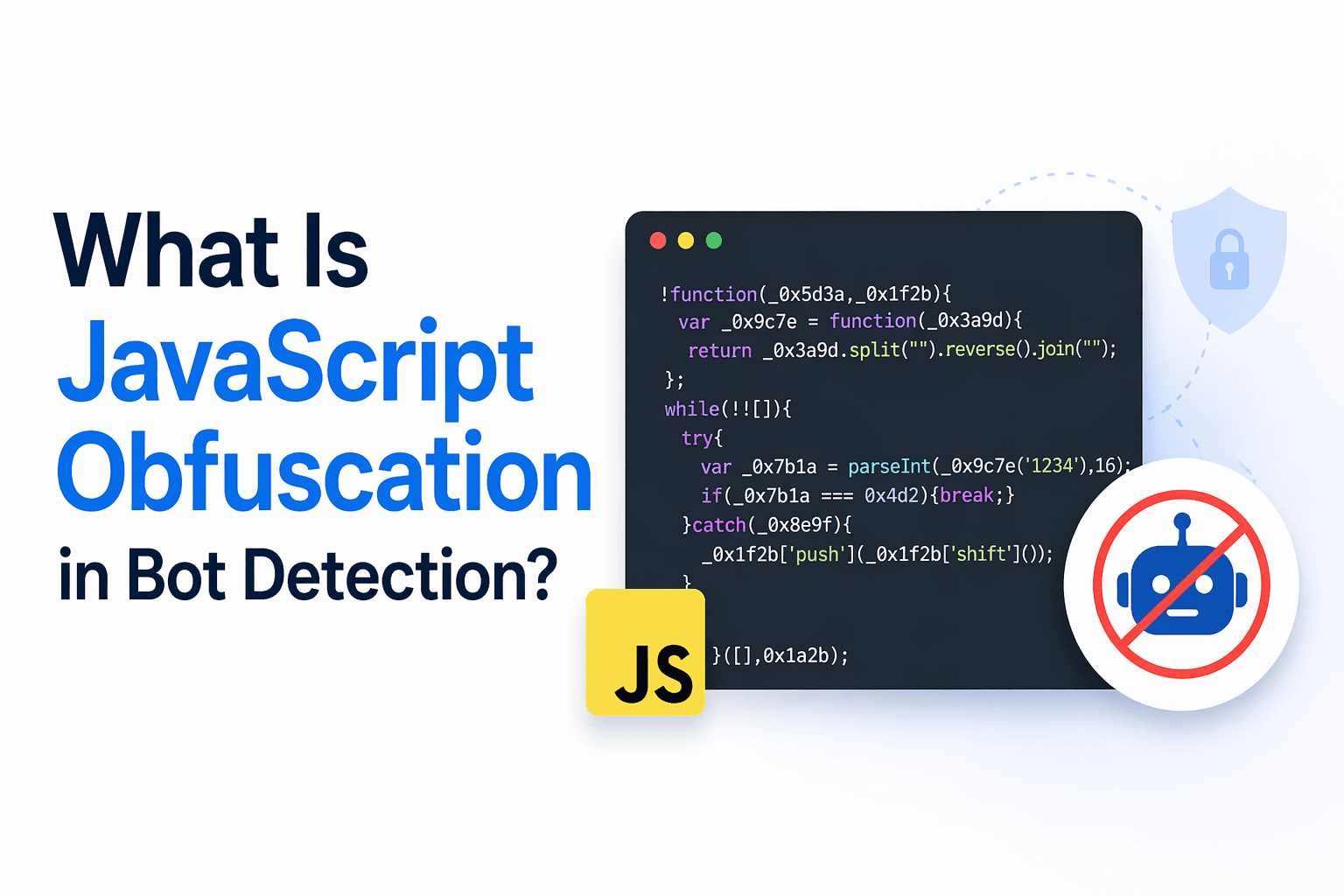
Modern bot detection systems rely heavily on client-side JavaScript to analyze browser behavior, but exposing this logic directly would make it easy for attackers to reverse engineer and bypass detection. To prevent this, websites use JavaScript obfuscation, a technique that transforms readable code into a complex and difficult-to-understand form while preserving its functionality.
Understanding JavaScript obfuscation is important because it plays a key role in protecting detection mechanisms. This guide explains how obfuscation works and why it is widely used in anti-bot systems.
What Is JavaScript Obfuscation?
JavaScript obfuscation is the process of transforming code into a version that is difficult for humans to read and understand, where the original logic remains intact but is hidden behind complex structures, renamed variables, and encoded values. This makes it challenging to analyze or modify the code, especially for automated scripts or reverse engineering efforts. In bot detection, obfuscation is used to protect the logic that identifies automation.
The Core Idea Behind Obfuscation in Bot Detection
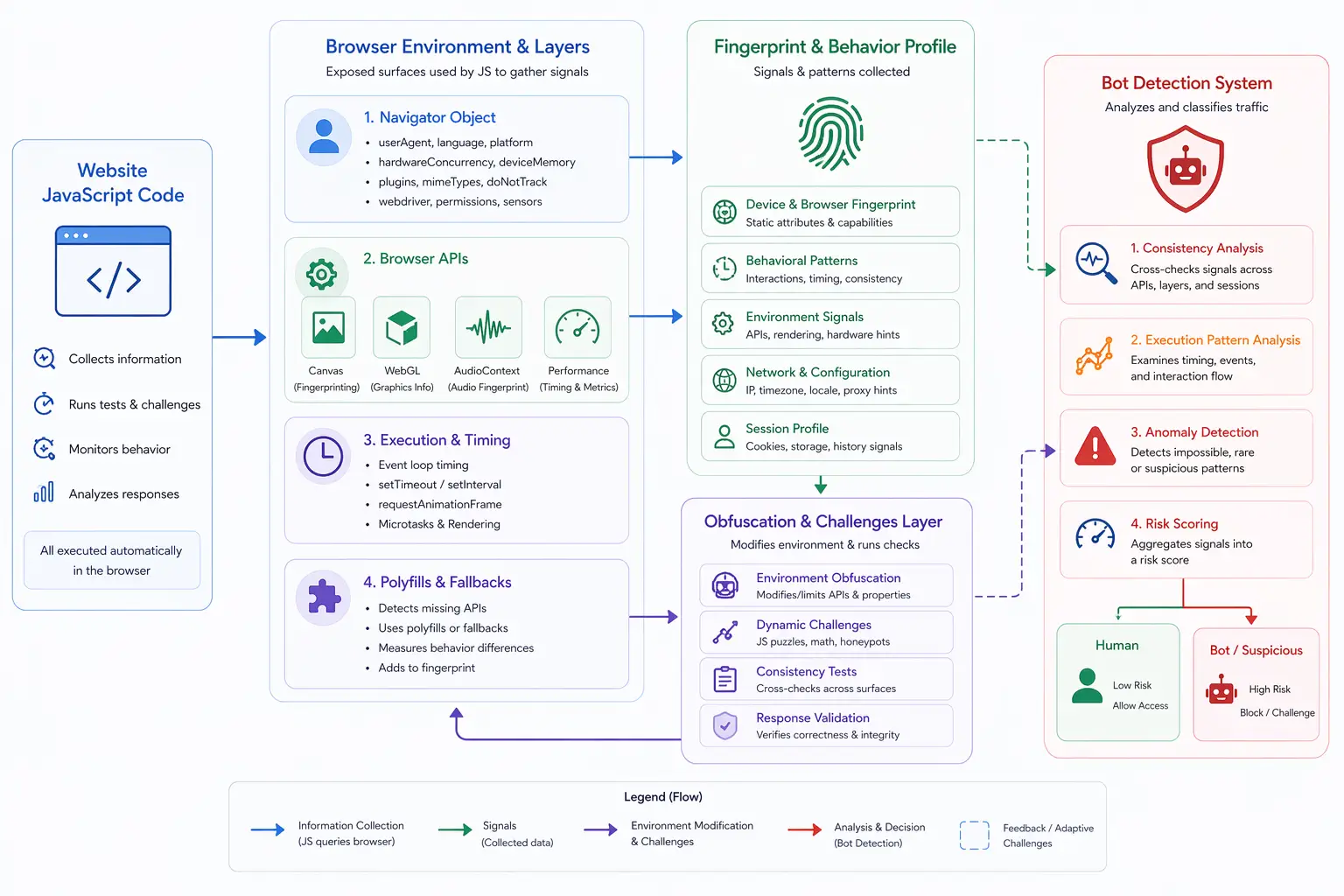
The core idea behind obfuscation is protection through complexity, where instead of preventing access to the code, the goal is to make it so difficult to interpret that analyzing it becomes impractical. By hiding how detection logic works, websites can prevent attackers from understanding what signals are being checked and how to bypass them. This adds a layer of defense on top of the detection mechanisms themselves.
How JavaScript Obfuscation Works
JavaScript obfuscation works by applying transformations to the code that change its structure without altering its behavior, where these transformations include renaming variables to meaningless identifiers, encoding strings, and restructuring control flow. These techniques make the code harder to read and analyze, especially when combined with dynamic loading and runtime execution.
Common Obfuscation Techniques
Several techniques are commonly used in JavaScript obfuscation, where variable and function names are replaced with random or short identifiers, strings are encoded or encrypted and decoded at runtime, and control flow is altered to make the execution path less obvious. In some cases, code is split into multiple parts and loaded dynamically, making it harder to reconstruct the full logic. These techniques work together to increase complexity.
Why Obfuscation Is Important for Bot Detection
Obfuscation is important because it protects the integrity of detection systems, where without it, attackers could easily inspect the code, identify detection logic, and modify their automation tools to bypass it. By hiding how detection works, obfuscation forces attackers to rely on trial and error rather than direct analysis, increasing the difficulty of evasion.
JavaScript Obfuscation and Dynamic Challenges
Obfuscation is often combined with dynamic JavaScript challenges, where the code changes frequently or is generated on the fly, making it even harder to analyze. This ensures that even if one version of the code is understood, it may not apply to future sessions. This dynamic approach strengthens detection systems.
Obfuscation and Reverse Engineering Resistance
One of the main goals of obfuscation is to resist reverse engineering, where attackers attempt to deconstruct the code to understand its logic. By making the code complex and non-linear, obfuscation increases the time and effort required for analysis. This discourages large-scale bypass attempts.
Limitations of JavaScript Obfuscation
Despite its effectiveness, JavaScript obfuscation has limitations because it does not make code completely secure, where determined attackers can still analyze obfuscated code given enough time and resources. Additionally, obfuscation can increase code size and affect performance, which may impact user experience. It also requires maintenance to ensure compatibility and effectiveness.
Obfuscation vs Other Anti-Bot Techniques
JavaScript obfuscation is one part of a broader anti-bot strategy that includes fingerprinting, behavioral analysis, and network-based detection, where each method provides a different layer of protection. While obfuscation hides the logic, other techniques actively detect automation. Combining these approaches creates a more robust system.
Obfuscation vs Real-Device Environments
A key distinction in modern detection is the difference between protecting detection logic and ensuring natural behavior, where obfuscation focuses on hiding how detection works, while real-device environments focus on producing authentic signals. Real-device approaches operate on actual hardware where browser behavior, API outputs, and execution patterns naturally align, and tools like Appilot follow this approach by running automation on real Android devices, ensuring that even when detection logic is hidden, the environment behaves consistently with real users. This reduces the risk of detection.
When JavaScript Obfuscation Is Most Critical
JavaScript obfuscation is most critical in scenarios where protecting detection logic is essential, such as high-security platforms, fraud prevention systems, and services that face significant automation attempts, where preventing reverse engineering helps maintain system integrity. In these contexts, obfuscation plays a key role in defense.
Frequently Asked Questions
Q: What is JavaScript obfuscation?
It is transforming code to make it difficult to read while keeping functionality intact.
Q: Why is it used in bot detection?
To protect detection logic from reverse engineering.
Q: Can obfuscated code be decoded?
Yes, but it requires significant effort.
Q: Does obfuscation stop bots completely?
No, it only makes bypassing more difficult.
Q: Does it affect performance?
It can increase complexity and slightly impact performance.
Q: How do real-device solutions compare?
Real-device solutions like Appilot focus on natural behavior rather than hiding logic, reducing detection risk.
Key Takeaways
JavaScript obfuscation is a technique used to hide and protect code by making it difficult to read and analyze, and in bot detection, it is used to safeguard detection logic from reverse engineering. While it increases complexity and resistance to analysis, it does not replace other detection methods and is most effective when combined with them. Understanding how obfuscation works is essential for understanding modern anti-bot systems.