Understanding LinkedIn Scraping Detection
LinkedIn is one of the most protected platforms when it comes to data extraction and automation. Because it contains high-value professional data, the platform has built strong systems to detect scraping, automated browsing, and bulk data collection. Unlike simple blocking mechanisms, LinkedIn combines behavioral analysis, technical signals, and AI models to identify suspicious activity.
Understanding how LinkedIn detects scraping is important because it reveals how modern platforms protect data at scale. This guide explains the key detection methods used by LinkedIn.
What Is LinkedIn Scraping Detection?
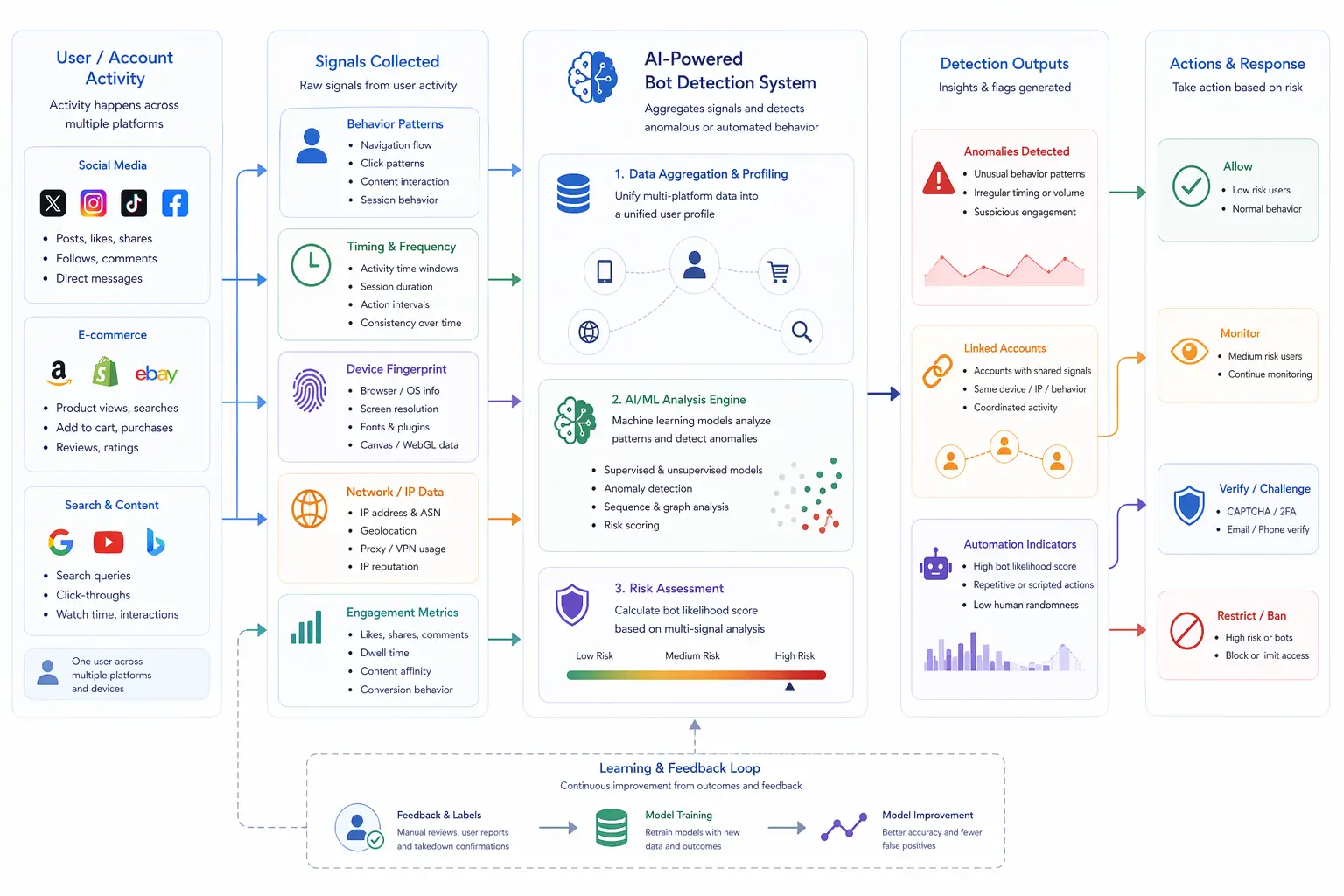
LinkedIn scraping detection refers to the systems and algorithms used to identify automated tools that collect data from profiles, search results, or other parts of the platform, where it monitors user behavior, request patterns, and device signals to determine whether activity is human or automated. Instead of relying on a single signal, LinkedIn combines multiple indicators to detect scraping even when it is partially disguised.
The Core Idea Behind LinkedIn’s Detection System
The core idea behind LinkedIn’s detection system is pattern recognition across multiple layers, where both technical and behavioral signals are analyzed together. Real users browse profiles, search, and interact in natural ways, while scraping tools often generate structured and repetitive activity. By comparing these patterns, LinkedIn can identify automation.
Behavioral Pattern Analysis
Behavioral analysis is one of the strongest signals used by LinkedIn, where it tracks how users navigate the platform, view profiles, and interact with content. Human behavior includes pauses, scrolling, and selective engagement, while scraping tools often move rapidly from one profile to another without meaningful interaction. Patterns such as viewing hundreds of profiles in a short time are strong indicators of scraping.
Request Rate and Frequency Monitoring
LinkedIn closely monitors how frequently requests are made, where scraping tools often generate a high volume of requests in a short period. Real users naturally space out their actions, while bots may operate at speeds that exceed normal human interaction. Rate limiting and anomaly detection are used to flag excessive activity.
Device Fingerprinting and Browser Signals
LinkedIn collects device and browser data to understand the environment used for access, where this includes user agent, screen properties, and API behavior. Fingerprinting techniques allow LinkedIn to track devices across sessions and detect inconsistencies. If multiple accounts operate from similar or identical environments, it can indicate automation.
Network and IP Analysis
Network-level signals play a key role in scraping detection, where LinkedIn analyzes IP addresses, geolocation, and connection patterns. Sudden changes in location, use of known proxy ranges, or repeated access from the same network can raise flags. Consistent scraping activity from a single IP or group of IPs is a strong indicator of automated behavior.
Interaction Quality and Engagement
LinkedIn evaluates the quality of user interaction, not just the quantity, where real users engage with content by reading profiles, clicking links, and spending time on pages. Scraping tools often extract data without meaningful interaction, resulting in shallow engagement patterns. Metrics such as dwell time, scroll behavior, and session depth help differentiate real users from bots.
JavaScript Challenges and Client-Side Checks
LinkedIn uses client-side JavaScript to verify that the browser behaves like a real user environment, where scripts test API availability, execution timing, and interaction patterns. Automated tools may fail these checks or produce inconsistent results, leading to detection. These challenges are often dynamic, making them harder to bypass.
AI and Machine Learning Models
LinkedIn uses machine learning models to analyze large datasets and identify patterns associated with scraping, where these models continuously learn from new activity and adapt to evolving techniques. By combining historical data with real-time signals, LinkedIn can detect subtle anomalies that indicate automation.
Account-Level Monitoring
Detection extends beyond individual sessions to overall account behavior, where LinkedIn evaluates long-term patterns such as activity frequency, connection growth, and interaction trends. Accounts that show unusual patterns over time are more likely to be flagged or restricted.
Limitations and False Positives
Despite its advanced systems, LinkedIn’s detection may occasionally flag legitimate users, especially those who perform high levels of activity, such as recruiters or sales professionals. These cases highlight the challenge of balancing security with usability, and the system must account for diverse user behavior.
LinkedIn Detection vs Other Platforms
Compared to many platforms, LinkedIn places a stronger emphasis on protecting data from scraping, where it combines rate limiting, behavioral analysis, fingerprinting, and AI into a unified system. This makes it particularly effective at identifying automated data collection.
Detection vs Real-Device Environments
A key distinction in modern detection is the difference between simulated environments and real-device environments, where simulated setups often struggle to maintain consistency across behavior, device signals, and network data. Real-device environments operate on actual hardware where all signals naturally align, and tools like Appilot follow this approach by running automation on real Android devices, ensuring that behavior, device characteristics, and network signals reflect real-world usage. This reduces inconsistencies that detection systems rely on.
When LinkedIn Scraping Detection Is Most Strict
LinkedIn’s scraping detection is most strict in scenarios involving high-volume profile views, rapid data extraction, or repeated automated searches, where protecting user data is a priority. In these contexts, even small anomalies can trigger detection or account restrictions.
Frequently Asked Questions
Q: How does LinkedIn detect scraping?
By analyzing behavior, request rates, and technical signals.
Q: What triggers detection?
High-speed activity, repetitive patterns, and shallow engagement.
Q: Does LinkedIn use AI?
Yes, machine learning models analyze patterns and anomalies.
Q: Can scraping avoid detection?
It is difficult due to multi-layered analysis.
Q: Are false positives possible?
Yes, especially for high-activity users.
Q: How do real-device solutions compare?
Real-device solutions like Appilot produce consistent signals across all layers, reducing detection risk.
Key Takeaways
LinkedIn scraping detection uses a multi-layered approach that combines behavioral analysis, request rate monitoring, device fingerprinting, network signals, and machine learning. By analyzing both real-time activity and long-term patterns, it can identify automated data collection with high accuracy. Understanding these systems is essential for navigating detection on data-sensitive platforms.