What Is Local IP Detection? Browser Network Scanning

Modern browsers expose more than just your public IP address. Through various APIs and network behaviors, websites can also detect your local IP address and gather insights about your internal network. This process is known as local IP detection and is often part of broader browser network scanning techniques.
Understanding local IP detection is important because it reveals how websites can access information about your internal environment, not just your external identity. This guide explains how it works and why it is used.
What Is Local IP Detection?
Local IP detection is the process of identifying the private IP address assigned to your device within a local network. This address is typically used for communication within your home, office, or internal network.
Unlike public IP addresses, local IPs are not visible on the internet by default. However, browser technologies like WebRTC can expose them during connection setup.
This allows websites to access information about your internal network configuration.
The Core Concept Behind Local IP Detection
The core concept behind local IP detection is network enumeration. When a browser attempts to establish connections, it gathers information about all available network interfaces.
This includes local IP addresses associated with Wi-Fi, Ethernet, or other connections.
By exposing this data, the browser provides insight into the internal network structure.
How Browser Network Scanning Works
Browser network scanning involves collecting and analyzing network-related data through client-side scripts.
WebRTC-Based Discovery
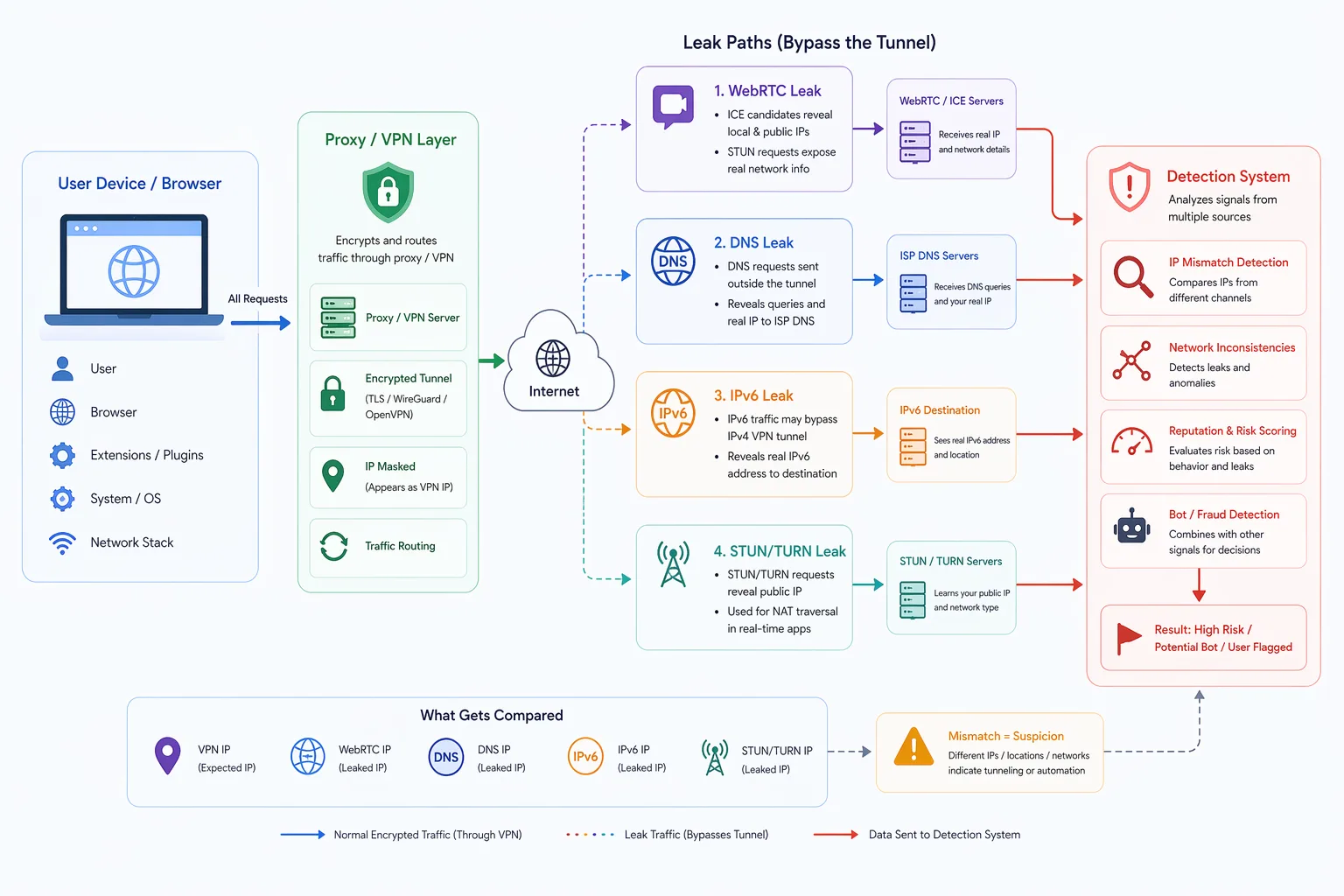
WebRTC is the primary method used to detect local IP addresses.
When a WebRTC connection is initiated, the browser generates ICE candidates that include local IPs.
These candidates can be accessed through JavaScript and used for detection.
Network Interface Enumeration
Browsers can identify multiple network interfaces on a device.
This includes different types of connections such as Wi-Fi and wired networks.
Each interface may have its own local IP, providing additional data points.
Timing and Connectivity Tests
Some detection systems perform timing-based checks to infer network structure.
By measuring response times to different endpoints, they can estimate network proximity and configuration.
This adds another layer to network scanning.
Port and Service Probing
In some cases, scripts attempt to identify open ports or services within the local network.
While modern browsers restrict direct access, indirect methods can still provide insights.
These techniques contribute to a more detailed network profile.
Why Local IP Detection Matters
Local IP detection matters because it exposes information that users typically assume is private.
It allows websites to gain insight into internal network configurations, which can be used for tracking and identification.
Even though local IPs are not globally unique, they add context to other signals.
This makes them valuable in detection systems.
Local IP Detection and Browser Fingerprinting
Local IP detection contributes to browser fingerprinting by adding network-level data.
When combined with device and browser characteristics, it helps create a more unique profile.
This increases the ability to track users across sessions.
It also helps identify inconsistencies in network behavior.
Local IP Detection and Bot Detection
Bot detection systems use local IP data to identify anomalies.
For example, if the local IP does not align with the expected network environment, it can indicate automation or a modified setup.
Combined with other signals, this helps detect non-human activity.
Local IP detection is rarely used alone but adds valuable context.
Local IP Detection vs Public IP Detection
Public IP detection identifies how a device appears on the internet, while local IP detection reveals internal network details.
Both provide different layers of information.
Public IPs are used for routing and geolocation, while local IPs provide insight into network structure.
Combining both improves detection accuracy.
Limitations of Local IP Detection
Despite its usefulness, local IP detection has limitations.
Modern browsers have introduced restrictions to limit exposure of local IPs.
Some environments may not reveal consistent data.
Additionally, local IPs are not globally unique, reducing their standalone value.
These limitations mean it is used alongside other signals.
Local IP Detection vs Other Network Signals
Local IP detection is one part of a broader network analysis process.
It is often combined with signals such as DNS behavior, WebRTC data, and IP reputation.
While each signal provides insight, combining them creates a more complete picture.
Local IP detection adds depth to this analysis.
Local IP Detection vs Real-Device Environments
A key distinction in modern detection is the difference between simulated setups and real-device environments.
Local IP detection can reveal inconsistencies in environments where network configuration is artificially modified.
Real-device approaches operate on actual hardware and networks where local IPs, interfaces, and routing behave naturally. Tools like Appilot follow this approach by running automation on real Android devices, where internal network structure and external signals remain consistent.
This reduces mismatches that detection systems rely on.
When Local IP Detection Is Most Relevant
Local IP detection is most relevant in scenarios where network context is important.
This includes fraud detection, authentication systems, and environments with strict security requirements.
In these cases, internal network data provides additional insight into user identity.
Understanding this helps in interpreting detection signals.
Frequently Asked Questions
Q: What is a local IP address?
It is a private address used within a local network.
Q: How do websites detect local IPs?
Primarily through WebRTC APIs and ICE candidates.
Q: Is local IP detection a privacy risk?
Yes, it can expose internal network information.
Q: Can local IP detection be prevented?
It can be reduced by limiting WebRTC access.
Q: Is local IP detection used alone?
No, it is combined with other detection methods.
Q: How do real-device solutions compare?
Real-device solutions like Appilot maintain consistent internal and external network signals, reducing anomalies.
Key Takeaways
Local IP detection is the process of identifying private network addresses through browser technologies like WebRTC. It allows websites to gather information about internal network structure and contributes to fingerprinting and bot detection. While limited on its own, it becomes powerful when combined with other signals. Understanding how local IP detection works is essential for managing network-level privacy and consistency.