Managing Multiple Antidetect Browser Profiles from One Dashboard
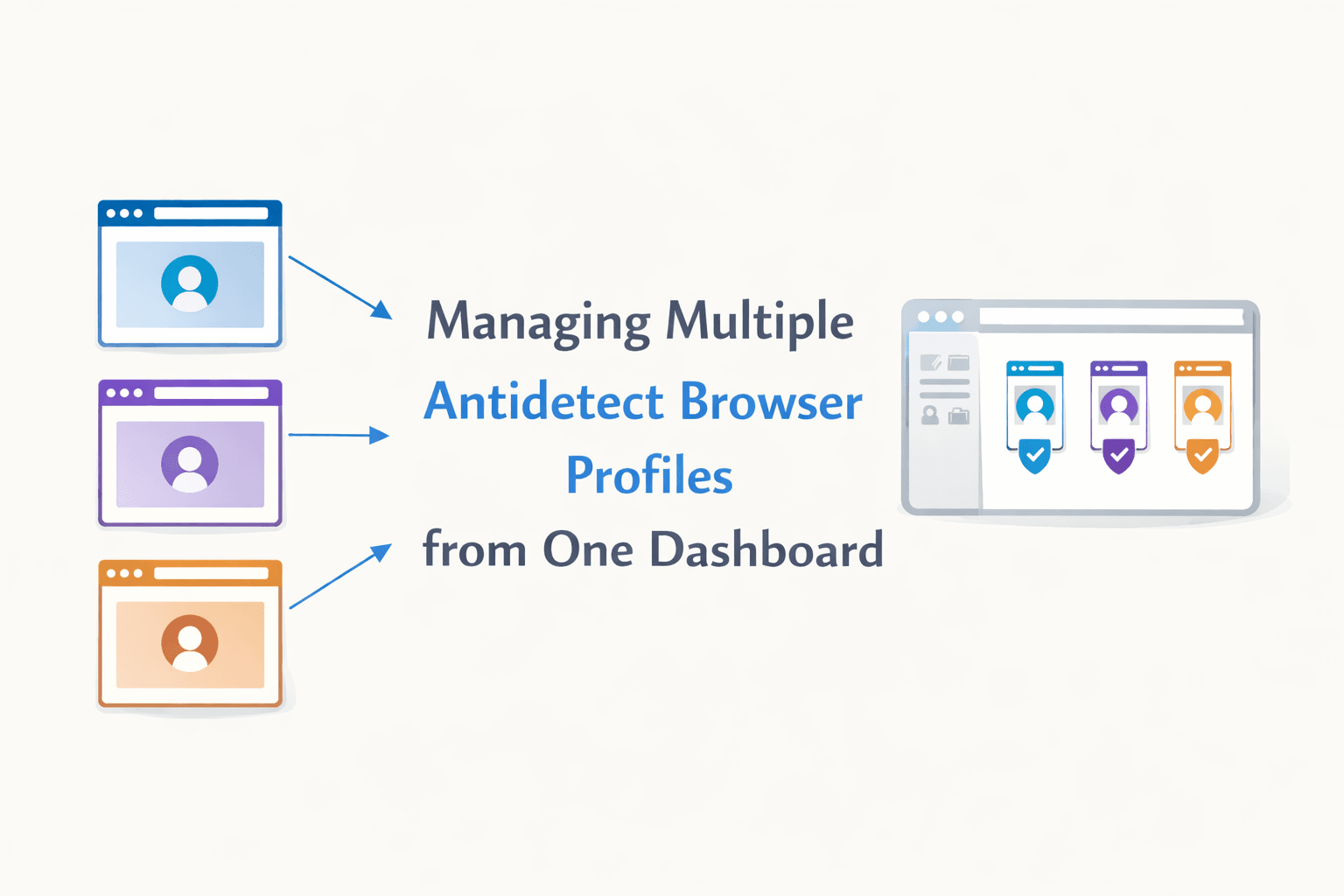
Managing a few antidetect browser profiles manually is usually not difficult. You can log in, switch between sessions, complete tasks, and keep everything organized without too much trouble. But once you start handling dozens or even hundreds of profiles, the entire process becomes much more difficult to manage.
You begin dealing with profile confusion, overlapping schedules, missed tasks, repeated actions, and constant switching between browser sessions. This is where most people realize that the problem is no longer creating browser profiles. The real challenge is managing all of those profiles efficiently from one place.
Appilot helps solve this problem by giving you one centralized dashboard where you can manage multiple antidetect browser profiles, assign workflows, schedule tasks, and monitor activity without constantly moving between separate browser windows.
For this guide, I will use Appilot because it is designed for large-scale browser automation and multi-profile management. Whether you are using antidetect browsers for social media, e-commerce, affiliate marketing, scraping, or account management, the same principle applies. The more profiles you manage, the more important centralized control becomes.
Why Managing Multiple Browser Profiles Becomes Difficult
Managing a handful of browser profiles is simple. Managing fifty or one hundred profiles is much more complicated.
Each profile may have different cookies, proxies, fingerprints, accounts, schedules, and tasks. Some profiles may need to log in daily while others only need to run once per week. Some may require different proxy regions while others need completely separate browser fingerprints.
Without a centralized dashboard, people often end up relying on spreadsheets, sticky notes, separate browser windows, and manual reminders to keep track of everything. This usually leads to mistakes.
For example, you might accidentally use the wrong proxy with the wrong profile, run the wrong workflow on the wrong account, or forget to rotate sessions. Over time, these small mistakes can create larger problems such as account flags, bans, failed tasks, and wasted time.
The more profiles you manage, the more important organization becomes.
Why Use Appilot to Manage Multiple Antidetect Profiles
Appilot gives you one place to manage all of your browser profiles, workflows, schedules, and tasks.
Instead of opening individual browser windows one by one, you can organize profiles into groups, assign different workflows to each group, and manage everything from a single dashboard.
For example, you might have one group of profiles for Facebook account management, another group for affiliate marketing campaigns, another group for scraping tasks, and another group for e-commerce operations. Appilot makes it easy to separate those workflows while still keeping everything organized.
You can also assign proxies, set schedules, create profile tags, add notes, and monitor task performance without constantly switching between different tools.
Another major benefit is that Appilot helps reduce mistakes. When you are managing a large number of profiles manually, it becomes very easy to accidentally mix profiles, run the wrong workflow, or forget an important step. Centralized management helps keep everything cleaner and more predictable.
Common Problems When Managing Antidetect Profiles Manually
Most people start with manual profile management because it works fine at a small scale. But as the number of profiles increases, the weaknesses become obvious.
One common issue is profile confusion. If you have dozens of browser sessions open at once, it becomes easy to lose track of which profile belongs to which account.
Another issue is inconsistent scheduling. Some profiles may be used too frequently while others are forgotten entirely. This creates uneven behavior patterns that can make automation look suspicious.
Proxy mistakes are also very common. If the wrong proxy is assigned to the wrong profile, it can create login issues, unusual location changes, or account security warnings.
Manual profile management also creates a lot of wasted time. Constantly opening sessions, checking tasks, switching tabs, and reviewing profile health can easily consume hours every day.
The larger your setup becomes, the more important it is to have one system that controls everything.
How to Organize Browser Profiles Inside One Dashboard
The best way to manage large numbers of browser profiles is to organize them into logical groups.
For example, you might group profiles by platform, campaign type, client account, region, or workflow type. Social media profiles could be separated from e-commerce profiles. Affiliate marketing accounts could be separated from scraping accounts.
You can also use tags to make profile management easier. For example, you might tag profiles based on country, proxy type, browser type, account age, or risk level.
Grouping and tagging profiles makes it much easier to find the right accounts quickly and assign the correct workflows to them.
You should also create clear naming conventions for your profiles. Generic names like Profile 1 or Session 8 quickly become confusing when you have dozens of accounts. Instead, use names that include useful information such as the platform, region, account type, or campaign.
For example, a profile name like US-Facebook-Account-01 is much easier to understand than Profile-01.
How Appilot Helps Manage Browser Tasks Across Multiple Profiles
One of the biggest advantages of Appilot is that it allows you to assign workflows across multiple browser profiles at once.
Instead of opening profiles one by one and running tasks manually, you can create reusable workflows that automatically apply to profile groups.
For example, you could create one workflow that logs into accounts, checks notifications, performs a small action, waits for a random amount of time, and then closes the session.
That same workflow can then be applied to ten, twenty, or fifty profiles without rebuilding it every time.
You can also schedule workflows to run automatically at different times. One profile group might run in the morning, another in the afternoon, and another late at night. This helps distribute activity more naturally and avoids having every profile behave in the exact same way.
Appilot also makes it easier to monitor profile health. You can quickly see which profiles failed, which proxies are having issues, which workflows are not performing properly, and which profiles need attention.
Best Practices for Managing Large Numbers of Browser Profiles
The most important rule is to stay organized from the beginning. It is much easier to manage ten profiles correctly than it is to clean up one hundred messy profiles later.
You should use clear naming conventions, group profiles logically, assign the correct proxies, and keep detailed notes about each profile.
You should also avoid running the same tasks at the exact same time across every profile. Randomized timing and variable delays help make browser activity look more natural.
It is also important to review profile health regularly. Cookies expire, sessions log out, proxies fail, and platforms change their security systems. Regular maintenance helps keep your profiles working properly.
You should also avoid scaling too quickly. Start with a smaller number of profiles, build stable workflows, and then expand gradually once everything is working consistently.
Finally, always keep logs of important activity. If something goes wrong, detailed logs can help you identify which profile failed, what action caused the problem, and when the issue started.
Common Mistakes to Avoid
One common mistake is giving profiles vague names. If you have dozens of profiles called Browser-1, Browser-2, and Browser-3, it becomes very difficult to understand which account belongs to which workflow.
Another mistake is using the same proxy for too many profiles. Sharing one proxy across a large number of accounts can create a larger footprint and increase the risk of detection.
Some people also make the mistake of scaling too quickly. They create dozens of profiles, automate too many actions, and run everything at once before they have fully tested their workflows.
Running identical schedules across all profiles is another major issue. If every browser profile performs the same action at exactly the same time every day, the behavior becomes much easier to detect.
Poor organization is usually the biggest problem of all. Without clear groups, tags, naming rules, and notes, browser profile management quickly becomes confusing.
Frequently Asked Questions
Q1: Why should I manage browser profiles from one dashboard?
Managing profiles from one dashboard helps reduce confusion, save time, and improve organization. It becomes much easier to assign workflows, monitor profile health, and avoid mistakes when everything is controlled from one place.
Q2: Can Appilot manage hundreds of browser profiles?
Yes. Appilot is designed for large-scale profile management and can help organize hundreds of browser profiles more efficiently than manual management methods.
Q3: Can I group profiles by campaign or platform?
Yes. You can organize profiles by platform, region, client, campaign type, or workflow. This makes it easier to assign the correct tasks to the correct profiles.
Q4: Does Appilot work with proxies and antidetect browsers?
Yes. Appilot can work alongside antidetect browsers, proxy tools, browser fingerprinting systems, and multi-account workflows.
Q5: What is the biggest mistake when managing many browser profiles?
The biggest mistake is poor organization. Without proper naming, grouping, scheduling, and proxy management, it becomes very difficult to control large numbers of profiles efficiently.
Conclusion
Managing multiple antidetect browser profiles manually becomes very difficult as your setup grows.
The more profiles you add, the more important it becomes to have a centralized system for organizing workflows, assigning proxies, scheduling tasks, and monitoring profile health.
Appilot helps solve these problems by giving you one dashboard where you can control everything more efficiently.
The best approach is to stay organized from the beginning, keep your workflows simple, and scale gradually as your setup becomes more stable.