Understanding Mobile Proxies: 4G/5G Network Routing

When it comes to browser automation and managing multiple identities, not all IP addresses are treated equally. Some networks carry more trust than others, and mobile networks are often considered the most reliable. This is where mobile proxies come in.
Understanding mobile proxies is important because they operate differently from residential and datacenter proxies. They are built on real mobile networks and follow routing patterns that closely resemble actual user behavior. This guide explains what mobile proxies are, how 4G and 5G routing works, and why they are widely used in automation.
What Are Mobile Proxies?
Mobile proxies are proxy servers that route traffic through IP addresses assigned by mobile network operators. These IPs come from cellular networks such as 4G and 5G and are shared among many real users.
When you use a mobile proxy, your requests appear as if they are coming from a mobile device connected to a cellular network. This makes them highly trusted by websites because they blend in with normal mobile traffic.
Unlike datacenter proxies, which originate from cloud infrastructure, mobile proxies are tied to real carrier networks.
The Core Principle Behind Mobile Proxies
The core principle behind mobile proxies is shared identity. Mobile networks use a system called carrier-grade NAT, where multiple users share the same public IP address.
Because many real users operate behind the same IP, it becomes difficult for websites to block or flag that IP without affecting legitimate users. This gives mobile proxies a higher level of trust.
This shared nature makes mobile proxies particularly effective in environments where detection systems are strict.
How 4G/5G Network Routing Works
Mobile proxies rely on how cellular networks assign and manage IP addresses.
Carrier-Grade NAT (CGNAT)
In mobile networks, devices are typically assigned private IP addresses internally. These are translated into a shared public IP using carrier-grade NAT.
This means that hundreds or even thousands of devices can appear under a single public IP. From a website’s perspective, traffic from that IP represents a large pool of real users.
This structure makes it difficult to attribute activity to a single user.
Dynamic IP Rotation
Mobile networks frequently rotate IP addresses as devices reconnect to the network. This creates natural variability in IP assignment.
Mobile proxies can leverage this behavior to rotate IPs without appearing artificial. Unlike manual rotation, this process aligns with real network behavior.
Network Behavior and Trust Signals
Mobile networks exhibit patterns that are consistent with real-world usage, such as varying latency, signal changes, and geographic movement.
These patterns contribute to higher trust levels because they match how real users interact with the internet.
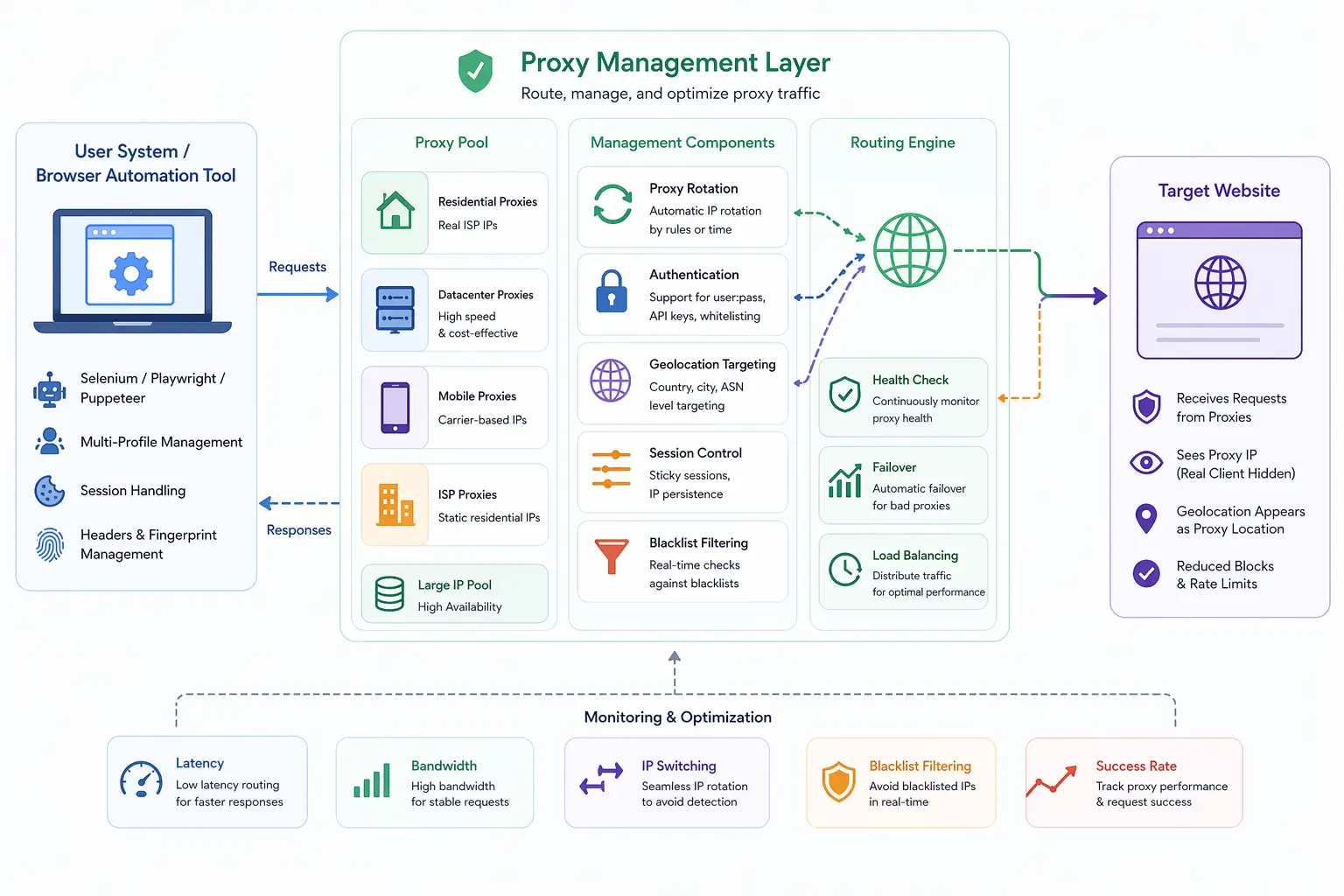
Why Mobile Proxies Matter in Automation
Mobile proxies are highly valued in automation because they provide a level of trust that other proxy types cannot easily match.
Since mobile IPs are shared among many users, blocking them can disrupt legitimate traffic. As a result, websites are more cautious about restricting these IPs.
This makes mobile proxies particularly useful in scenarios where detection systems are strict and where maintaining access is critical.
However, their effectiveness depends on how well they are integrated with other aspects of the environment.
Mobile Proxies vs Residential Proxies
Mobile proxies and residential proxies both use real-world IP addresses, but they differ in how those IPs are assigned and used.
Residential proxies are tied to individual devices and fixed networks, while mobile proxies use shared IPs through carrier networks. This shared structure gives mobile proxies an advantage in terms of trust.
However, residential proxies can offer more stability, while mobile proxies may experience more frequent IP changes.
Mobile Proxies vs Datacenter Proxies
The difference between mobile and datacenter proxies is significant.
Datacenter proxies are fast and scalable but are often flagged due to their origin in cloud infrastructure. Mobile proxies, on the other hand, come from real carrier networks and are harder to detect.
This makes mobile proxies more suitable for sensitive tasks, while datacenter proxies are better for high-volume operations.
Limitations of Mobile Proxies
Despite their advantages, mobile proxies have limitations.
One limitation is cost. Mobile proxies are typically more expensive than other proxy types due to their infrastructure and demand.
Another limitation is control. Because IPs are shared and dynamic, it can be harder to maintain a consistent identity over time.
There is also the issue of speed and latency, which can vary depending on network conditions.
These factors must be considered when choosing mobile proxies.
Mobile Proxies and Fingerprinting
While mobile proxies provide strong network-level anonymity, they do not affect browser fingerprinting signals.
If multiple sessions share the same fingerprint but use different mobile IPs, they can still be linked. This highlights the importance of aligning network identity with browser and device-level signals.
Consistency across all layers is critical for avoiding detection.
Mobile Proxies vs Real-Device Environments
A key distinction in modern detection systems is the difference between network-level realism and full environment realism.
Mobile proxies provide realistic network signals, but they do not change how the browser or device behaves. This can lead to inconsistencies if other signals do not align.
Real-device approaches operate on actual hardware connected to real networks. Tools like Appilot follow this approach by running automation on real Android devices, combining mobile network behavior with consistent device-level signals.
This creates a more complete and realistic environment.
When to Use Mobile Proxies
Mobile proxies are best used in scenarios where trust and detection resistance are critical.
They are commonly used in account management, sensitive automation workflows, and environments with strict anti-bot systems.
However, due to their cost and variability, they are not always necessary for every use case.
Understanding when to use mobile proxies helps optimize both performance and reliability.
Frequently Asked Questions
Q: What is a mobile proxy?
It is a proxy that routes traffic through IP addresses assigned by mobile network operators.
Q: Why are mobile proxies hard to detect?
Because they use shared IPs from real users, making it difficult to distinguish individual activity.
Q: What is carrier-grade NAT?
It is a system where multiple devices share a single public IP address.
Q: Are mobile proxies better than residential proxies?
They offer higher trust but less stability compared to residential proxies.
Q: Do mobile proxies prevent fingerprinting?
No, they only affect IP addresses. Fingerprinting must be managed separately.
Q: How do real-device solutions compare?
Real-device solutions like Appilot combine mobile network routing with real hardware behavior, creating more consistent and realistic environments.
Key Takeaways
Mobile proxies route traffic through real 4G and 5G networks, using shared IP addresses managed by carrier-grade NAT. This shared structure makes them highly trusted and difficult to block, as they represent large groups of real users. While they offer strong advantages in detection resistance, they come with trade-offs in cost, control, and performance. As with other proxy types, they must be combined with consistent browser and device-level signals to create a realistic and effective automation environment.