Posts Going Out at 3 AM Because Time Zones Confuse You? Fix This
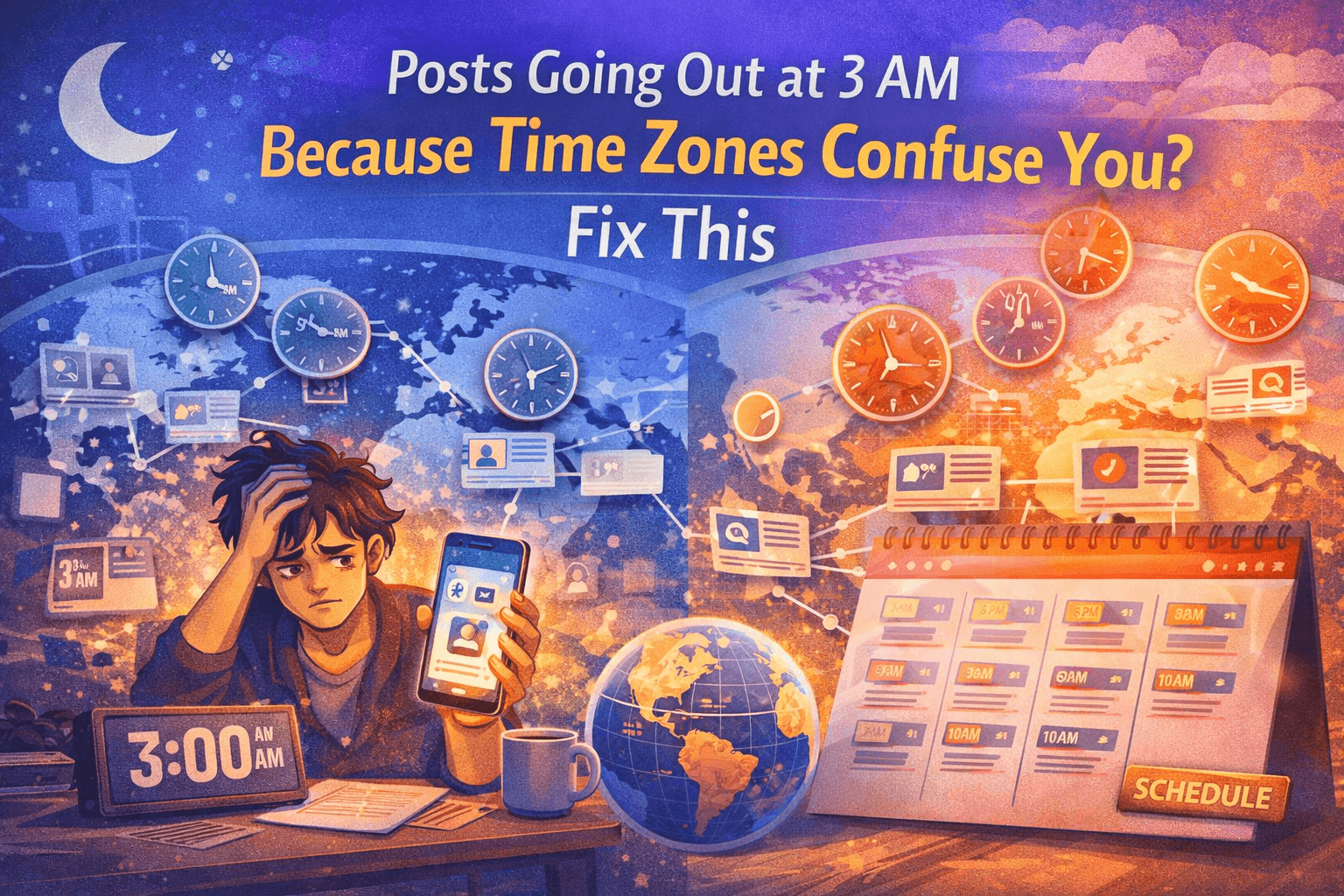
Your Post Was Perfect—But It Went Live At The Worst Possible Time
You spent time writing the post, creating the image, checking the caption, and scheduling everything properly.
Then you wake up the next day and realize the post went live at 3 AM.
Nobody saw it. Engagement is terrible. The timing makes no sense for the audience, and now the entire schedule feels off.
This is one of the most common problems in multi-account content management because time zones become much harder to manage as the number of accounts grows.
One account targets the United States. Another targets Europe. Another targets the Middle East. Another targets Australia. Suddenly, the same posting schedule no longer works because every audience is awake at a different time.
The bigger your account network gets, the easier it becomes to publish content at the wrong moment.
The good news is that this problem is usually not caused by the content itself.
The real issue is that the scheduling system is not built around time zones.
Why Time Zone Mistakes Keep Happening
Most people schedule content based on their own local time.
That seems fine in the beginning because it is easy to think in terms of your own clock.
The problem is that your audience may be in a completely different region.
If you live in one country but most of your followers are in another, scheduling based on your own timezone creates bad timing very quickly.
This becomes even more confusing when you are managing multiple accounts in different regions because you are constantly switching between countries, posting windows, and audience habits.
Another major issue is that most people think in terms of one universal posting schedule.
They decide something like “post every day at 10 AM” and apply that across every account.
That rarely works.
A United States audience, a United Kingdom audience, and an Australian audience all have completely different active hours. Even within the same country, different industries may respond better at different times.
A B2B audience may be active during business hours. A gaming audience may be active late at night. A crypto audience may be active almost all day because the audience is global.

The Biggest Mistake: Treating Every Account Like It Lives In The Same Region
One of the biggest reasons posts go out at the wrong time is because people schedule everything from their own perspective.
They look at the clock, choose a convenient time, and assume it works for every account.
That creates problems very quickly because accounts are rarely all targeting the same audience.
An account targeting the United States should not be posted at the same time as an account targeting Europe. An account for local businesses should not be posted at the same time as an account for crypto traders. An account aimed at night-shift workers should not be scheduled the same way as an account aimed at office workers.
The audience matters more than your own schedule.
That means every account should have its own posting window based on where the audience is and when they are most active.
The System That Fixes Time Zone Confusion
The easiest way to stop making time zone mistakes is to stop thinking in terms of one universal posting schedule.
Instead, you should group accounts by region and audience behavior.
For example, you may have separate groups for North America, Europe, the Middle East, Asia, and Australia.
Once the accounts are grouped properly, you can create posting windows for each region.
That way, instead of manually calculating time differences every day, you already know the best hours for each audience.
Another important step is keeping all schedules in one reference timezone internally.
For example, you may decide that all internal scheduling happens in UTC or your local timezone, but every account still has its own target posting time relative to the audience.
That reduces confusion because you are not constantly switching between different clocks in your head.
You should also leave buffer time between content creation and publishing.
If a post is being finished only minutes before it goes live, there is a much higher chance of making a timezone mistake.
Having content ready earlier gives you more time to double-check the schedule.
Why Centralization Makes This Much Easier
Time zone mistakes become much more common when content schedules are spread across different tools.
You may have one account scheduled in one platform, another in a spreadsheet, another in a browser extension, and another somewhere else entirely.
That makes it much harder to see which posts are going out at the wrong time.
This is one of the reasons Appilot becomes useful when content operations start scaling.
Instead of keeping browser profiles, Android workflows, content schedules, and account assignments spread across different systems, everything can stay visible from one dashboard. That makes it easier to see which accounts belong to which region, which posts are scheduled for which timezone, and where scheduling mistakes are happening.
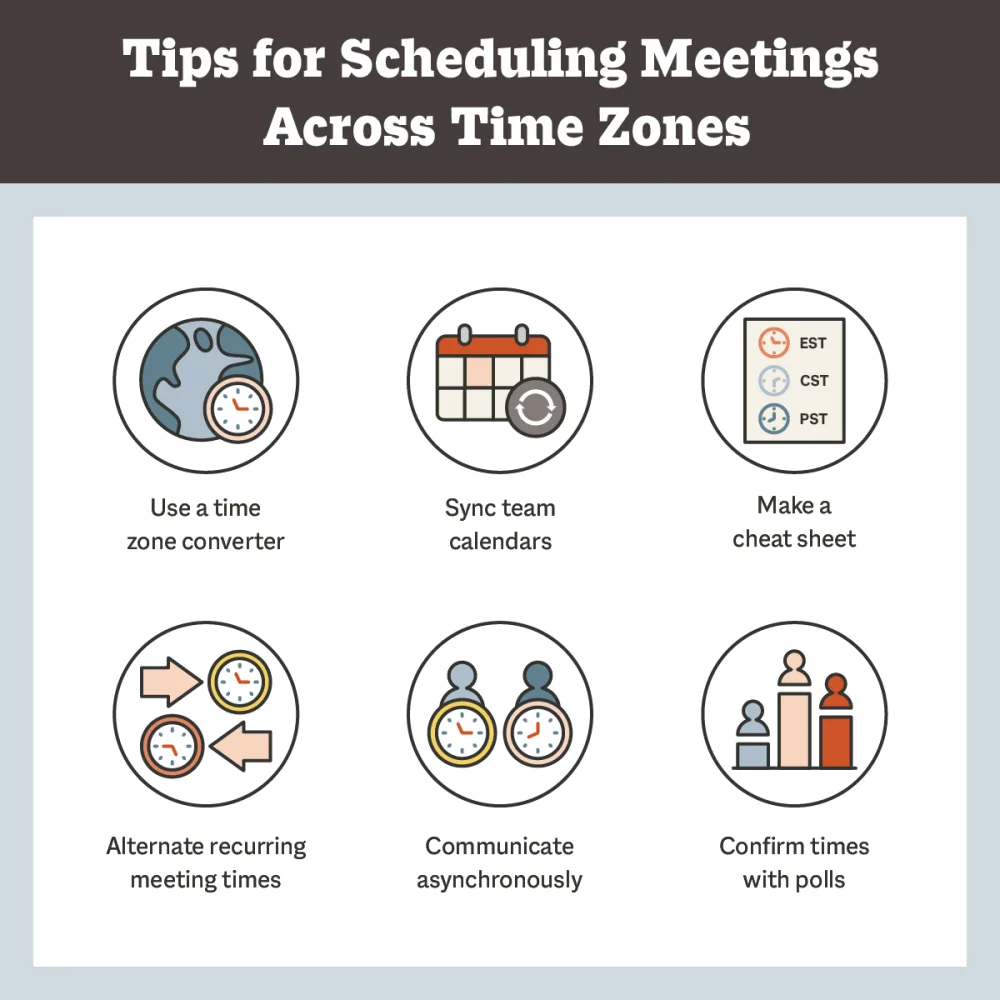
Conclusion: Wrong Posting Times Are Usually A Scheduling Problem, Not A Content Problem
If your posts keep going out at 3 AM, the issue is usually not the content itself.
The problem is that the scheduling system is not built around audience location, regional posting windows, and timezone management.
Once you organize accounts by region, create better posting windows, and centralize scheduling into one system, timing mistakes become much easier to avoid.
That is what allows you to keep content consistent without accidentally publishing to the wrong audience at the wrong time.