Understanding Proxy Geolocation and IP Targeting

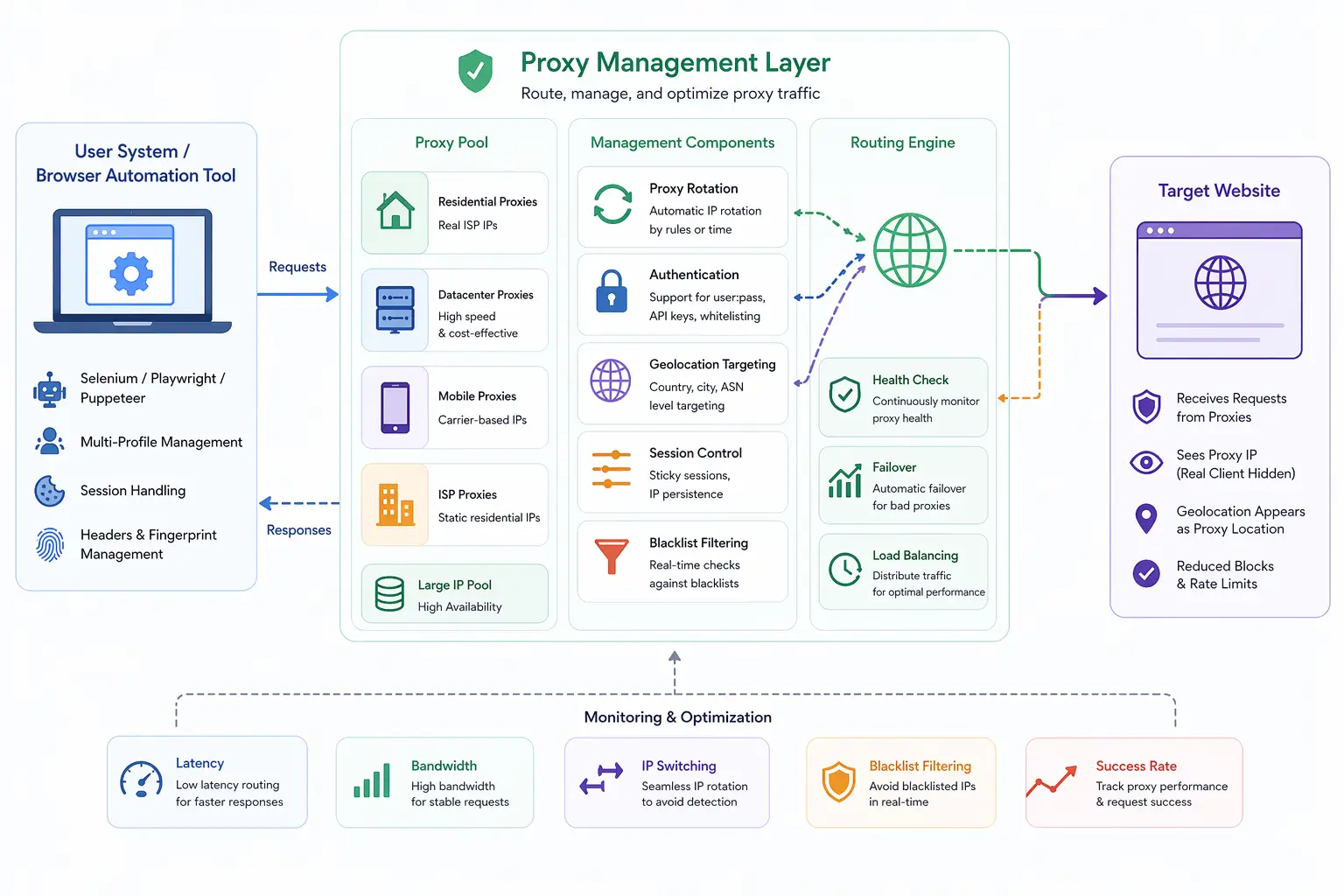
When using proxies in browser automation, changing the IP address is only part of the picture. Every IP is associated with a geographic location, and websites use this information to tailor content, enforce restrictions, and detect inconsistencies. This is where proxy geolocation and IP targeting become critical.
Understanding proxy geolocation is important because location data influences how your sessions are perceived. If the network location does not match other signals such as timezone or language, detection systems can flag the session. This guide explains how geolocation works and how to use IP targeting effectively.
What Is Proxy Geolocation?
Proxy geolocation refers to the geographic location associated with a proxy’s IP address. When you connect through a proxy, websites use that IP to determine where the request is coming from.
This location is typically mapped using IP databases that associate IP ranges with countries, regions, and sometimes cities.
As a result, your visible location changes depending on the proxy you use.
The Core Principle Behind Geolocation
The core principle behind proxy geolocation is location identity. Websites rely on IP-based location data to understand user origin.
This information is used for content localization, security checks, and access control. By choosing proxies from specific locations, you can control how your traffic is perceived geographically.
However, geolocation must align with other signals to appear realistic.
How IP Targeting Works
IP targeting is the process of selecting proxies based on specific geographic criteria.
Country-Level Targeting
The simplest form of targeting is selecting proxies from a specific country. This allows traffic to appear as if it originates from that region.
Country-level targeting is commonly used for accessing region-specific content or services.
City-Level Targeting
More advanced proxy providers offer city-level targeting, allowing you to select IPs from specific cities.
This provides greater precision and can be important for localized testing or region-specific workflows.
ASN and ISP Targeting
Some setups allow targeting based on autonomous system numbers or specific internet service providers. This enables even finer control over how the IP is classified.
This level of targeting can be useful when consistency and realism are critical.
Why Geolocation Matters in Automation
Geolocation plays a major role in how websites evaluate sessions.
Many platforms use location data to enforce restrictions, detect unusual activity, and personalize content. If multiple sessions originate from unexpected or inconsistent locations, they may be flagged.
For example, logging in from different countries within a short time frame can trigger security checks.
This makes proper geolocation management essential.
Geolocation and Fingerprinting Alignment
Proxy geolocation must align with browser and device-level signals.
If an IP indicates one country but the browser reports a different timezone or language, this creates inconsistencies. Detection systems can identify these mismatches.
To maintain realism, all signals should reflect the same geographic context.
This includes timezone, locale, and even behavior patterns.
Common Mistakes in IP Targeting
One common mistake is ignoring consistency. Switching between distant locations too frequently can appear unrealistic.
Another mistake is mismatched signals. Using a proxy from one region while maintaining settings from another can create detectable inconsistencies.
There is also the issue of low-quality geolocation data. Some proxies may be incorrectly mapped, leading to unexpected results.
These mistakes can reduce the effectiveness of proxy usage.
Proxy Geolocation vs VPN Location
Proxy geolocation and VPN location both affect how your traffic appears, but they serve different purposes.
VPNs route all device traffic through a single location, while proxies can be assigned per session. This allows more granular control in automation workflows.
In most automation scenarios, proxies are preferred because they enable multiple identities with different locations.
Limitations of Geolocation Targeting
While geolocation targeting is powerful, it has limitations.
One limitation is database accuracy. IP-to-location mappings are not always precise, especially at the city level.
Another limitation is that geolocation only affects network identity. It does not change browser or device-level signals.
There is also the challenge of maintaining consistency across sessions, especially when using multiple locations.
These limitations must be considered when designing workflows.
Geolocation vs Real-Device Environments
A key distinction in modern detection systems is the difference between assigned location and natural location.
Proxy geolocation assigns a location to your traffic, but it does not change how the device behaves. This can lead to inconsistencies if other signals do not match.
Real-device approaches operate on actual hardware connected to real networks in specific locations. Tools like Appilot follow this approach by running automation on real Android devices, where location, network, and device signals naturally align.
This reduces the need for manual alignment.
When to Use IP Targeting
IP targeting is most useful in scenarios where location matters.
It is commonly used for accessing region-specific content, testing localized features, and managing geographically distributed sessions.
Choosing the right location and maintaining consistency are key to using IP targeting effectively.
Frequently Asked Questions
Q: What is proxy geolocation?
It is the geographic location associated with a proxy’s IP address.
Q: What is IP targeting?
It is the process of selecting proxies based on specific geographic criteria.
Q: Can you choose a specific city with proxies?
Yes, some providers offer city-level targeting.
Q: Does geolocation affect fingerprinting?
It does not change fingerprints but must align with them for consistency.
Q: Are geolocation databases always accurate?
No, they can have inaccuracies, especially at finer levels.
Q: How do real-device solutions compare?
Real-device solutions like Appilot naturally align location, network, and device behavior, reducing the need for manual geolocation targeting.
Key Takeaways
Proxy geolocation determines how your traffic is perceived geographically based on the IP address used. IP targeting allows you to select proxies from specific countries, cities, or networks to control this perception. While geolocation is a powerful tool in browser automation, it must be aligned with browser and device-level signals to avoid detection. Understanding how location affects behavior and consistency is essential for building reliable automation systems.