Proxy Rotation Explained: When and How to Rotate IPs
When using proxies in browser automation, one of the most important decisions is whether to keep the same IP or change it over time. This process is known as proxy rotation. While rotating IPs can help avoid detection, doing it incorrectly can create patterns that are even easier to identify.
Understanding proxy rotation is important because it directly affects how sessions are perceived by websites. Detection systems analyze both stability and change, so knowing when and how to rotate IPs is critical. This guide explains proxy rotation, how it works, and how to use it effectively.
What Is Proxy Rotation?
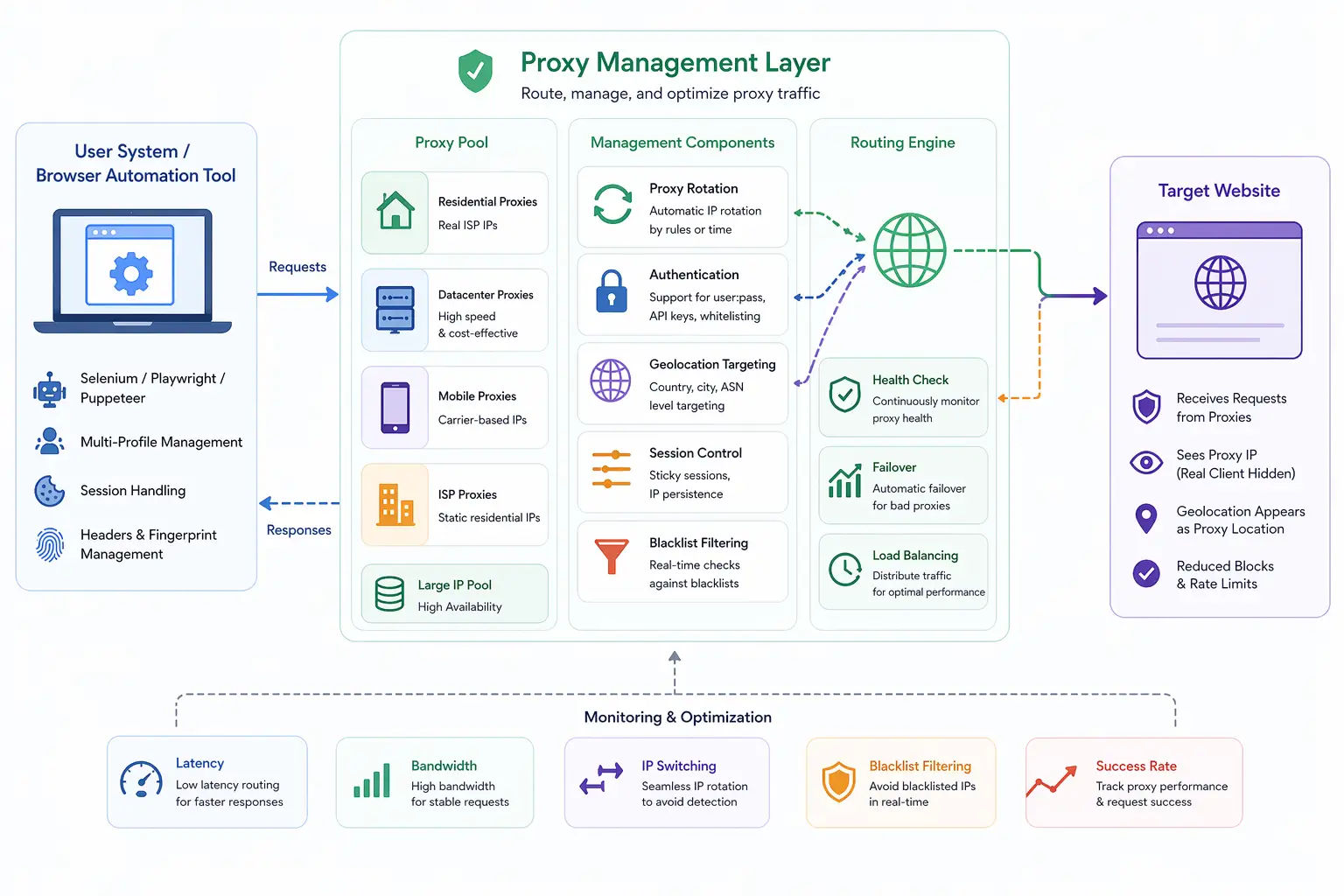
Proxy rotation is the process of changing the IP address used for requests over time. Instead of sending all traffic through a single proxy, different IPs are used across sessions or requests.
The goal is to reduce the risk of detection by preventing large volumes of activity from being associated with a single IP. This helps distribute traffic and avoid rate limits or blocks.
Proxy rotation is commonly used in automation, data collection, and multi-account workflows.
The Core Principle Behind Proxy Rotation
The core principle behind proxy rotation is distribution. Websites monitor activity patterns, and repeated actions from the same IP can raise suspicion.
By rotating IPs, activity is spread across multiple identities, making it harder to detect patterns. However, real users do not frequently change IPs in unnatural ways, so rotation must be done carefully.
Detection systems analyze how and when IPs change, not just the fact that they change.
How Proxy Rotation Works
Proxy rotation works by assigning different IPs to requests or sessions based on a defined strategy.
Per-Request Rotation
In per-request rotation, the IP changes for every request. This creates maximum variability and is often used in large-scale data collection.
While this approach reduces the load on a single IP, it can appear unnatural in scenarios where consistency is expected.
Session-Based Rotation
In session-based rotation, an IP is maintained for a period of time before being changed. This approach aligns more closely with real user behavior.
For example, a session may use the same IP for several minutes or hours before rotating to a new one.
Time-Based Rotation
Time-based rotation changes IPs at fixed intervals. This method is simple but must be configured carefully to avoid predictable patterns.
If rotations occur too frequently or at exact intervals, detection systems may identify the pattern.
When to Rotate IPs
Proxy rotation should be based on the specific requirements of the workflow.
Rotation is useful when handling large volumes of requests that would otherwise overload a single IP. It is also important when managing multiple identities that must remain separate.
However, rotation is not always necessary. For tasks that require consistent sessions, maintaining the same IP may be more effective.
Understanding the context helps determine when rotation is appropriate.
Common Mistakes in Proxy Rotation
One common mistake is rotating IPs too frequently. Real users do not change IPs on every request, so excessive rotation can appear unnatural.
Another mistake is using predictable patterns. Fixed intervals or repetitive sequences can be detected by advanced systems.
There is also the issue of misalignment. If the IP changes but other signals remain constant, sessions can still be linked.
These mistakes highlight the importance of balancing variability with realism.
Proxy Rotation vs Fingerprint Rotation
Proxy rotation and fingerprint rotation are often used together but serve different purposes.
Proxy rotation changes network identity, while fingerprint rotation changes browser and device-level signals. Both must be aligned to create a consistent identity.
For example, changing the IP without updating related attributes such as timezone or location can create inconsistencies.
Proper coordination between these layers is essential.
Limitations of Proxy Rotation
While proxy rotation can reduce detection risk, it has limitations.
One limitation is that it only affects IP addresses. Other signals such as browser fingerprinting and behavior patterns can still link sessions.
Another limitation is transition detection. Systems can analyze how IPs change over time and identify unusual patterns.
There is also the challenge of maintaining consistency. Frequent changes can disrupt sessions and reduce reliability.
These limitations mean that proxy rotation must be part of a broader strategy.
Proxy Rotation vs Static IPs
Proxy rotation is often compared to using static IPs.
Static IPs provide consistency and are useful for long-term sessions, while rotation provides variability and is useful for distributing activity.
Choosing between them depends on whether stability or variability is more important for the use case.
Proxy Rotation vs Real-Device Environments
A key distinction in modern detection systems is the difference between rotating IPs and using real devices.
Proxy rotation changes network identity but does not affect how the browser or device behaves. This can lead to inconsistencies if other signals do not align.
Real-device approaches operate on actual hardware connected to real networks. Tools like Appilot follow this approach by running automation on real Android devices, where network changes and device behavior naturally align.
This reduces the need for artificial rotation.
When Proxy Rotation Makes Sense
Proxy rotation is most useful in scenarios where distributing activity across multiple IPs is necessary.
It is effective for large-scale automation, data collection, and workflows that require multiple identities.
However, it should be used strategically rather than excessively. Understanding when to rotate is more important than rotating frequently.
Frequently Asked Questions
Q: What is proxy rotation?
It is the process of changing IP addresses over time to distribute requests.
Q: When should you rotate proxies?
When handling large volumes of requests or managing multiple identities.
Q: Is rotating IPs always better?
No, excessive rotation can appear unnatural and increase detection risk.
Q: What is session-based rotation?
It is maintaining the same IP for a session before switching to another.
Q: Does proxy rotation prevent fingerprinting?
No, it only changes IP addresses. Fingerprinting must be handled separately.
Q: How do real-device solutions compare?
Real-device solutions like Appilot align network and device behavior naturally, reducing the need for artificial IP rotation.
Key Takeaways
Proxy rotation is the process of changing IP addresses over time to distribute activity and reduce detection risk. It works through strategies such as per-request, session-based, and time-based rotation. While it can improve scalability and reduce IP-based detection, it must be implemented carefully to avoid unnatural patterns. Balancing rotation with consistency and aligning it with other signals is essential for building effective automation environments.