Understanding Rate Limiting as Bot Prevention

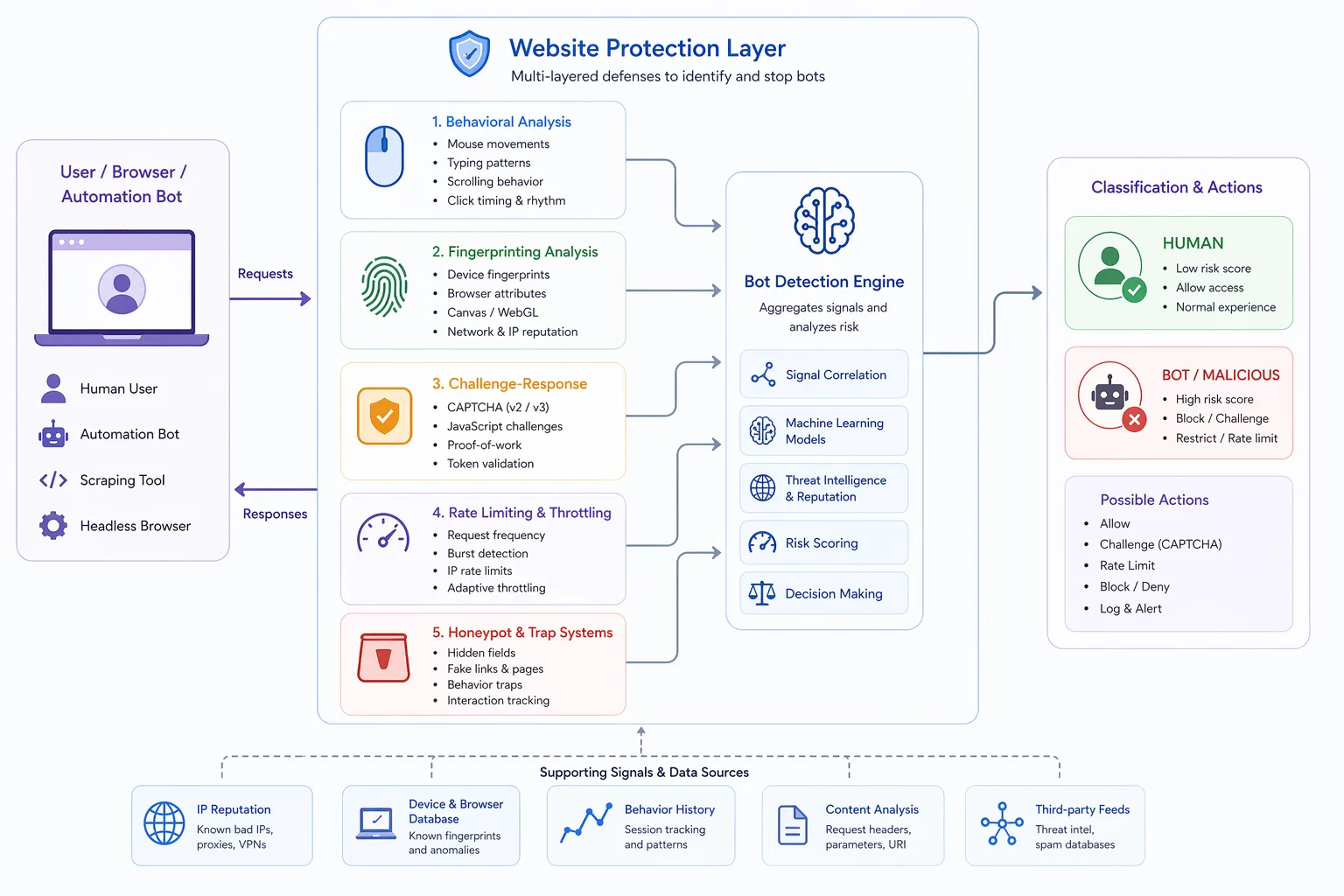
As websites handle increasing amounts of traffic, one of the simplest yet most effective methods for controlling automated activity is rate limiting. While advanced systems rely on fingerprinting and behavioral analysis, rate limiting focuses on how frequently requests are made.
This approach works because bots often generate large volumes of requests in short periods, while human users interact at a much slower and less predictable pace. By controlling request frequency, websites can reduce abuse and protect resources. This guide explains how rate limiting works and how it helps prevent bots.
What Is Rate Limiting?
Rate limiting is a technique used to restrict how many requests a user or system can make within a specific time period. It sets thresholds that define acceptable usage levels.
When a client exceeds these limits, the system can respond by slowing down requests, temporarily blocking access, or returning error responses.
Rate limiting is commonly applied to APIs, login systems, and high-traffic endpoints.
The Core Principle Behind Rate Limiting
The core principle behind rate limiting is controlling frequency. Human users naturally interact with websites at a limited pace, while bots can generate requests rapidly and consistently.
By enforcing limits on request frequency, systems can identify and restrict activity that deviates from normal usage patterns.
This makes rate limiting an effective first layer of defense.
How Rate Limiting Works
Rate limiting systems track incoming requests and compare them against predefined thresholds.
Request Counting
The system counts how many requests are made by a client within a given time window.
This can be based on IP address, user account, session, or API key.
If the number exceeds the allowed limit, action is taken.
Time Windows
Rate limits are defined within time windows, such as requests per second, minute, or hour.
These windows help control bursts of activity and ensure fair usage over time.
Threshold Enforcement
When a client exceeds the allowed threshold, the system enforces limits.
This may include delaying responses, returning error codes, or temporarily blocking access.
Adaptive Rate Limiting
Some systems use adaptive rate limiting, where thresholds change based on context.
For example, stricter limits may be applied to suspicious activity, while trusted users receive higher allowances.
Why Rate Limiting Matters
Rate limiting is important because it protects systems from overload and abuse.
It prevents bots from overwhelming servers with excessive requests and ensures that resources remain available for legitimate users.
It is also simple to implement and works well as a first line of defense.
While not sufficient on its own, it is an essential component of modern bot prevention strategies.
Common Rate Limiting Strategies
Websites use different strategies to implement rate limiting.
Fixed window limits restrict requests within a set time frame.
Sliding window limits provide more flexibility by tracking requests over a moving time period.
Token bucket and leaky bucket algorithms allow bursts of traffic while maintaining overall limits.
These strategies help balance usability and protection.
Rate Limiting vs Behavioral Analysis
Rate limiting focuses on request frequency, while behavioral analysis evaluates how users interact with a website.
Rate limiting is simpler and easier to implement, but it may not detect sophisticated bots that mimic human pacing.
Behavioral analysis provides deeper insights but requires more complex systems.
Combining both methods improves effectiveness.
Limitations of Rate Limiting
Despite its usefulness, rate limiting has limitations.
Bots can distribute requests across multiple IP addresses to avoid limits.
Legitimate users may be affected if limits are too strict, leading to false positives.
Rate limiting also does not analyze behavior or environment, making it less effective against advanced automation.
These limitations require additional detection layers.
Rate Limiting vs IP-Based Blocking
Rate limiting differs from simple IP blocking in its flexibility.
Instead of blocking traffic entirely, it allows controlled access within defined limits.
This reduces the risk of blocking legitimate users while still preventing abuse.
It provides a more balanced approach to traffic management.
Rate Limiting vs Real-Device Environments
A key distinction in modern detection is the difference between simulated environments and real-device environments.
Rate limiting primarily focuses on request frequency rather than environment characteristics.
However, automated systems often generate requests at unnatural rates, making them more likely to trigger limits.
Real-device approaches operate within natural interaction speeds. Tools like Appilot follow this approach by running automation on real Android devices, where request patterns and timing align more closely with human behavior.
This reduces the likelihood of triggering strict limits.
When Rate Limiting Is Most Effective
Rate limiting is most effective in scenarios where request frequency is a strong indicator of abuse.
This includes API endpoints, login attempts, and data scraping activities.
In these contexts, controlling request volume provides immediate protection.
Understanding this helps in applying rate limits effectively.
Frequently Asked Questions
Q: What is rate limiting?
It is the process of restricting the number of requests within a time period.
Q: Why is rate limiting effective against bots?
Because bots often generate requests at high and consistent rates.
Q: What happens when limits are exceeded?
Requests may be delayed, blocked, or rejected.
Q: Can bots bypass rate limiting?
They can try by distributing requests across multiple sources.
Q: Is rate limiting enough on its own?
No, it should be combined with other detection methods.
Q: How do real-device solutions compare?
Real-device solutions like Appilot naturally operate within human-like request patterns, reducing the risk of triggering limits.
Key Takeaways
Rate limiting is a fundamental bot prevention technique that controls how frequently requests can be made within a given time period. By restricting excessive activity, it helps prevent abuse and protects system resources. While simple and effective, it has limitations and works best when combined with other detection methods such as behavioral analysis and fingerprinting. Understanding rate limiting is essential for building balanced and secure systems.