Realistic Typing Speed Simulation Explained
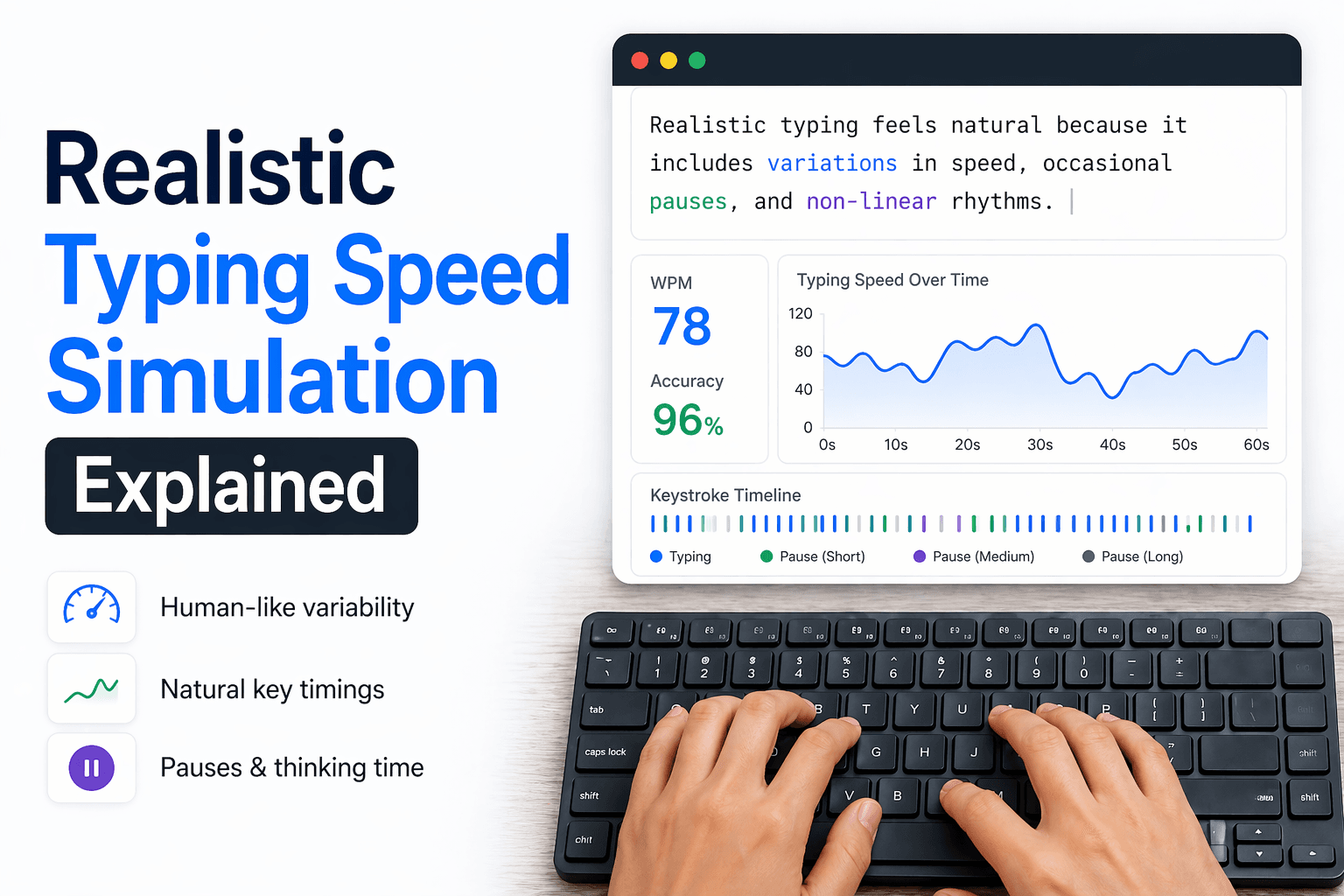
As bot detection systems become increasingly behavior-focused, typing patterns have emerged as a key signal for identifying automation. Unlike static browser properties, typing behavior reflects real-time human interaction, making it much harder to replicate accurately. Detection systems analyze not only how fast text is entered, but also how it is entered.
Understanding realistic typing speed simulation is important because it highlights how automation attempts to mimic human input at a granular level. This guide explains how typing behavior is analyzed and how simulation works.
What Is Typing Speed Simulation?
Typing speed simulation refers to the process of replicating how humans type text, where instead of instantly filling input fields, automation introduces delays and variations between keystrokes to mimic natural typing behavior. This includes controlling the timing, rhythm, and sequence of key presses so that the input appears more human-like. The goal is to produce interaction patterns that align with real user behavior.
The Core Difference Between Human and Bot Typing
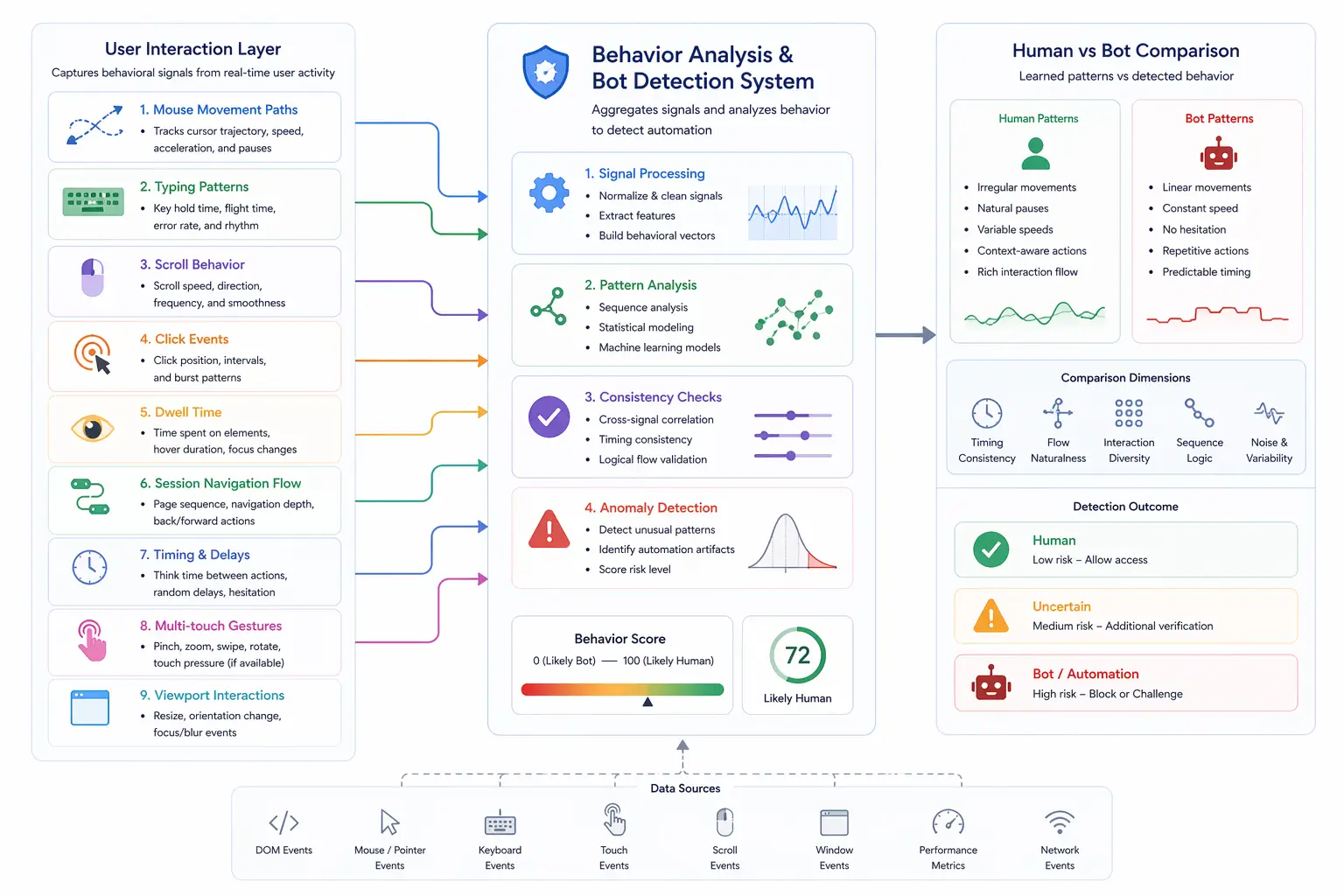
The core difference between human and bot typing lies in variability and rhythm, where human typing is irregular, with varying delays between keystrokes, occasional pauses, and changes in speed depending on familiarity with the text. Bots, on the other hand, often type at constant speeds or insert text instantly, creating patterns that are easy to detect. Even when randomness is introduced, the lack of natural variation can still reveal automation.
How Typing Behavior Is Tracked
Typing behavior is tracked using JavaScript event listeners that capture keydown, keypress, and keyup events along with timestamps, where these events allow systems to measure the time between keystrokes and analyze typing patterns. By analyzing these intervals, detection systems can identify patterns such as speed consistency, pauses, and typing bursts.
Key Characteristics of Human Typing
Human typing has several distinctive characteristics, where it includes variable delays between keystrokes, occasional pauses when thinking or correcting input, and differences in speed depending on context. Users may type faster in familiar words and slower in complex or unfamiliar ones, and mistakes followed by corrections are common. These traits create a dynamic and unpredictable typing pattern.
Common Bot Typing Patterns
Bot typing patterns often differ significantly from human behavior, where text may appear instantly or be entered with perfectly consistent delays between characters. There may be no pauses, no errors, and no variation in speed, resulting in a uniform pattern that stands out. Even when delays are added, they may follow simple distributions that lack the complexity of real typing behavior.
Why Typing Simulation Matters in Bot Detection
Typing simulation matters because detection systems use typing patterns as a behavioral signal to identify automation, where unrealistic typing behavior can trigger detection even if other signals appear valid. By simulating human-like typing, automation attempts to reduce these detectable differences and blend in with normal user activity.
Typing Simulation vs Other Behavioral Signals
Typing behavior is often analyzed alongside other behavioral signals such as mouse movement and scrolling patterns, where each signal provides additional context about user interaction. While typing focuses on input behavior, mouse movement captures navigation patterns, and scrolling reflects content consumption. Combining these signals creates a more comprehensive behavioral profile.
Limitations of Typing Speed Simulation
Despite its usefulness, typing speed simulation has limitations because it is difficult to replicate the full complexity of human typing, where factors such as cognitive processing, context awareness, and micro-delays are challenging to model accurately. Detection systems can identify patterns that appear artificial even when variability is introduced, and maintaining consistency across sessions adds further complexity.
Typing Simulation vs Advanced Detection Systems
Advanced detection systems analyze typing patterns in detail, including timing distributions, error rates, and contextual behavior, where they look for deeper inconsistencies beyond simple delays. While basic simulation can bypass simple checks, more sophisticated systems can still detect anomalies. This creates an ongoing cycle of improvement between automation and detection.
Typing Simulation vs Real-Device Environments
A key distinction in modern detection is the difference between simulated typing and natural input, where simulated typing attempts to recreate human patterns through algorithms, but real typing is influenced by actual user interaction and physical input devices. Real-device environments operate on actual hardware where keystroke timing, system response, and interaction patterns naturally align, and tools like Appilot follow this approach by running automation on real Android devices, ensuring that typing behavior reflects real-world conditions. This reduces the likelihood of detection.
When Typing Simulation Is Most Critical
Typing simulation is most critical in scenarios where input behavior is closely monitored, such as login forms, registration processes, and high-security applications, where detection systems analyze how users enter information. In these contexts, realistic typing patterns are essential for avoiding detection.
Frequently Asked Questions
Q: What is typing speed simulation?
It is replicating human-like typing behavior in automation.
Q: Why is typing behavior important?
Because it reveals real-time user interaction patterns.
Q: How do bots differ from humans in typing?
Bots often type too fast or too consistently.
Q: Can typing be simulated accurately?
It is difficult to fully replicate human variability.
Q: Is typing analysis used alone?
No, it is combined with other behavioral signals.
Q: How do real-device solutions compare?
Real-device solutions like Appilot produce natural typing patterns, reducing detection risk.
Key Takeaways
Realistic typing speed simulation focuses on replicating human typing behavior by introducing variability in timing, rhythm, and interaction patterns. It helps reduce detection by aligning automated input with human behavior, but it has limitations due to the complexity of real typing. Understanding how typing patterns work is essential for navigating modern bot detection systems.