What Is Session Depth? Measuring Authentic User Behavior
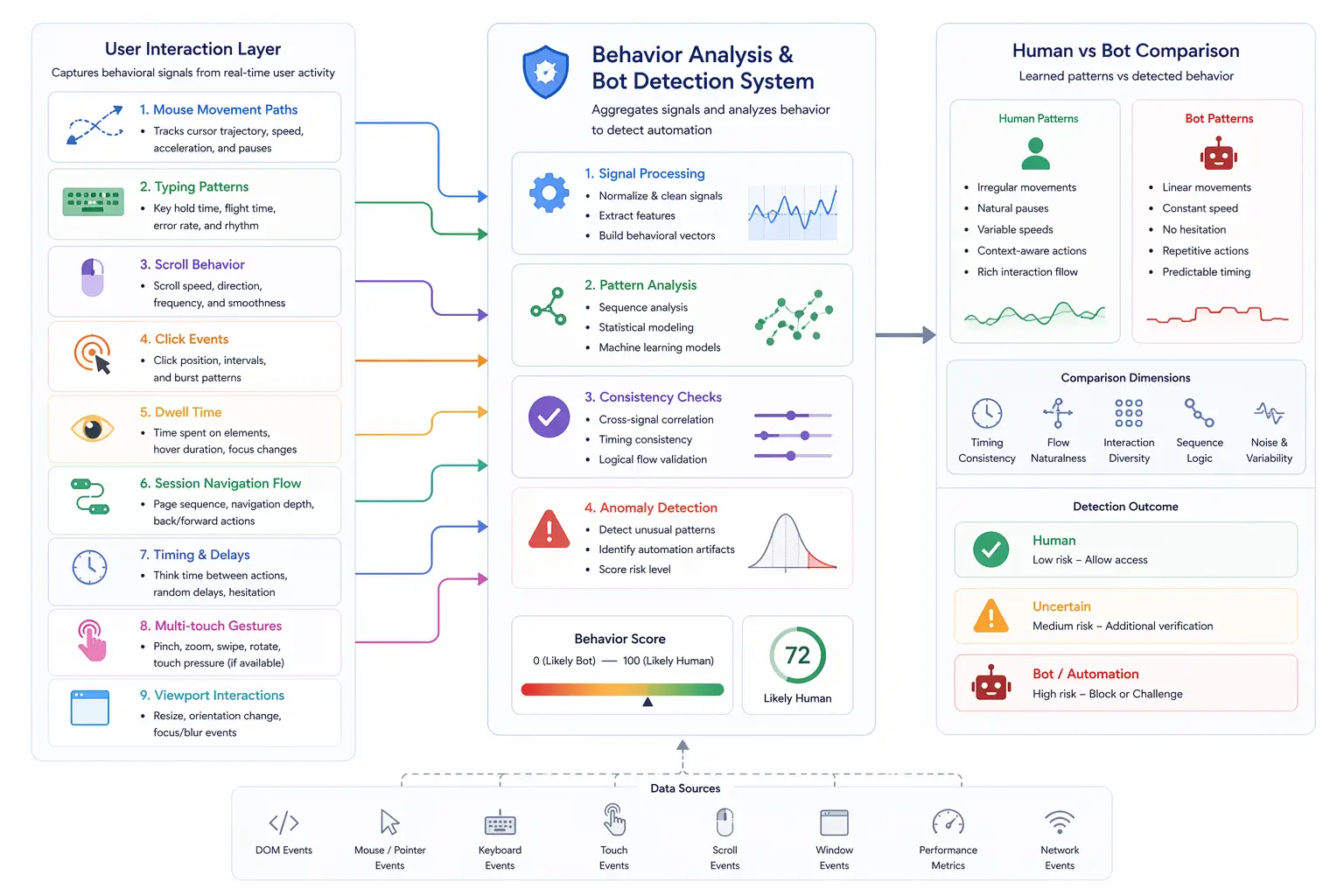
As bot detection systems shift toward behavioral analysis, they increasingly focus on how users move through a website rather than just what they do on a single page. One of the most important metrics in this context is session depth, which reflects how extensively a user interacts with a site during a session. This metric provides insight into user intent, engagement, and authenticity.
Understanding session depth is important because it captures the broader journey of a user, not just isolated actions. This guide explains how session depth works and how it is used in detection systems.
What Is Session Depth?
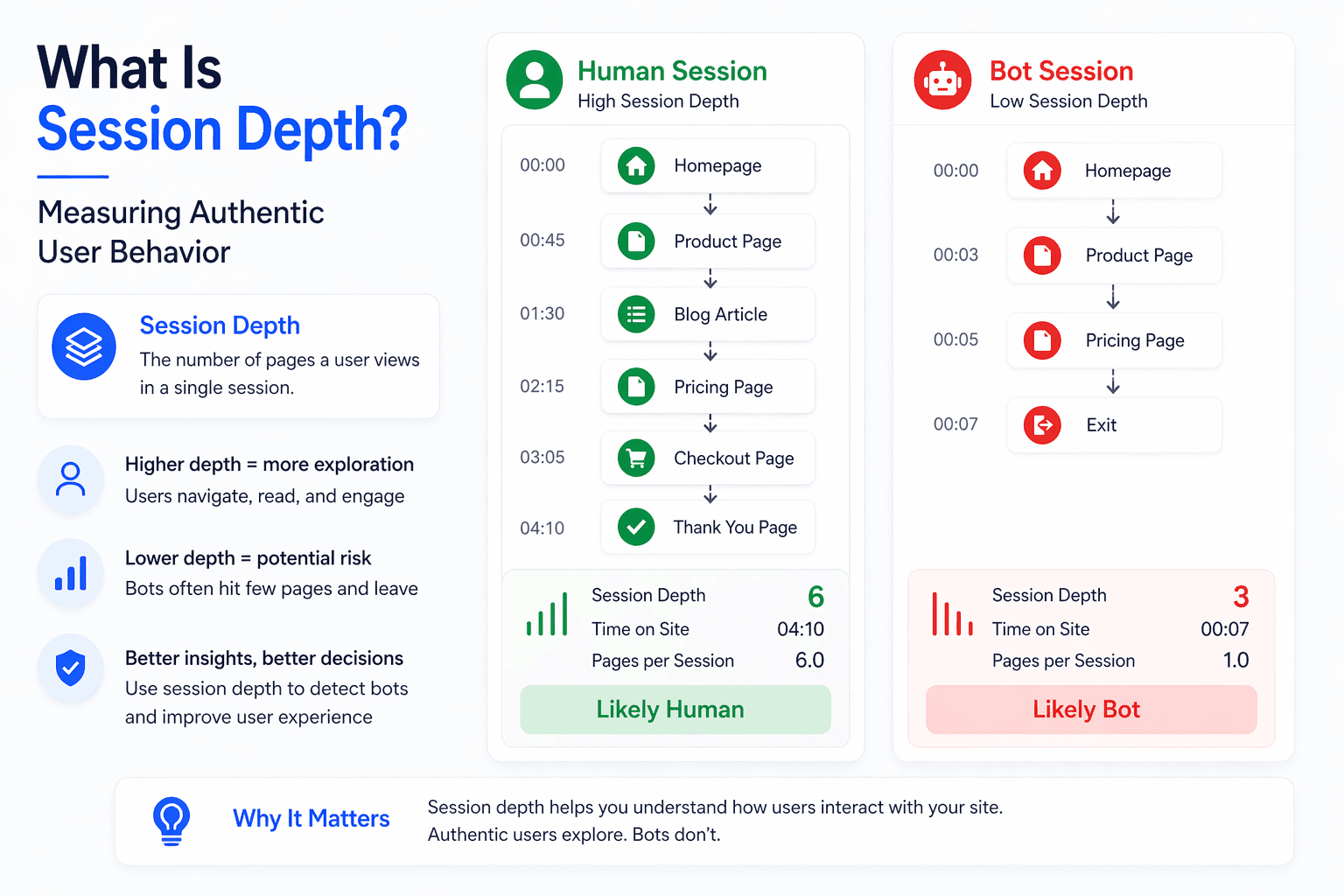
Session depth refers to the number of pages or interactions a user completes within a single browsing session, where it measures how far a user navigates through a website before leaving. Instead of focusing on a single page, session depth looks at the entire path a user takes, including clicks, page transitions, and interactions. This metric helps determine whether a user is genuinely exploring the site or performing limited, automated actions.
The Core Idea Behind Session Depth
The core idea behind session depth is that real users tend to explore content in a meaningful way, where they navigate between pages, follow links based on interest, and interact with multiple sections of a site. Automated systems, on the other hand, often exhibit shallow or unnatural navigation patterns, such as visiting only one page or following repetitive paths. Detection systems use these differences to identify authentic behavior.
How Session Depth Is Measured
Session depth is measured by tracking user navigation and interactions across multiple pages, where JavaScript and server-side logs record page views, click paths, and transitions within a session. By analyzing these sequences, systems can calculate how deep a session goes and how the user moves through the site.
Key Characteristics of Human Session Depth
Human session depth typically includes varied navigation paths, multiple page visits, and interaction with different types of content, where users may explore related pages, return to previous sections, and spend time understanding information. Their navigation is influenced by curiosity, intent, and content relevance, resulting in patterns that are dynamic and context-driven. This creates a natural flow of interaction across the site.
Common Bot Session Patterns
Bot session patterns often differ significantly from human behavior, where sessions may be extremely shallow, involving only one or two pages, or follow rigid and repetitive navigation paths. Bots may jump directly to specific endpoints without exploring intermediate content, or they may perform actions in a predictable sequence. Even when bots simulate navigation, the patterns may lack the variability and context of real user journeys.
Why Session Depth Analysis Is Effective
Session depth analysis is effective because it captures the overall structure of user behavior, where real users naturally engage with multiple parts of a site, while bots often exhibit limited or artificial interaction patterns. By analyzing how deep and varied a session is, detection systems can identify anomalies that indicate automation. This makes session depth a valuable signal in bot detection.
Session Depth vs Other Engagement Metrics
Session depth complements other engagement metrics such as dwell time, scroll behavior, and click patterns, where each metric provides a different perspective on user interaction. While dwell time measures how long users stay, session depth measures how far they go. Combining these metrics creates a more complete understanding of user behavior.
Limitations of Session Depth Analysis
Despite its usefulness, session depth analysis has limitations because user behavior can vary depending on context, where some legitimate users may only visit a single page or complete a quick task without deep navigation. These variations can lead to false positives if not properly accounted for. Additionally, advanced automation tools may attempt to simulate deeper sessions, reducing the effectiveness of simple checks.
Session Depth vs Simulated Navigation
A key distinction in modern detection is the difference between genuine exploration and simulated navigation, where simulated behavior attempts to replicate user journeys but often lacks the natural variability and context of real interaction. Real users navigate based on interest and intent, while simulated paths may appear mechanical or overly structured. Detection systems focus on these differences.
Session Depth vs Real-Device Environments
Another important distinction is between simulated environments and real-device environments, where simulated setups generate navigation patterns through scripts, while real-device environments reflect actual user interaction or realistic system behavior. Tools like Appilot follow this approach by running automation on real Android devices, where navigation patterns, timing, and interaction depth align with real-world usage. This reduces inconsistencies that detection systems rely on.
When Session Depth Is Most Critical
Session depth is most critical in scenarios where understanding user engagement and intent is essential, such as e-commerce platforms, content websites, and high-security applications, where distinguishing between genuine users and automated traffic is important. In these contexts, analyzing navigation depth provides valuable insight into user authenticity.
Frequently Asked Questions
Q: What is session depth?
It is the number of pages or interactions in a user session.
Q: Why is it important?
It helps measure user engagement and authenticity.
Q: How do bots differ from humans?
Bots often have shallow or repetitive sessions.
Q: Can bots simulate session depth?
Yes, but it is difficult to mimic natural navigation patterns.
Q: Is session depth used alone?
No, it is combined with other behavioral metrics.
Q: How do real-device solutions compare?
Real-device solutions like Appilot produce natural navigation patterns, reducing detection risk.
Key Takeaways
Session depth measures how extensively a user interacts with a website by tracking the number of pages and interactions within a session. Human behavior typically involves varied and meaningful navigation, while bot behavior tends to be shallow or repetitive. By analyzing session depth alongside other engagement metrics, detection systems can more effectively identify automation. Understanding session depth is essential for evaluating authentic user behavior.