Why Your Social Media Bot Keeps Getting Banned (And How to Fix It)
If your social media bot keeps getting banned, it is easy to blame the platform.
However, in most cases, bans do not happen because you are using automation.
They happen because the automation behaves in ways that real humans do not, and social media platforms are extremely good at detecting patterns over time.
The frustrating part is that two bots can appear to do the same thing, yet one survives for weeks while the other gets banned within days.
The difference is rarely the tool itself.
It is usually the behaviour and architecture behind it.
For this guide, I’ll occasionally refer to Appilot because the same principles around real-device execution, account separation, and event-driven automation apply strongly to social media automation. While Appilot focuses on Android automation, many of the same ideas that reduce bans in mobile workflows also help reduce bans in browser-based systems.
This guide explains why bots get banned, how detection actually works, and what structural fixes make automation more resilient.
Understanding Why Social Media Bots Get Banned
Platforms do not ban bots because of one mistake.
They use layered risk-scoring systems that combine behavioural patterns, device identity, timing consistency, long-term trends, and correlation across accounts.
An account is rarely banned because of one action.
It is usually banned because multiple small signals accumulate over time.
The key insight is that platforms do not really ask, “Is this a bot?”
Instead, they ask whether the behaviour looks like a normal user over a long period of time.
Detection is statistical rather than moral.
The Core Principle Behind Bot Detection
Detection is pattern-based.
When behaviour becomes too consistent, too correlated, too synchronised, or too perfect, risk scores rise.
When the risk crosses a threshold, enforcement happens.
Sometimes that enforcement is immediate, but sometimes it appears weeks later.
That is why a bot working today does not automatically mean it is safe long term.
Delayed enforcement is extremely common.
The Real Reasons Social Media Bots Get Banned
Let’s break down the root causes that matter most.
Reason 1 – Behaviour That’s Too Perfect
Humans are naturally inconsistent.
Bots often are not.
Common red flags include identical delays between actions, repeated navigation patterns, fixed session durations, and exact timing intervals.
Even slow automation can get flagged if it behaves too consistently.
Variability matters more than speed.
Reason 2 – Shared or Unstable Device Identity
Mobile platforms track device-level signals such as operating-system behaviour, app environment, interaction context, and session continuity.
Problems usually appear when multiple accounts share identical fingerprints, when accounts jump between environments too frequently, or when sessions reset in unnatural ways.
Correlation often happens at the device level rather than the IP level.
Reason 3 – Synchronised Multi-Account Activity
This is one of the biggest risks at scale.
When multiple accounts log in simultaneously, perform the same actions, follow the same navigation sequence, and log out together, that correlation becomes very easy to detect.
Humans do not move in perfect unison.
Bots often do.
Reason 4 – Over-Focusing on IP Rotation
IP rotation can help, but it is often misunderstood.
On mobile platforms, IP address is rarely the main signal.
Excessive IP switching can actually increase suspicion if it does not match the surrounding device behaviour.
IP changes need to align with environment consistency.
Reason 5 – UI and App State Mistakes
Bots that click before screens load, ignore pop-ups, interact with disabled elements, or skip animations create impossible interaction sequences.
These subtle inconsistencies are highly visible to platforms.
How Platforms Actually Detect Bots
Detection happens in multiple layers.
Layer 1 – Behavioural Analysis
Platforms analyse action frequency, timing variance, navigation flow, and scroll behaviour.
They compare this data against millions of real users.
The deviation does not need to be extreme.
It only needs to be consistent.
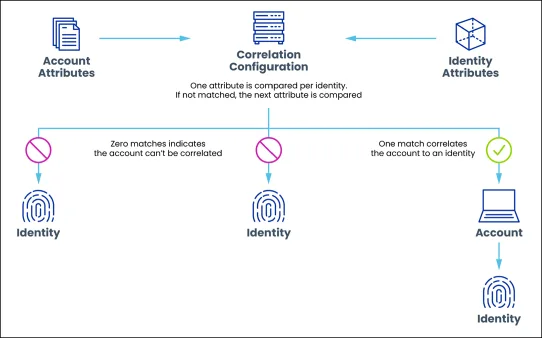
Layer 2 – Identity Correlation
Accounts are grouped together based on similarity.
Shared signals often include device characteristics, interaction style, session structure, and environment fingerprints.
Even when there are no explicit identifiers, similarity still creates linkage.
Layer 3 – Long-Term Trend Analysis
Enforcement is often delayed.
Platforms watch for gradual ramp-ups, sudden behavioural changes, speed increases, and environment shifts.
This is why many users wonder why a bot worked for weeks and then suddenly got banned.
Risk accumulation eventually crosses the threshold.
Common Myths That Cause More Bans
Myth #1: “Just Slow It Down”
The reality is that slow but identical behaviour is still detectable.
Variability is much more important than slowness.
Myth #2: “Rotate Proxies Aggressively”
The reality is that excessive IP switching without matching device behaviour often increases suspicion.
Myth #3: “Emulators Are Fine If Configured Well”
The reality is that emulators expose subtle environmental signals that real devices do not, especially over long periods of time.
Surface-level tweaks rarely fix structural weaknesses.
How to Fix a Bot That Keeps Getting Banned
Fixing bans requires architectural alignment rather than shortcuts.
Fix 1 – Make Behaviour State-Aware
Automation should react to the actual user-interface state rather than following rigid timers.
This means waiting for element confirmation, handling slow loads, responding to errors, and adapting dynamically.
State-aware systems make fewer impossible moves.
Fix 2 – Break Synchronisation
You should never run identical workflows simultaneously.
Introduce staggered starts, variable session lengths, randomised navigation paths, and account-specific behaviour.
Independence dramatically reduces correlation risk.
Fix 3 – Stabilise Device Identity
Each account should stay mapped to a stable environment.
Frequent resets, reinstallations, and environment changes often do more harm than good.
Consistency builds trust signals.
Fix 4 – Think in Weeks, Not Days
Daily limits matter less than long-term patterns.
Gradual ramp-up combined with stable behaviour is much safer than aggressive short bursts.
Sustainability beats speed.
Fix 5 – Improve Architecture, Not Just Scripts
Many bans happen because automation logic is tightly coupled, centralised, synchronised, and blind to state.
This is one reason why platforms like Appilot are useful.
Appilot runs on real Android devices, uses event-driven interaction, maintains stronger separation between accounts, and avoids synchronised behaviour patterns.
The tool itself is not magic.
The architecture is what reduces risk.
When Bots Are the Wrong Tool
Automation always carries some level of risk.
Scenario 1 – Brand-New Accounts
New accounts have little trust history.
Scenario 2 – Highly Sensitive Actions
Mass messaging and aggressive follow or unfollow activity carry much higher scrutiny.
Scenario 3 – No Monitoring
If you cannot observe behaviour and adjust over time, automation becomes blind.
Sometimes the smartest decision is restraint.
Key Takeaways
Social media bots do not get banned because they are bots.
They get banned because their behaviour becomes statistically abnormal.
Detection is pattern-based, consistency is more dangerous than speed, correlation across accounts triggers risk, and architecture determines long-term survival.
If a bot keeps getting banned, the solution is usually not another proxy or another delay.
The real fix is rethinking how the system behaves over time.
If you are running Android-based social media automation, Appilot can help by using real devices, stable sessions, event-driven workflows, and stronger separation between accounts.
Frequently Asked Questions
Q: Why does my bot get banned even when it is slow?
Because platforms detect consistency and correlation rather than speed alone.
Q: Are mobile bots safer than browser bots?
They can be, especially when they run on real devices, but behaviour still matters.
Q: How long before a bot gets flagged?
It can take days or weeks because enforcement is often delayed.
Q: Can any bot be completely ban-proof?
No. Automation always carries some risk. The goal is to reduce that risk.
Q: When should I stop automating?
You should stop when the account value becomes higher than your tolerance for losing it.