SOCKS5 vs HTTP Proxies: Which to Use for Automation
When choosing a proxy for browser automation, one of the most common decisions is whether to use SOCKS5 or HTTP proxies. While both serve the same purpose of routing traffic through an intermediary server, they operate differently at the protocol level and offer distinct advantages.
Understanding the difference between SOCKS5 and HTTP proxies is important because it affects performance, compatibility, and how traffic is handled. This guide explains how each type works and when to use them in automation workflows.
What Are HTTP Proxies?
HTTP proxies are designed specifically to handle web traffic. They operate at the application layer and understand HTTP and HTTPS protocols.
When a browser sends a request through an HTTP proxy, the proxy can inspect, modify, or filter the request before forwarding it to the target website. This makes HTTP proxies useful for tasks that involve web-based interactions.
Because they are protocol-aware, HTTP proxies can provide additional features such as caching, header modification, and request filtering.
How HTTP Proxies Work
HTTP proxies sit between the browser and the website, intercepting HTTP requests. They forward these requests to the destination server and return the response to the browser.
For HTTPS traffic, they typically use tunneling methods such as CONNECT to establish a secure connection.
This makes them well-suited for standard web automation tasks.
What Are SOCKS5 Proxies?
SOCKS5 proxies operate at a lower level compared to HTTP proxies. They do not interpret or modify traffic but simply route it between the client and the destination.
They support multiple types of traffic, not just HTTP, including TCP and UDP. This makes them more flexible and versatile.
Because SOCKS5 proxies do not inspect traffic, they introduce less overhead and can offer better performance in certain scenarios.
How SOCKS5 Proxies Work
SOCKS5 proxies act as a relay between the client and the destination server. They establish a connection and pass data back and forth without analyzing the content.
This makes them protocol-agnostic, meaning they can handle various types of network traffic beyond just web requests.
Key Differences Between SOCKS5 and HTTP Proxies
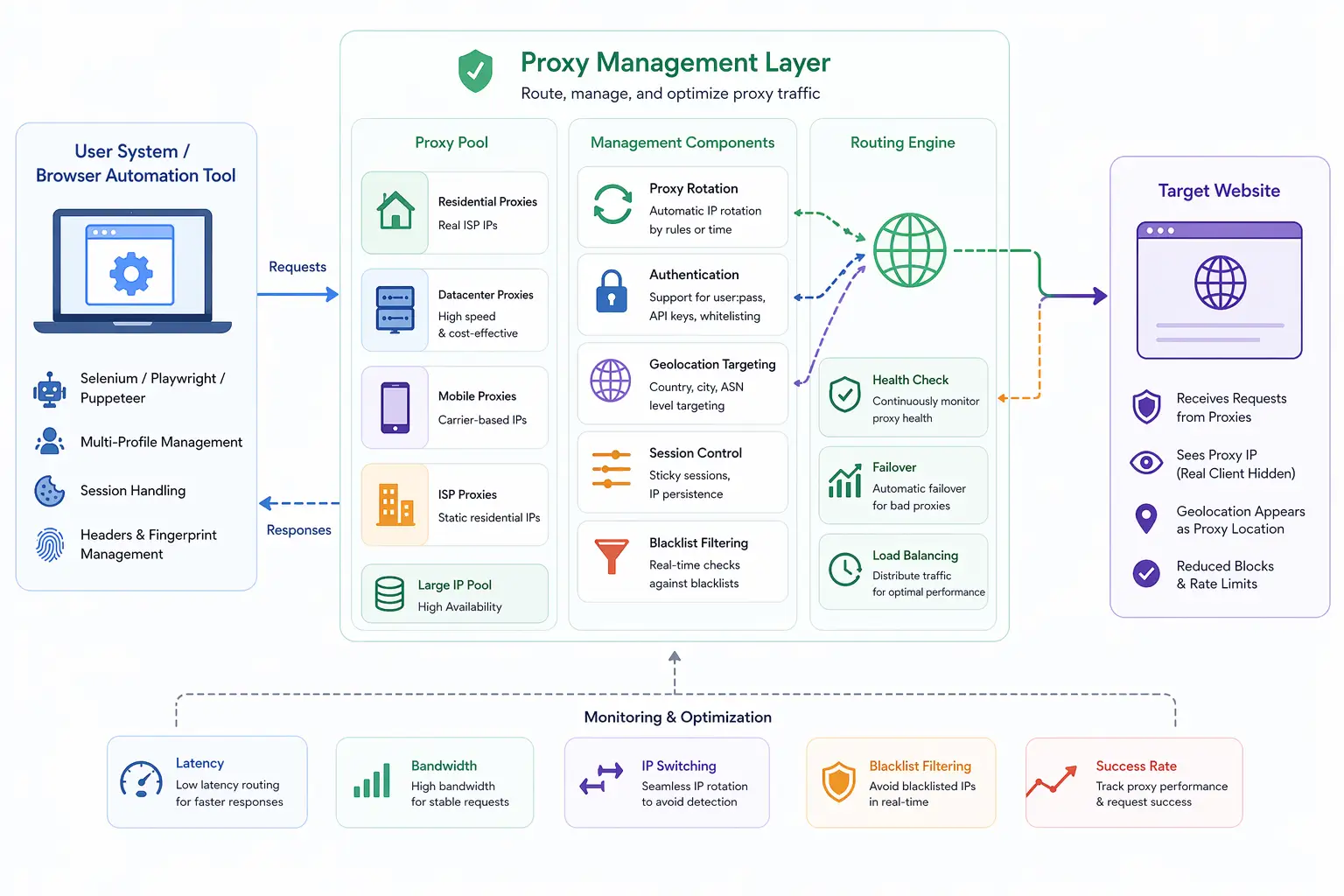
The main difference between SOCKS5 and HTTP proxies lies in how they handle traffic. HTTP proxies understand web protocols and can modify requests, while SOCKS5 proxies simply relay data without interpretation.
This difference affects flexibility. SOCKS5 proxies can handle a wider range of traffic types, while HTTP proxies are limited to web-based protocols.
Performance is another key factor. Because SOCKS5 proxies do not process traffic, they can be faster in certain scenarios. HTTP proxies, with their additional processing, may introduce slight overhead.
Security behavior also differs. HTTP proxies can filter and modify headers, while SOCKS5 proxies maintain the original data flow.
SOCKS5 vs HTTP in Browser Automation
In browser automation, the choice between SOCKS5 and HTTP proxies depends on the specific requirements of the workflow.
HTTP proxies are commonly used because they integrate easily with browsers and support web-specific features. They are suitable for most standard automation tasks.
SOCKS5 proxies are preferred when flexibility is needed, especially for handling non-HTTP traffic or when lower-level control is required.
Both can be effective, but their suitability depends on the context.
Performance Considerations
Performance differences between SOCKS5 and HTTP proxies are often subtle but important.
SOCKS5 proxies may offer lower latency because they do not inspect traffic. This can be beneficial in high-performance scenarios.
HTTP proxies, while slightly slower due to processing, provide additional capabilities that may be useful in certain workflows.
The impact on performance depends on how the proxies are used and configured.
Detection Perspective
From a detection standpoint, the type of proxy protocol is less important than the quality and origin of the IP address.
Whether using SOCKS5 or HTTP, detection systems primarily focus on IP reputation, consistency, and behavior patterns.
However, HTTP proxies that modify headers incorrectly can introduce inconsistencies, which may increase detection risk.
SOCKS5 proxies, by preserving original traffic, may reduce such inconsistencies.
Limitations of Both Proxy Types
Both SOCKS5 and HTTP proxies have limitations.
Neither type affects browser fingerprinting signals, which means they cannot prevent tracking based on device or browser characteristics.
They also do not inherently provide anonymity if other signals are inconsistent.
This highlights the need to use proxies as part of a broader strategy.
SOCKS5 vs HTTP vs Real-Device Environments
A key distinction in modern automation is the difference between proxy protocols and full environment realism.
Both SOCKS5 and HTTP proxies operate at the network level. They do not change how the browser or device behaves.
Real-device approaches operate on actual hardware, where network, browser, and system signals naturally align. Tools like Appilot follow this approach by running automation on real Android devices, ensuring consistency across all layers rather than relying solely on proxy configuration.
This reduces the importance of protocol choice alone.
When to Use HTTP Proxies
HTTP proxies are best used in standard web automation scenarios where compatibility and ease of use are priorities.
They are suitable for browser-based tasks, data collection, and workflows that rely on HTTP/HTTPS traffic.
Their ability to handle web-specific features makes them a practical choice for many setups.
When to Use SOCKS5 Proxies
SOCKS5 proxies are ideal for scenarios that require flexibility and support for multiple types of traffic.
They are useful in advanced automation setups, applications beyond web browsing, and situations where preserving original traffic is important.
Their protocol-agnostic nature makes them versatile.
Frequently Asked Questions
Q: What is the main difference between SOCKS5 and HTTP proxies?
HTTP proxies handle web traffic specifically, while SOCKS5 proxies relay all types of traffic.
Q: Which proxy is faster?
SOCKS5 proxies can be faster because they do not inspect traffic.
Q: Which proxy is better for browser automation?
HTTP proxies are commonly used, but SOCKS5 proxies are better for flexible or advanced use cases.
Q: Do SOCKS5 proxies support HTTPS?
Yes, they support all traffic types, including HTTPS.
Q: Do these proxies prevent fingerprinting?
No, they only manage network traffic. Fingerprinting must be handled separately.
Q: How do real-device solutions compare?
Real-device solutions like Appilot align network, browser, and hardware signals naturally, reducing reliance on proxy protocol choices.
Key Takeaways
SOCKS5 and HTTP proxies differ in how they handle traffic, with HTTP proxies focusing on web protocols and SOCKS5 proxies providing protocol-agnostic routing. HTTP proxies are easier to integrate with browsers and offer additional features, while SOCKS5 proxies provide greater flexibility and potentially better performance. The choice between them depends on the specific requirements of the automation workflow, but both must be combined with consistent browser and device-level signals to be effective.