Team Members Keep Making the Same Mistakes? Here’s Why (And How to Fix It)
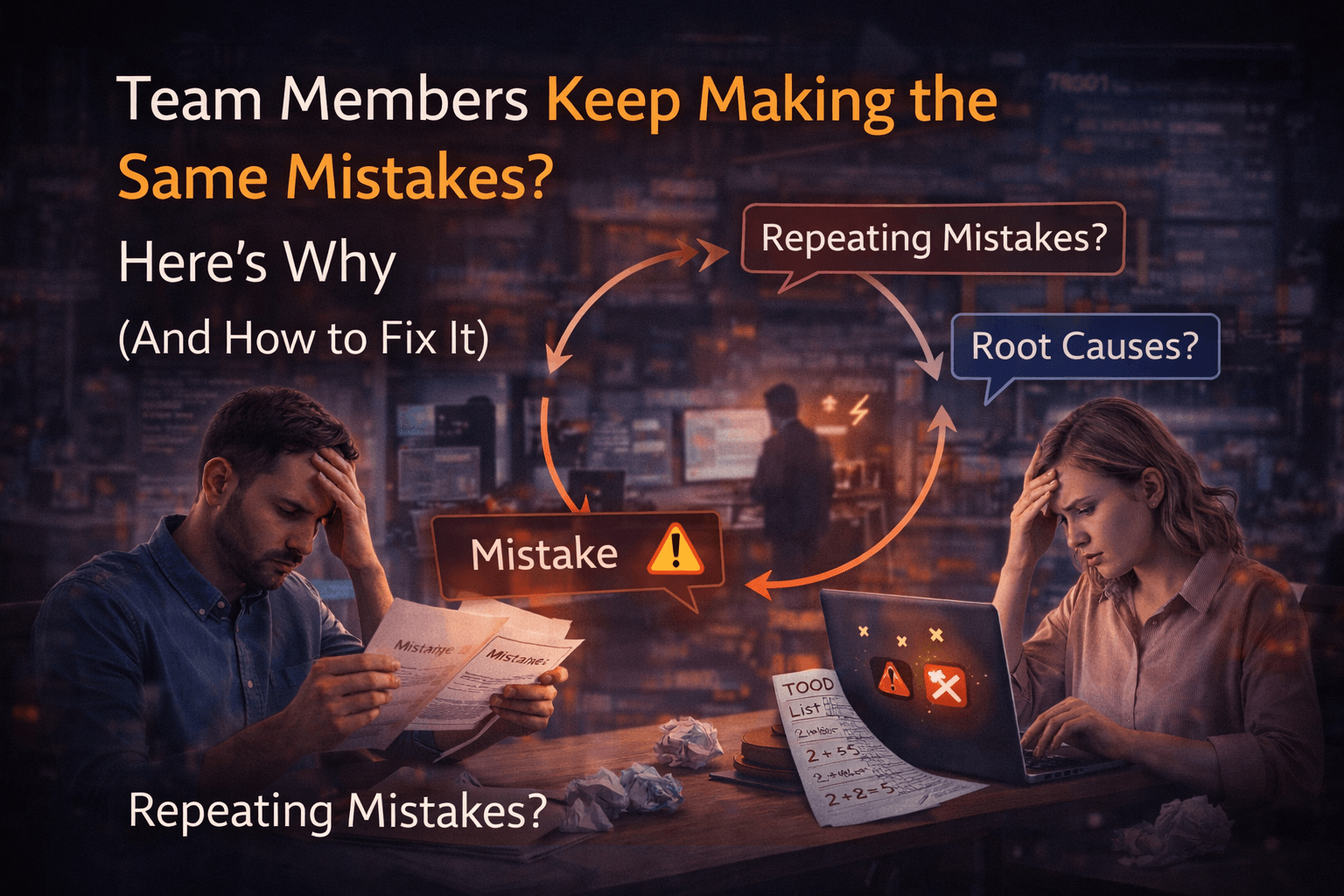
You’ve Already Explained It… So Why Is It Still Happening?
You explained the process clearly, maybe more than once, maybe even documented it, walked through it live, and answered follow-up questions, yet somehow the same mistake shows up again, sometimes from a different team member, sometimes in a slightly different form, but always in a way that makes you stop and think that this should not be happening anymore.
At first, it feels like a communication gap, so you explain it again. Then it happens again, and you start adding more detail. Eventually, you begin double-checking everything because you cannot rely on consistency, and before you realize it, your role shifts from leading the team to constantly correcting it.
This is where frustration builds, not because the work is difficult, but because progress does not stick. You are solving the same problem repeatedly instead of moving forward, and it starts to feel like something deeper is broken.
This is not a people problem. It is a system problem, and once you understand where it comes from, it becomes fixable in a way that removes the repetition entirely.
Why Team Members Keep Making the Same Mistakes
The natural assumption is that repeated mistakes happen because people are not paying attention or not following instructions properly, but in most cases, the real issue is that the workflow itself is not designed to produce consistent results across different individuals.
The first cause is instruction fragility. When processes are explained through conversations or loosely written steps, they rely heavily on memory and interpretation, which means each person reconstructs the workflow slightly differently over time.
The second cause is environment inconsistency. Even when the process is the same, different tools, devices, or setups create variations in execution, which leads to different outcomes even when the intention is correct.
The third cause is hidden complexity. Many workflows contain steps that depend on timing, sequence, or platform behavior that are not obvious to someone following instructions, which means mistakes can occur even when the process appears to be followed correctly.
The fourth cause is delayed feedback. When mistakes are not caught immediately, they become part of the workflow, and the person continues repeating them without realizing something is wrong.
The Hidden Cost of Repeated Mistakes
Repeated mistakes do not just slow things down, they create a compounding effect that impacts every part of your operation.
Each mistake forces you to stop what you are doing, investigate the issue, and correct it, which breaks your focus and reduces your ability to work on higher-level tasks. Over time, this becomes a significant drain on productivity.
There is also a quality issue. When mistakes are frequent, you start adding checks and safeguards, which slows down execution and creates friction in workflows that should be smooth.
From a scaling perspective, this becomes a ceiling. You cannot confidently delegate tasks because you expect them to come back with issues, which means your growth is limited by how much you can personally oversee.
The emotional impact is just as important. Constantly fixing the same issues creates frustration, reduces trust, and makes the work feel heavier than it should.
The Real Problem: Your System Relies on Memory, Not Structure
The core issue is not that your team cannot perform the work, but that the system requires them to remember and interpret too much.
In small teams, this works because communication is fast and context is shared. People can ask questions quickly and adjust in real time.
As the team grows, this breaks down. Information gets lost, instructions are interpreted differently, and the same task starts producing different results depending on who performs it.
What you need is not better explanations, but a system where execution does not depend on memory or interpretation at all.
The Complete Solution: Turn Processes Into Systems
The only way to eliminate repeated mistakes permanently is to remove variability from execution and replace it with structured workflows that produce consistent results.
The first step is stabilization, where you identify the tasks that are causing repeated issues and reduce variability in how they are performed.
The second step is clarity, but not in the form of more explanations. Instead, you define workflows in a way that leaves no room for interpretation, where each step is explicit and consistent.
The third step is systemization. Instead of relying on individuals to execute tasks manually, you introduce systems that standardize execution, ensuring that the same input produces the same output every time.
This is where most teams struggle, because building these systems manually requires managing environments, workflows, and execution layers.
This is also where tools like Appilot become relevant.
Instead of having each team member perform tasks in their own way, Appilot allows you to run structured workflows on real devices through a centralized system, which removes variability and ensures consistency across execution.
You could build a similar setup using tools like Appium, but that requires managing infrastructure and maintenance. Appilot simplifies this by handling the execution layer, allowing your team to focus on output instead of constantly fixing mistakes.
The key shift is moving from people-dependent execution to system-dependent execution.
Why Systems Eliminate Repeated Mistakes
Once execution is structured, mistakes stop repeating because the system removes the conditions that allow them to happen.
Tasks are performed the same way every time, which eliminates variation and reduces the need for corrections.
Coordination becomes simpler because team members no longer need to interpret instructions, they follow a defined system.
Feedback becomes immediate because deviations are easier to detect when there is a consistent baseline.
Most importantly, the system scales. Adding new team members does not introduce new variations, because they are integrated into an existing structure.
How to Prevent This From Coming Back
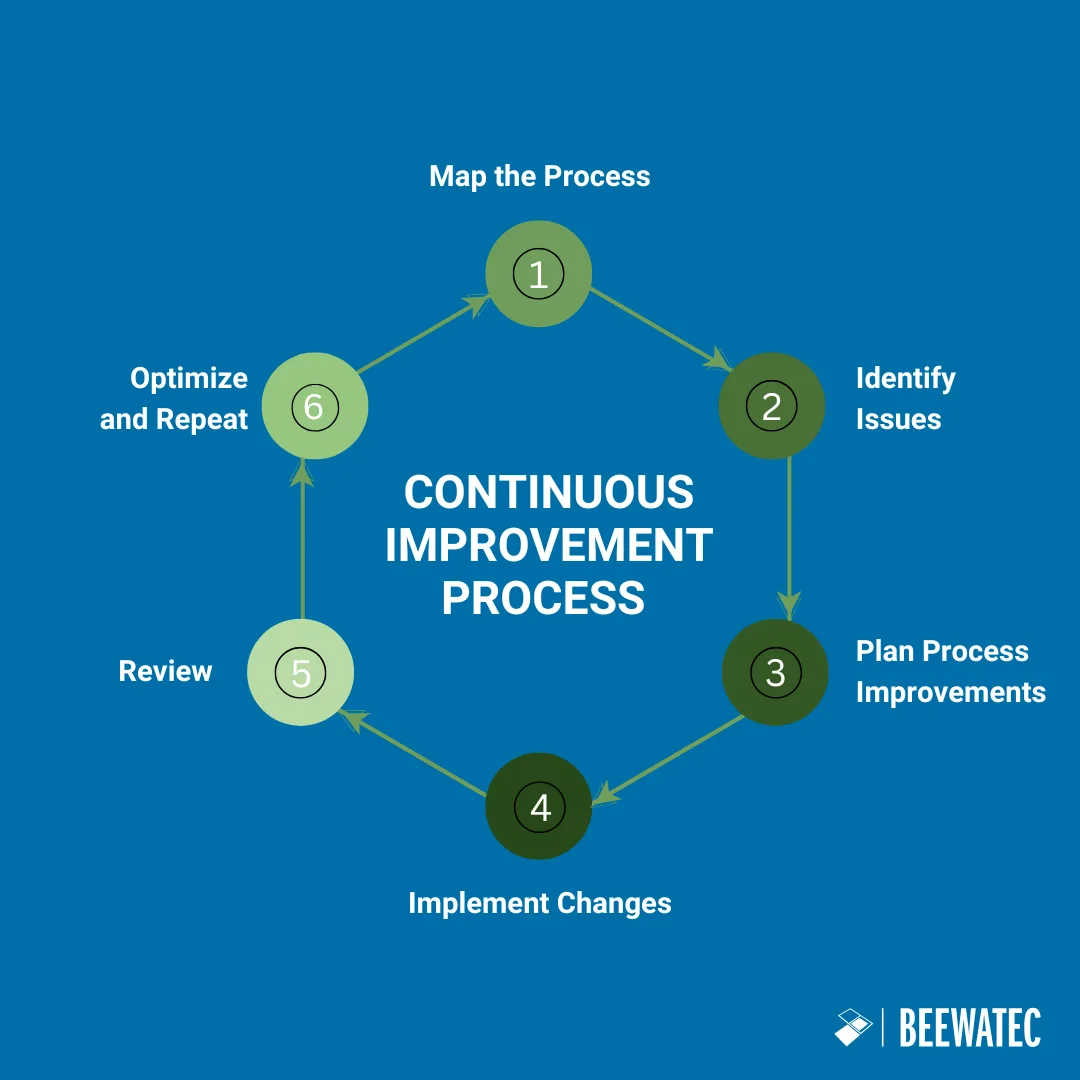
Fixing the system once is not enough. You need to maintain it as your team grows.
You ensure consistency by standardizing tools and environments, so that everyone operates under the same conditions.
You monitor execution patterns to detect issues early, before they become repeated problems.
You continuously refine workflows based on what you observe, making the system stronger over time.
Common Mistakes That Make This Worse
One of the most common mistakes is adding more instructions instead of improving the system, which increases complexity without reducing variability.
Another mistake is blaming individuals instead of examining the structure, which may temporarily increase attention but does not solve the underlying issue.
Some teams attempt to document processes but stop short of systemizing them, which means execution still depends on interpretation.
The most critical mistake is assuming that repeated mistakes are normal, when they are actually a clear signal that your system needs to change.
Conclusion: This Is a System Problem, Not a People Problem
If your team keeps making the same mistakes, it is not because they are incapable, it is because your current workflow relies too heavily on human consistency instead of structural consistency.
Once you shift from explaining tasks to structuring them, the repetition disappears because the system ensures consistency by design.
You can continue trying to manage this manually, but as your team grows, the complexity will grow with it.
At some point, you either build systems to handle it or use tools that already do.
That is where platforms like Appilot fit in, not as a shortcut, but as a way to create consistent, repeatable execution so your team can scale without being held back by the same mistakes.