TikTok Automation for Educators: Growing a Following That Buys
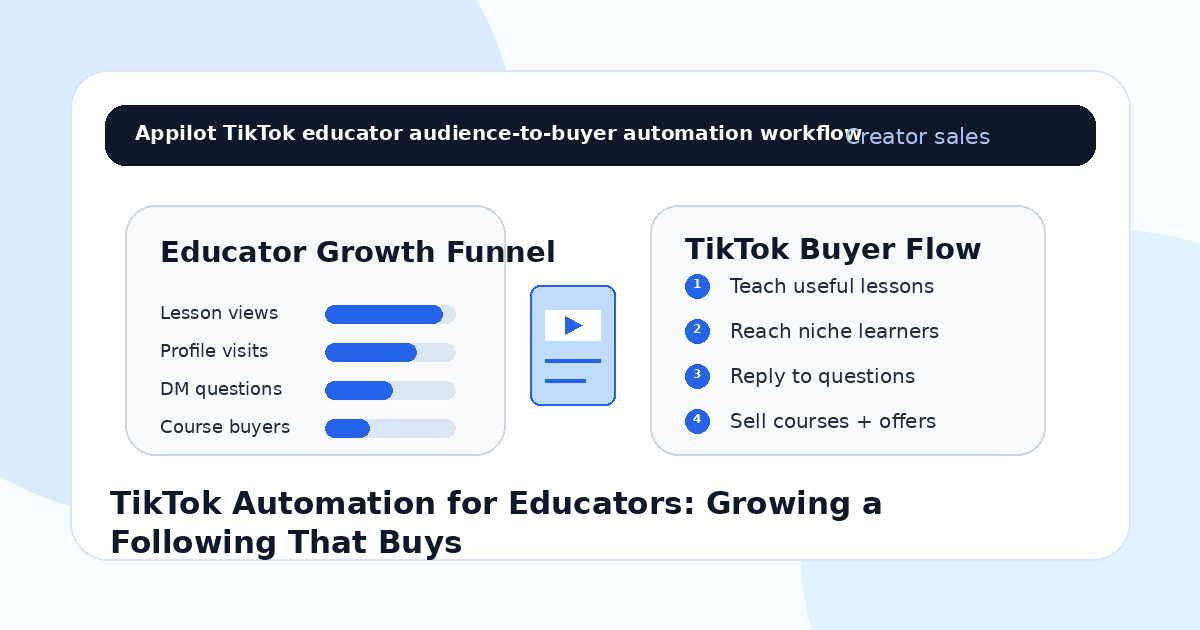
You post a short lesson on TikTok. It teaches something useful, explains a common mistake, and gives viewers a quick win.
A few people save it. Someone comments “part two?” Another asks where they can learn the full system. A few people visit your profile, but most leave before joining your email list, buying your course, or booking a coaching call.
That is the challenge for educators on TikTok. A large following is useful, but followers alone do not build a business. You need the right learners, useful content, fast replies, trust, and a clear path from free education to paid offers.
TikTok automation helps educators manage that path more consistently. It can support audience discovery, comment replies, DM flows, resource delivery, and lead routing without forcing creators to spend all day inside the app.
The goal is not to fake engagement or spam course links. The goal is to help interested learners take the next step while their attention is fresh.
Why TikTok Works for Educators
TikTok is no longer only a platform for entertainment. It is also a discovery engine for learning.
People use it to learn languages, business, fitness, design, coding, career skills, finance, marketing, productivity, parenting, music, real estate, and many other skills. A simple 30-second lesson can introduce a creator to thousands of potential students.
But educational content does not automatically create buyers.
A viewer may save five videos before trusting you. They may ask questions in comments before joining your free training. They may need to understand your teaching style before buying a course. They may follow you for weeks before becoming ready.
Most educators lose potential buyers because they treat TikTok like a content-only platform. They post lessons, but they do not create a system for turning learner interest into conversations, leads, and enrollments.
Automation helps create that system.
What TikTok Automation Means for Educators
TikTok automation means using software to support repeated actions around audience discovery, comment replies, DM routing, lead magnet delivery, profile engagement, and campaign follow-up.
For educators, the safest use is not mass commenting or cold messaging. It is controlled, real-device automation that supports warm interest. Real-device automation runs through the actual TikTok mobile app on Android devices or emulators, which behaves more like normal app usage than basic desktop scripts or risky shortcuts.
A platform like Appilot is built for this type of workflow. It lets educators run TikTok automation on Android devices or emulators from a browser dashboard, without coding, ADB setup, or keeping a laptop connected all day. That means educators can keep learner engagement moving while focusing on teaching, content, curriculum, and student support.
Automation should support your teaching voice. It should not replace it.
Step 1: Teach Around a Clear Learner Problem
Before automating anything, define the learner problem you want to own.
A broad education niche like “business tips” or “English lessons” is too vague. A stronger niche is “English for job interviews,” “Excel for finance professionals,” “coding for beginners,” “content strategy for coaches,” or “math help for high school students.”
This matters because automation magnifies your targeting.
If your audience is broad, you may get views from people who never buy. If your audience is specific, automation helps more relevant learners discover your content and offers.
Your TikTok content should repeatedly answer the problems your paid offer solves. If you sell a course on public speaking, your free content should teach confidence, structure, delivery, and speaking mistakes. If you sell a design course, your content should teach layout, tools, portfolio building, and client-ready skills.
A following that buys starts with a following that knows exactly why it follows you.
Step 2: Use Short Lessons as Trust Builders
Educational TikTok content works best when each video gives one clear lesson.
Do not try to teach the whole course in one clip. Teach one mistake, one framework, one example, one exercise, one shortcut, or one mini transformation.
Short lessons build trust because they prove you can explain things clearly.
A creator teaching coding might show one common bug and how to fix it. A language teacher might teach one phrase learners misuse. A business coach might explain one pricing mistake. A finance educator might explain one budgeting rule.
Automation can support the engagement around these lessons by helping you respond to repeated questions, route people to resources, and identify which topics create the most learner intent.
The lesson creates attention. The response system turns attention into a lead.
Step 3: Reply Fast to Learner Questions
Educational content creates questions quickly.
Viewers ask for examples, beginner versions, templates, tools, next steps, resources, and deeper explanations. These questions are buying signals because they show the viewer wants more help.
If someone comments “where do I start?” or “do you have a full course?” or “can you send the template?” that is a warm lead.
TikTok automation can help identify repeated questions and support faster replies. A comment saying “template” can trigger a resource. A comment saying “course” can route the learner to details. A question about level can receive a simple explanation.
This is where Appilot’s TikTok automation can fit naturally. Educators can run TikTok workflows through Android devices or emulators while managing learner replies and campaign actions from one dashboard.
The faster you answer useful questions, the easier it becomes to convert attention into trust.
Step 4: Use Lead Magnets to Capture Serious Learners
A lead magnet gives viewers a low-pressure next step.
For educators, this could be a checklist, workbook, free lesson, template, quiz, mini-course, webinar, study plan, PDF guide, practice worksheet, or beginner roadmap.
The lead magnet should connect directly to your paid offer. If you sell a course on email marketing, offer an email sequence template. If you sell language coaching, offer a speaking practice guide. If you sell a design course, offer a portfolio checklist.
Automation can deliver the resource when someone comments a keyword or sends a DM.
For example, you can say, “Comment ROADMAP and I’ll send the beginner study plan.” Once the learner comments, the automation sends the resource and asks one simple question about their goal.
This keeps the path helpful instead of pushy.
Step 5: Qualify Before Selling the Offer
Not every follower is ready to buy.
Some people are beginners. Some are advanced. Some only want free tips. Some need a different offer. Some are ready for your course, coaching, membership, or paid workshop.
A simple qualification flow can help.
Ask what they are trying to learn, what level they are at, what result they want, and whether they prefer self-paced learning, live help, or a structured program.
For example, an educator might ask, “Are you just starting, or are you already trying to use this skill for work or clients?” That answer tells you how to guide the learner.
Automation can collect the first response, but serious questions should get human attention.
Education-based sales work best when the learner feels guided, not pushed.
Step 6: Make Your Profile Ready to Convert
TikTok automation can bring more people to your profile, but your profile must make the next step obvious.
Your bio should explain who you help and what they can learn from you. Your pinned videos should show your best lesson, your offer, student proof, and how to start. Your link should point to a clear resource, course page, webinar, email list, or booking page.
If someone likes your lesson and visits your profile, they should know exactly what to do next.
A confusing profile loses buyers. A clear profile turns curiosity into action.
Automation drives attention. Your profile converts that attention.
Step 7: Build a Content-to-Offer Funnel
A TikTok following that buys needs a simple funnel.
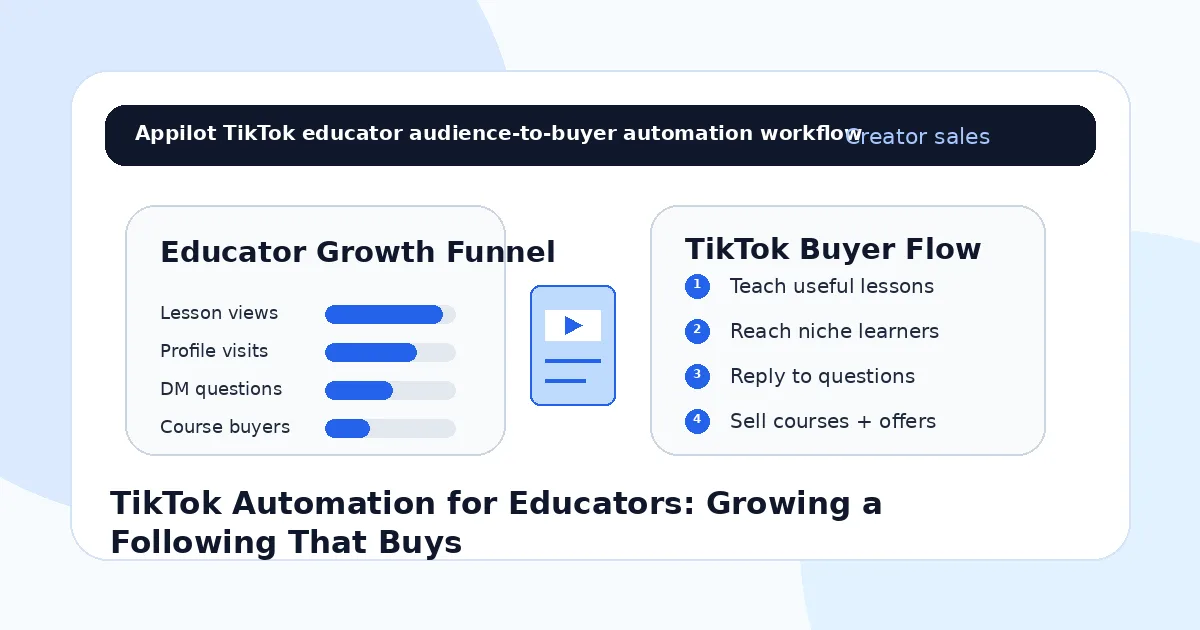
A short lesson creates awareness. A comment or DM starts interaction. A lead magnet captures intent. A follow-up explains the next step. A course page, webinar, or call turns the learner into a buyer.
This does not need to be complicated.
For low-ticket courses, the path can go from keyword reply to free resource to checkout page. For higher-ticket coaching or cohort programs, the path may go from free lesson to application or discovery call. For memberships, the path may go from ongoing tips to community invitation.
Appilot-style workflows help educators keep these early steps organized without coding or manual device management. The creator still owns the offer, teaching style, and student relationship.
Step 8: Track Buyers, Not Just Followers
A large following is not the same as a profitable audience.
Educators should track video saves, profile visits, resource requests, DM questions, email signups, webinar registrations, course page clicks, enrollments, student quality, and revenue from TikTok leads.
You should also track which lessons create buyers. A beginner tip may create many views, while a case study may create more enrollments. A controversial take may attract attention, while a practical tutorial may attract serious learners.
Automation gives you more signals. Tracking tells you which signals lead to sales.
Common Mistakes Educators Should Avoid
Chasing Views Instead of Learners
Viral views are not always valuable. Focus on attracting people who actually want the skill, result, or transformation you sell.
Sending Course Links Too Early
Do not push the paid offer before the learner understands the value. Start with education, context, and fit.
Using Weak Lead Magnets
A random freebie may attract the wrong audience. Use resources that naturally connect to your paid course or coaching offer.
Ignoring Comments
Questions in comments reveal learner intent. Fast, useful replies can turn casual viewers into warm leads.
Automating Without a Clear Offer
If your course, coaching, or paid product is confusing, automation will not fix the funnel. Clarify the offer first.
Is TikTok Automation Right for Educators?
TikTok automation is a good fit if you already create educational content, get learner questions, use lead magnets, or sell courses, coaching, memberships, templates, or workshops. It works especially well for online educators, coaches, tutors, course creators, skill teachers, creators, and niche experts.
It may not be right if you have no clear topic, no paid offer, or no content strategy. Automation can support growth, but it cannot replace useful lessons or strong teaching.
Think of TikTok automation as a learner-engagement assistant. It helps organize attention, but your teaching value creates the sale.
Final Thoughts
TikTok automation can help educators grow a following that buys when it supports a clear teaching funnel.
The strongest workflow starts with specific learner problems, short useful lessons, fast replies, lead magnets, simple qualification, a clear profile, and a direct path to enrollment or purchase. Automation handles the repetitive actions while the educator keeps the teaching human.
If you want to run TikTok automation without coding, ADB setup, or manual device management, Appilot gives educators a browser-based way to control Android devices, emulators, and ready-to-use bots for TikTok and other platforms. You can check it out at appilot.app.
FAQs
Q1: Can TikTok automation help educators sell courses?
Yes, it can help educators answer questions, deliver lead magnets, qualify learners, and guide warm followers toward paid offers.
Q2: What should educators automate first on TikTok?
Start with comment replies, keyword triggers, lead magnet delivery, profile engagement, and routing interested learners to resources.
Q3: Is TikTok automation safe for educators?
It is safer when activity is gradual, relevant, and based on real learner interest. Spammy comments or cold DMs can create account risk.
Q4: Can Appilot help educators automate TikTok?
Yes, Appilot can run TikTok workflows on Android devices or emulators from a browser dashboard without coding or ADB setup.
Q5: Does automation replace teaching quality?
No. Automation supports visibility and replies, but clear lessons, strong offers, and real student outcomes drive sales.