TikTok Automation for Music Artists: How to Get More Streams
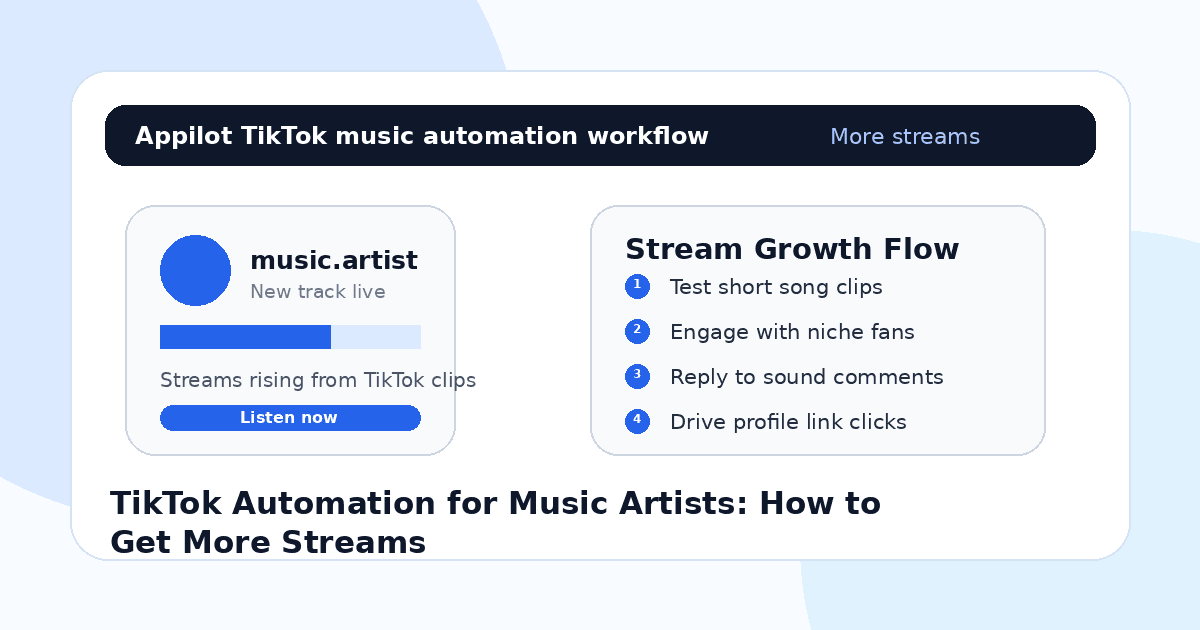
You post a 15-second clip of your new song, add the streaming link to your bio, and hope TikTok does what TikTok sometimes does.
For the first hour, you keep checking the views. A few people like it. One person comments “song name?” Another says the hook sounds good. Then the video slows down, and the stream spike you were hoping for never really happens.
That is the problem for a lot of independent music artists. TikTok can break songs, but it does not magically break every song just because the clip is uploaded.
You still need the right audience, repeated content angles, fast replies, fan engagement, and a clear path from TikTok to Spotify, Apple Music, YouTube, SoundCloud, or wherever your music lives.
TikTok automation helps artists support that process. Not by faking fans. Not by spamming links. But by helping you reach more likely listeners, keep release content active, and turn comments into streaming actions faster.
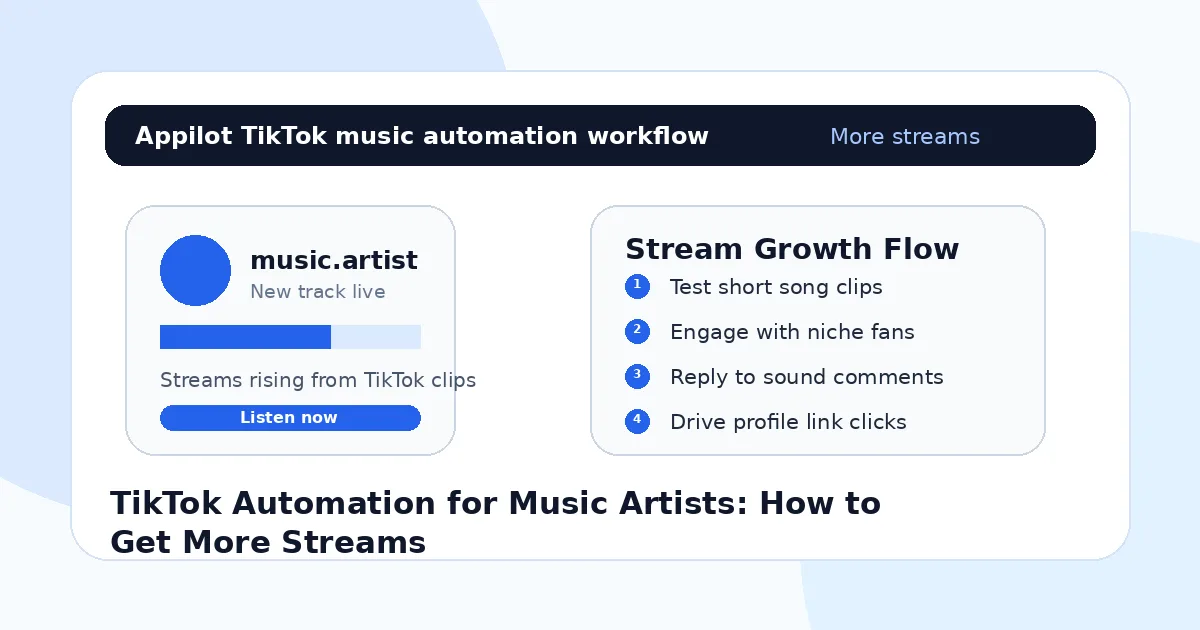
Why Music Artists Struggle to Turn TikTok Views Into Streams
TikTok attention is easy to misunderstand.
A video can get views without creating fans. People might watch because the edit is funny, the visual is interesting, or the hook is catchy for two seconds. That does not always mean they will leave TikTok and stream the full song.
That is why music promotion on TikTok needs more than posting clips.
Artists need to test different parts of the song, different visual ideas, different captions, different storytelling angles, and different audience segments. A chorus might not work, but one emotional lyric might. A studio clip might flop, but a raw car performance might connect. A polished music video snippet might get ignored, while a simple “I wrote this after losing someone” clip gets comments.
Manual TikTok growth also takes time. You need to reply to comments, engage with fans of similar artists, monitor sounds, test captions, answer DMs, and post consistently around releases.
Most artists get this wrong because they treat TikTok as a posting platform. It is really a testing and discovery platform.
What TikTok Automation Means for Music Artists
TikTok automation means using software to handle repetitive actions around music promotion. That can include engaging with fans of similar artists, watching niche content, replying to common comments, tracking reactions, sending song links when people ask, and keeping release activity consistent.
The safer approach is real-device automation, where actions run through the actual TikTok app on Android devices or emulators. This is different from basic desktop bots or fragile API-based shortcuts because the behavior comes from a mobile environment.
A platform like Appilot is built around this kind of setup. It lets music artists and teams run TikTok automation on Android devices or emulators through a browser dashboard, without ADB setup, coding, or keeping a laptop connected all day. For artists, that means the repetitive promotion work becomes easier to manage while the creative side stays human.
Automation should support your music campaign. It should not become your personality.
Step 1: Find the Right Listener Audience
Before automating anything, decide who should hear the song.
Do not target “music fans” broadly. That is too vague. A bedroom pop artist should target different people than a drill rapper, indie folk singer, Afrobeats producer, metal band, or lo-fi instrumental artist.
Start with similar artists, genre pages, playlist accounts, fan communities, music reaction pages, live event pages, and niche hashtags. If your music sounds like a mix of two or three artists, those fanbases are a practical starting point.
TikTok automation can help you engage around those communities more consistently. Instead of manually searching and interacting every day, you can create workflows that help your profile show up near people already interested in your sound.
This is where Appilot can fit naturally into the music promotion workflow. It lets you run TikTok actions through Android devices or emulators from one dashboard, so you can support fan discovery without manually handling every repeated action.
The goal is not to reach everyone. The goal is to reach listeners who are already close to your lane.
Step 2: Test Multiple Song Clips, Not Just One Hook
A song can have more than one TikTok angle.
The obvious hook is not always the part that performs best. Sometimes the lyric before the chorus creates the strongest reaction. Sometimes the beat drop works. Sometimes the bridge hits harder. Sometimes the best clip is not the song itself but the story behind it.
Artists should test multiple short clips from the same track. One video might use a lyric overlay. Another might show the recording process. Another might show a live performance. Another might explain what the song is about. Another might ask listeners to finish the lyric or use the sound in their own video.
Automation helps around the edges by keeping audience engagement active while these clips are being tested. You can monitor comments, track which posts create “song name?” replies, and follow up faster when people show interest.
Do not judge a song from one post. TikTok often needs repeated angles before the right one lands.
Step 3: Reply Fast When People Ask About the Song
A comment like “song name?” is not just engagement. It is a streaming opportunity.
The same goes for “is this out?”, “where can I listen?”, “Spotify?”, “drop this,” or “need the full version.” These comments show actual listener intent.
If you reply hours later, you may lose the moment.
TikTok automation can help detect common comment patterns and route people toward the right next step. If someone asks for the song name, you can reply with the title. If someone asks where to stream, you can point them to the link in bio or send a short DM if appropriate. If someone asks whether it is released, you can answer clearly.
Keep replies short and natural. A listener does not need a long pitch. They need the name, the link path, or the release date.
The artists who win are often the ones who treat comments like real fan conversations instead of random engagement.
Step 4: Use DMs Without Spamming Fans
DM automation can be useful for music promotion, but it needs to be handled carefully.
Sending cold streaming links to random users usually feels desperate. Most people ignore it, and some will see it as spam. But if someone comments “send me the link” or replies to a video asking where to listen, a short DM can be helpful.
That is the difference.
Buyer intent in e-commerce becomes listener intent in music. When someone asks for the song, they are giving you permission to help them find it. Automation can make that faster.
One reason artists use Appilot-style workflows is the setup simplicity. Appilot lets you manage TikTok automation through Android devices or emulators from a web dashboard, without scripts or command-line setup. That makes it easier for artists, managers, and small teams to support release activity without needing technical automation knowledge.
The message still needs to sound like you. Fans connect with artists, not machines.
Step 5: Turn TikTok Attention Into Streaming Traffic
TikTok views only matter if some of that attention turns into deeper fan action.
Your profile should make the next step obvious. Your bio should mention the song, your link should go to a smart landing page or streaming destination, and your pinned videos should support the current release.
If someone enjoys a clip and visits your profile, they should know exactly what to do next.
For music artists, the conversion path might be streaming the song, saving it, following on Spotify, watching the full video on YouTube, joining an email list, joining a fan community, buying merch, or checking tour dates.
Automation can help bring more likely listeners to that path, but the path itself needs to be clean.
If your bio link is confusing, your song title is hard to find, or your pinned content is outdated, you will lose streams even with good TikTok activity.
Step 6: Track the Signals That Actually Matter
Do not only track views.
Track comments that ask about the song, profile visits, link clicks, saves, shares, follows, sound uses, Spotify follower lift, playlist adds, YouTube searches, and repeat engagement from the same people.
A video with 8,000 views and 40 comments asking for the song may be more valuable than a video with 80,000 views and no listener intent.
This is where music promotion becomes more strategic. You are not just asking, “Did this go viral?” You are asking, “Did this create listeners?”
Automation helps you generate and manage more touchpoints, but your campaign decisions should come from the signals. If people keep responding to emotional lyrics, make more lyric-led clips. If they react to live performance, show more performance. If they ask for the beat, maybe producers and creators are your best audience.
Common Mistakes Music Artists Should Avoid
Promoting to the Wrong Audience
If your song is indie R&B, targeting random pop fans may waste time. Similar artist audiences, genre communities, and niche hashtags are usually more useful.
Sending Cold Streaming Links
A random “listen to my song” message rarely works. Send links when someone asks, comments with interest, or engages directly with the release.
Posting Only Once
One TikTok clip is not a campaign. Test different lyrics, hooks, stories, visuals, and captions around the same track.
Ignoring Comments From Real Fans
Automation can help with repeated replies, but genuine fan comments deserve real attention. Those early supporters often matter most.
Expecting Automation to Fix Weak Content
If the clip does not make people feel something, automation will not save it. The song, story, visual, and hook still drive the result.
Is TikTok Automation Right for Music Artists?
TikTok automation is a good fit if you already have music released or ready to release, a clear genre lane, and content clips you can test consistently. It works best when you know which fans, artists, scenes, or communities your sound belongs near.
It may not be right if you have no content plan or only want to spam your link. TikTok rewards creativity, personality, and repeat testing. Automation only supports the process.
Think of it as a fan discovery assistant. It helps you show up more often, but your music makes people stay.
Final Thoughts
TikTok can help music artists get more streams, but only when the campaign is built around more than uploading one clip and hoping.
You need targeted discovery, multiple song angles, fast comment replies, careful DMs, a clean profile link, and consistent tracking. Automation helps by keeping the repetitive promotion work moving while you focus on music, visuals, and real fan relationships.
If you want to run TikTok automation without coding, ADB setup, or manual device management, Appilot gives artists and teams a browser-based way to control Android devices, emulators, and ready-to-use bots for TikTok and other platforms. You can check it out at appilot.app.
FAQs
Q1: Can TikTok automation help music artists get more streams?
Yes, it can help artists reach likely listeners, reply faster, support release campaigns, and guide interested fans toward streaming links.
Q2: What should music artists automate on TikTok?
Start with fan discovery, engagement around similar artists, comment replies, song link requests, and release campaign support.
Q3: Is TikTok automation safe for artists?
It is safer when activity is gradual, relevant, and run through realistic mobile workflows. Spam-style messaging can still hurt account trust.
Q4: Can Appilot help artists promote music on TikTok?
Yes, Appilot can run TikTok automation on Android devices or emulators from a web dashboard without coding or ADB setup.
Q5: Does TikTok automation replace music marketing?
No. It supports discovery and engagement, but strong songs, good clips, real fan interaction, and clear release strategy still matter most.