TikTok Automation for Product Launches: What Works in 2025
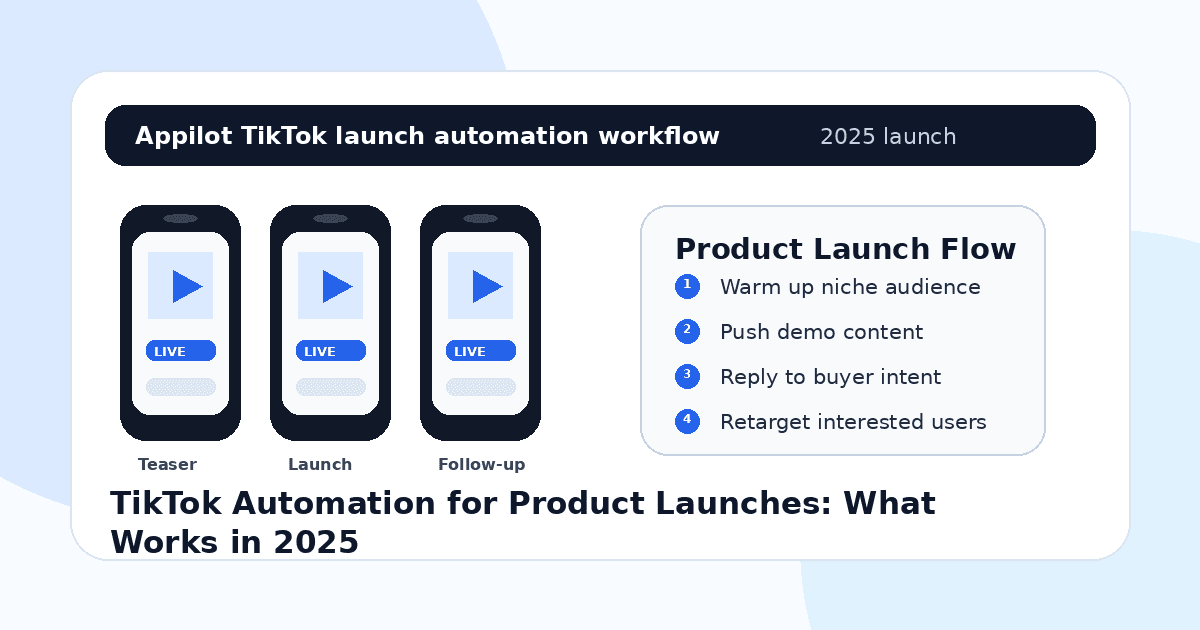
You have a new product ready to launch. The page is live, the offer looks good, and you already have a few videos prepared.
You post the first TikTok, refresh the analytics, and wait for momentum. Maybe the video gets some views. Maybe a few people comment. Maybe someone asks where to buy it.
Then the launch starts slowing down.
That is the hard part about TikTok product launches. The window is short, attention moves fast, and if your brand does not respond quickly, test enough angles, or engage with the right audience, the product can disappear before it gets a real chance.
TikTok automation helps product launches work more like a system. It can support trend research, audience discovery, comment replies, DM flows, account activity, and follow-up during the most important launch window.
The goal is not to replace strong content. The goal is to make sure good content gets enough support to turn attention into product interest.
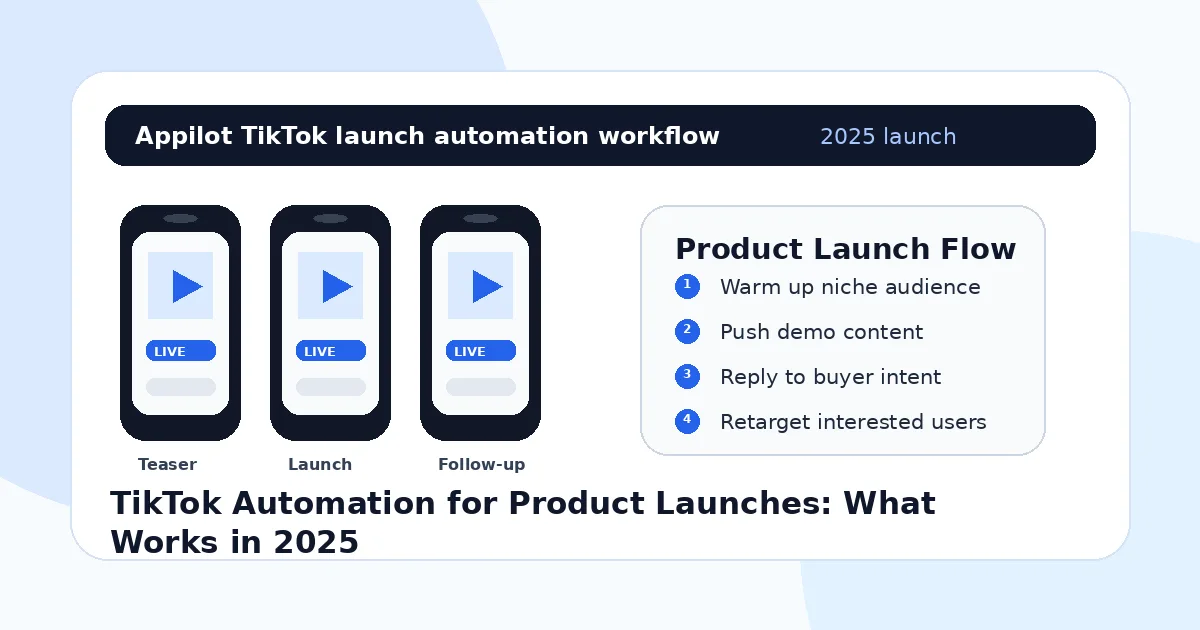
Why Product Launches on TikTok Are So Hard
TikTok is powerful because a product can get discovered quickly. But that speed cuts both ways.
A launch can get attention in the morning and feel old by the next day. A competitor can copy your angle. A creator can post a similar demo. A buyer can ask a question and forget about it before you reply.
That makes consistency important.
Most brands struggle because they treat TikTok launches like one or two posts. They create a product video, publish it, and hope the algorithm does the rest. That is not a strategy. That is a lottery ticket.
A real launch needs a warm-up phase, several video angles, fast comment replies, buyer-intent tracking, DM handling, and a clear path from TikTok to the product page.
What most brands get wrong is focusing only on views. Views matter, but buyer signals matter more. Comments like “link,” “price,” “does this ship worldwide,” “is this still available,” and “I need this” are far more valuable than passive views from people who never intended to buy.
What TikTok Automation Actually Does for Product Launches
TikTok automation helps handle the repetitive actions around a launch. That can include monitoring niche content, engaging with relevant accounts, tracking competitor videos, replying to common comments, sending product links, and keeping campaign activity moving.
The safer version is real-device automation, where TikTok actions run through Android phones or emulators. Instead of relying only on desktop scripts or unofficial API shortcuts, the automation interacts with the actual TikTok app in a more mobile-native way.
A platform like Appilot is built for this type of workflow. It lets brands run TikTok automation on Android devices or emulators from a web dashboard, without coding, ADB setup, or keeping a laptop connected all day. For product launches, that means your team can keep repetitive TikTok actions running while focusing on content, inventory, creative testing, and customer support.
Automation will not make a weak product win. But it can help a strong product get more chances to be seen, tested, and discussed.
Step 1: Warm Up the Audience Before Launch Day
A good TikTok launch does not start on launch day.
The warm-up phase should begin before the product is available. This is where you test problems, angles, and audience reactions without immediately asking people to buy.
For example, a skincare brand might post videos about the problem the product solves, common mistakes in the routine, behind-the-scenes packaging, or early customer reactions. A gadget brand might show the frustration first, then tease the product as the fix. A fashion store might show styling ideas, restock hints, or upcoming color drops.
Automation can support this by helping you monitor niche accounts, engage with people already interested in similar products, and track which topics create reactions. This creates a more informed launch instead of guessing what buyers care about.
The goal is to build familiarity before the sales push. When the product finally launches, the audience has already seen the problem, the category, or the brand.
Step 2: Test Multiple Product Angles Quickly
One TikTok video rarely tells you enough.
A product can win with one angle and fail with another. A kitchen tool might work as a time-saver, a cleaning hack, a gift idea, or a satisfying demo. A fitness product might work as a home workout solution, recovery tool, beginner-friendly accessory, or transformation story.
During a launch, you should test several angles quickly.
Automation helps by supporting the activity around those videos. It can help monitor comments, track interest signals, and keep engagement active while you compare which angles are producing real buyer intent.
This is where Appilot’s TikTok automation can fit naturally. You can run mobile-first TikTok workflows through Android devices or emulators and keep launch activity organized from one dashboard, instead of manually switching devices, accounts, and tasks all day.
The best launch teams do not ask, “Which video got the most views?” only. They ask, “Which video made people ask about the product?”
Step 3: Reply Fast to Comments That Show Buying Intent
During a product launch, comments are sales signals.
A comment like “link?” is not just engagement. It is a buyer asking for the next step. A comment like “does this come in pink?” tells you that the person is imagining the product in their life. A comment like “does it ship to the UK?” means the buyer is already thinking about checkout.
Slow replies waste those moments.
TikTok automation can help detect common launch comments and respond faster. For example, you can create reply flows around “link,” “price,” “shipping,” “available,” “size,” “discount,” or product-specific keywords.
The reply should be short and useful. If someone asks for the link, send the link. If someone asks about stock, answer stock. If someone asks about shipping, answer shipping.
Do not turn every reply into a long pitch. During a launch, speed and clarity matter more than clever copy.
Step 4: Use DMs Carefully for Product Links and Questions
DM automation can help product launches, but only when it feels helpful.
If someone comments “link,” replies to a product video, or asks a buying question, sending a short DM with the product page can make sense. If someone only likes a video or watches content casually, sending a cold sales message is usually too aggressive.
The best DM flows are buyer-triggered.
For example, someone comments “where can I buy?” and gets a DM with the product link. Someone asks about sizing and gets a short answer plus the correct product page. Someone asks if the launch discount is still live and gets the current offer details.
One reason brands use Appilot for this type of workflow is the setup simplicity. Appilot’s dashboard lets you manage TikTok automation through Android devices or emulators without dealing with scripts, command lines, or ADB tools. That makes it easier to run launch support without needing a technical team.
The message should still sound human. A useful DM feels like customer service. A bad DM feels like spam.
Step 5: Monitor Competitors and Similar Product Launches
TikTok launches do not happen in isolation.
If your product category is active, competitors are probably testing hooks, creators, discounts, bundles, and demos at the same time. Watching them closely can help you avoid weak angles and spot what buyers are responding to.
Automation can help monitor competitor accounts, niche hashtags, product keywords, and creator videos. This is especially useful for dropshipping brands, Amazon sellers, Shopify stores, and DTC brands that launch products in fast-moving categories.
Look for repeated patterns. Are people asking the same questions under competitor videos? Are certain demos getting saved more often? Are buyers complaining about shipping, price, quality, or missing features?
Those signals can improve your own launch.
If buyers keep asking competitors whether a product is washable, your content should answer that before they ask. If competitor comments show confusion about sizing, your launch page and videos should make sizing clearer.
Step 6: Keep Launch Activity Realistic
The biggest mistake with TikTok automation is doing too much too fast.
A new account that suddenly sends too many messages, follows too many users, comments too often, or behaves in a repetitive pattern can look unnatural. That can hurt account trust and campaign performance.
Launch automation should feel like support, not pressure.
Use conservative limits. Focus on relevant audiences. Avoid generic comments. Do not send product links to people who did not ask for them. Keep responses varied and helpful.
Real-device automation can reduce some risks compared with brittle desktop setups, but it does not remove the need for smart behavior. TikTok still rewards content quality, viewer retention, relevance, and real engagement.
Automation should help a strong launch stay organized. It should not be used to force attention where the product or content is weak.
Step 7: Track the Signals That Matter After Launch
A launch is not finished when the first videos go live.
You need to review what happened. Which videos created buyer questions? Which comments came up repeatedly? Which DMs led to clicks? Which audience reacted best? Which hook created interest but no sales?
Do not only track views.
Track comments with buying intent, profile visits, product link clicks, saves, shares, DM replies, add-to-cart movement, conversion rate, and repeated objections. These signals tell you whether the product is actually connecting with buyers.
If people love the demo but do not click, the CTA may be weak. If people ask about price constantly, the offer may need clearer framing. If people ask about shipping, delivery details should appear earlier in the content and product page.
The best TikTok launches improve after day one because the brand listens to the signals.
Common Mistakes to Avoid
Launching With Only One Video
One video is not enough to understand what buyers respond to. Test different hooks, demos, objections, and use cases during the launch window.
Chasing Views Instead of Buyer Intent
A high-view video can still produce weak sales. Comments, saves, DMs, link requests, and product questions often tell you more than view count alone.
Sending Cold DMs Too Aggressively
DMs should follow intent. If someone asks for a link or product detail, a DM makes sense. If they only watched a video, do not treat that as permission to pitch.
Ignoring Comment Questions
Repeated questions are not interruptions. They are launch data. Use them to improve content, captions, product pages, and follow-up messages.
Using Automation Before the Store Is Ready
If your product page is unclear, checkout is slow, or inventory is limited, automation will only expose those weaknesses faster.
Is TikTok Automation Right for Your Product Launch?
TikTok automation is a good fit if your product is visual, easy to demonstrate, and likely to create questions or curiosity. It works especially well for e-commerce brands, dropshippers, Shopify stores, Amazon sellers, fashion brands, beauty products, gadgets, home goods, fitness accessories, and pet products.
It may not be right if your product needs a long explanation or your content plan is not ready. Automation can support discovery and replies, but it cannot replace strong launch creative.
The best time to use TikTok automation is when your offer, videos, product page, and fulfillment process are already prepared.
Final Thoughts
TikTok product launches work best when they are treated like systems, not one-off posts.
You need warm-up content, multiple angles, fast replies, buyer-triggered DMs, competitor monitoring, and post-launch analysis. Automation helps by keeping the repetitive parts moving while your team focuses on strategy, creative, and customer experience.
If you want to run TikTok product launch automation without coding, ADB setup, or manual device management, Appilot gives brands a browser-based way to control Android devices, emulators, and ready-to-use bots for TikTok and other platforms. You can check it out at appilot.app.
FAQs
Q1: Can TikTok automation help with product launches?
Yes, it can support audience research, comment replies, DM flows, competitor monitoring, and launch engagement during the key launch window.
Q2: What works best for TikTok product launches in 2025?
Short product demos, problem-solution hooks, fast replies, buyer-triggered DMs, and repeated angle testing work better than one-off launch posts.
Q3: Is TikTok automation safe for brands?
It is safer when actions are gradual, relevant, and run through realistic mobile workflows. Aggressive spam-style automation can still create risk.
Q4: Can Appilot run TikTok launch automation?
Yes, Appilot can run TikTok workflows on Android devices or emulators from a web dashboard without coding or ADB setup.
Q5: Does automation replace TikTok content creation?
No. Automation supports the launch workflow, but strong videos, clear hooks, product quality, and a good offer still drive sales.