Time Zone Fingerprinting: The Mistake That Gets You Caught
You connect a proxy, open a browser profile, and assume the session looks clean.
The IP address shows the right country. The browser is isolated. Cookies are separated. Everything appears normal.
Then the website still flags the session.
CAPTCHAs appear. Accounts get challenged. Logins fail. Browser profiles start getting linked together.
For many people running browser automation, anti-detect browsers, scraping tools, or multi-account systems, time zone fingerprinting is one of the easiest mistakes to miss.
Most users focus on proxies, cookies, user agents, and screen sizes.
What they forget is that websites can compare the browser time zone with the IP location, language settings, geolocation, system clock behavior, and other browser signals.
If those details do not match, the session can look suspicious very quickly.
The good news is that time zone fingerprinting problems can be reduced.
Once you understand how websites use time zone data, you can create more realistic browser environments, reduce mismatches, and make sessions much more stable.
In this guide, you will learn what time zone fingerprinting is, why websites use it, what warning signs to watch for, and how to avoid the mistake that gets many profiles caught.
Time to stabilize: Usually between a few hours and several days depending on the target website. Success rate: High if browser settings become more realistic and internally consistent. Cost: Usually low if you already have the right browser, proxy, and profile setup.
What Is Time Zone Fingerprinting?
Time zone fingerprinting is a tracking method that websites use to compare the browser's reported time zone with other browser and network signals.
Every browser exposes time-related information such as the local time zone, UTC offset, locale settings, date formatting behavior, and JavaScript time values.
Websites can read this information in the background and compare it with the IP address, proxy country, browser language, geolocation settings, and account history.
If those values do not match, the session may look suspicious.
For example, if a browser uses a proxy from Germany but still reports a Pakistan time zone, the mismatch can become a strong detection signal.
This is especially important on social media platforms, ecommerce sites, advertising systems, ticketing platforms, financial websites, and websites with strong anti-bot systems.
Why Websites Use Time Zone Fingerprinting
Websites use time zone fingerprinting because it is one of the easiest ways to spot unrealistic browser environments.
A real user usually has a browser time zone that matches the country or region where the connection appears to come from.
When that relationship breaks, the session starts looking fake.
Websites also use time zone data to compare long-term account behavior.
If an account normally logs in from one region but suddenly appears from another country while keeping the old time zone, websites may see that as a trust issue.
Even if the proxy is high quality, the mismatch between IP location and browser time zone can still expose the session.
Warning Signs That Time Zone Fingerprinting Is Causing Detection
In many cases, websites give warning signs before they fully block the session.
You may notice more CAPTCHAs, repeated login challenges, failed logins, verification requests, shorter session lifetimes, or multiple accounts getting flagged together.
Some people also notice that profiles still get linked together even when they use separate proxies.
These are often signs that the browser environment may not be internally consistent.
The earlier you react, the easier it is to reduce detection.
The Most Common Time Zone Mistakes
One of the biggest mistakes is using a proxy from one country while leaving the browser time zone set to another country.
This is far more common than most people think.
Another common issue is mismatched language and locale settings.
If a profile uses a United Kingdom proxy but still reports a different regional time format, browser language, and locale combination, the browser may still look suspicious.
Over-randomization is another major problem.
Some people constantly change time zones across sessions because they think it makes the browser safer.
In reality, unrealistic changes can make the profile look unstable.
Shared browser profiles are another issue.
If several accounts use the same browser environment with the same unusual time zone mismatch, websites may connect them together.
How to Avoid Time Zone Fingerprinting Detection
Step 1: Match the Time Zone to the Proxy Location
The browser time zone should match the proxy country and region as closely as possible.
If the proxy is from France, the browser time zone, locale settings, and regional formatting should also look French.
The more internally consistent the browser looks, the safer the session becomes.
Step 2: Match Language and Locale Settings
Time zone settings should not exist on their own.
They should match the browser language, geolocation, date formatting, and region settings.
The more natural that combination looks, the harder it becomes to detect.
Step 3: Keep Profiles Stable Over Time
Do not constantly switch time zones, countries, and locales unless there is a realistic reason to do so.
Profiles that behave consistently are usually much safer.
If a browser profile changes regions too often, websites may see it as suspicious.
Step 4: Check the Full Browser Environment, Not Just the IP
Many people only test whether the proxy works.
That is not enough.
You should also check the browser time zone, UTC offset, locale settings, geolocation, WebRTC behavior, and language settings.
If those pieces do not match, the session may still get flagged.
Step 5: Separate Browser Profiles Properly
If you manage multiple browser profiles, keep them separated.
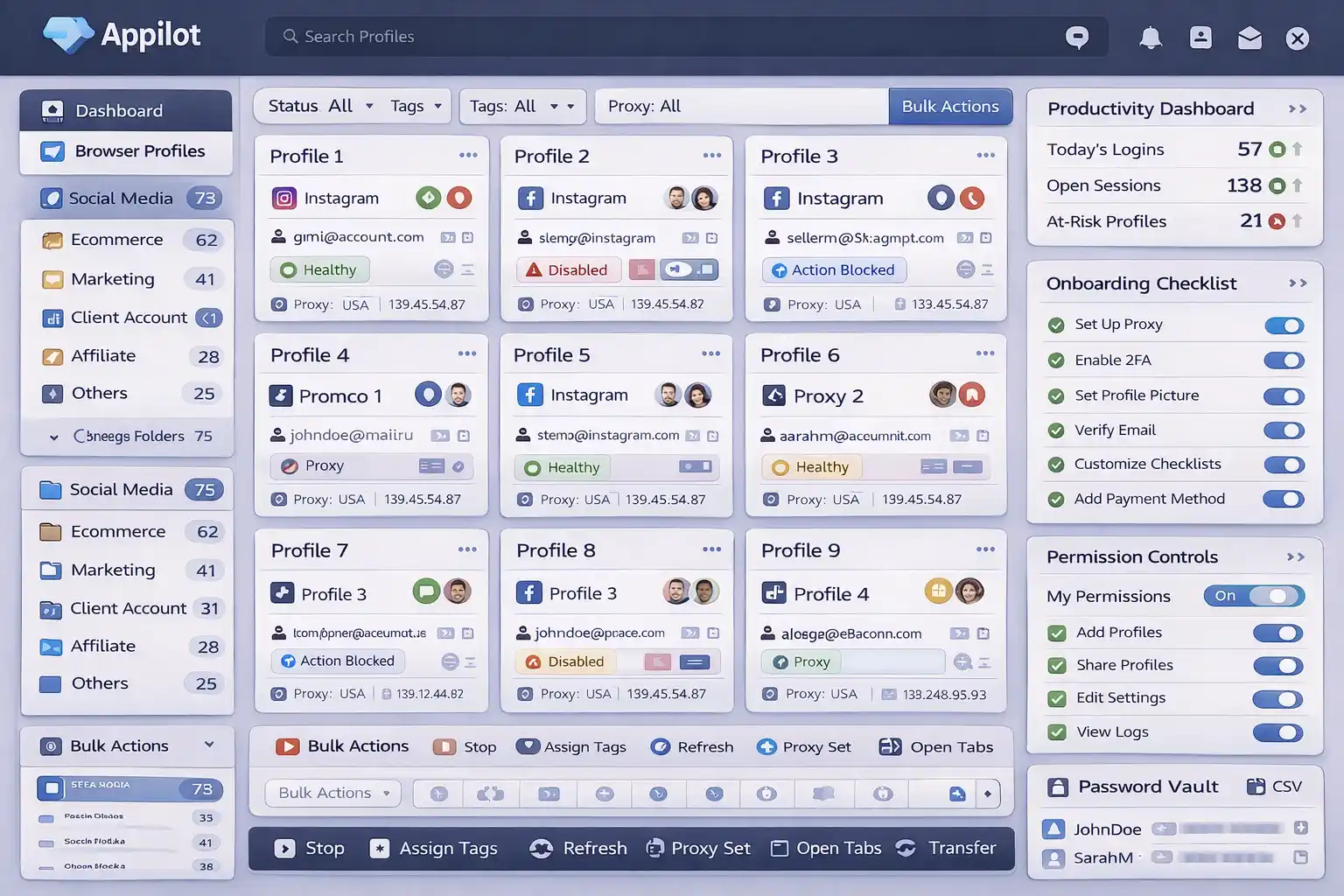
Each profile should have its own proxy, cookies, browser fingerprint, session history, and correctly matched time zone settings.
This makes every profile appear more independent.
If one account gets flagged, the others are less likely to be affected.
Appilot can help reduce detection risk by making browser environments more isolated, sessions more stable, and browser settings more consistent.
Step 6: Test Profiles Before Scaling
Before using browser profiles across many accounts, test them first.
Check whether the time zone, locale, language, IP location, and browser fingerprint all match each other.
It is much easier to fix profile issues early than after accounts start getting blocked.
How to Prevent Future Time Zone Fingerprinting Problems
The best way to avoid future time zone fingerprinting problems is creating more realistic and stable browser environments.
Use better proxy matching, stronger locale consistency, more isolated profiles, and more stable browser settings.
Avoid mismatched countries, copied browser profiles, unrealistic time zone changes, and over-randomization.
The more natural the browser looks, the easier it becomes to stay undetected.
Common Mistakes That Make Time Zone Fingerprinting Worse
One major mistake is assuming that changing the IP address automatically changes the time zone.
Another mistake is ignoring browser language and locale settings while only updating the proxy.
People also make the mistake of copying one browser profile into many others without fixing regional settings.
Another common mistake is switching countries too often without keeping the browser environment internally consistent.
If the browser does not look geographically realistic, websites are much more likely to detect it.
Frequently Asked Questions
Q1: What is time zone fingerprinting?
Time zone fingerprinting is a tracking method that compares the browser's reported time zone with the IP location, language, locale, and other browser signals.
Q2: Can websites detect a mismatch between my proxy and my time zone?
Yes. This is one of the easiest inconsistencies for websites to spot.
Q3: Should the browser time zone always match the proxy location?
In most cases, yes. The more realistic and internally consistent the browser looks, the safer it becomes.
Q4: Can time zone mismatches connect multiple accounts together?
Yes. If several accounts share the same unusual mismatch pattern, websites may connect them.
Q5: Does Appilot help reduce time zone fingerprinting risk?
Appilot helps create more isolated browser environments, stable sessions, and more consistent browser settings.
Conclusion
Time zone fingerprinting is one of the simplest ways websites identify suspicious sessions and catch unrealistic browser setups.
The safest approach is matching time zones correctly, aligning locale and language settings, separating profiles properly, and creating more realistic browser environments.
The goal is not just changing the IP address.
The goal is creating a browser session that looks geographically consistent and trustworthy over time.