What Is Timezone Fingerprinting? (And How to Avoid It)

Most users rarely think about their timezone as a tracking signal, but it is one of the simplest and most commonly used attributes in browser fingerprinting. Even if you change your IP address or clear cookies, your timezone can still reveal information about your location and device setup. This method is known as timezone fingerprinting.
Understanding timezone fingerprinting is important because it shows how even basic system settings contribute to tracking and detection. It also explains why mismatched environments are often flagged in automation systems. This guide explains timezone fingerprinting, how it works, and how to reduce its effectiveness.
What Is Timezone Fingerprinting?
Timezone fingerprinting is a technique used to identify users based on their system’s timezone setting. Websites collect this information through browser APIs and use it as part of a broader fingerprint.
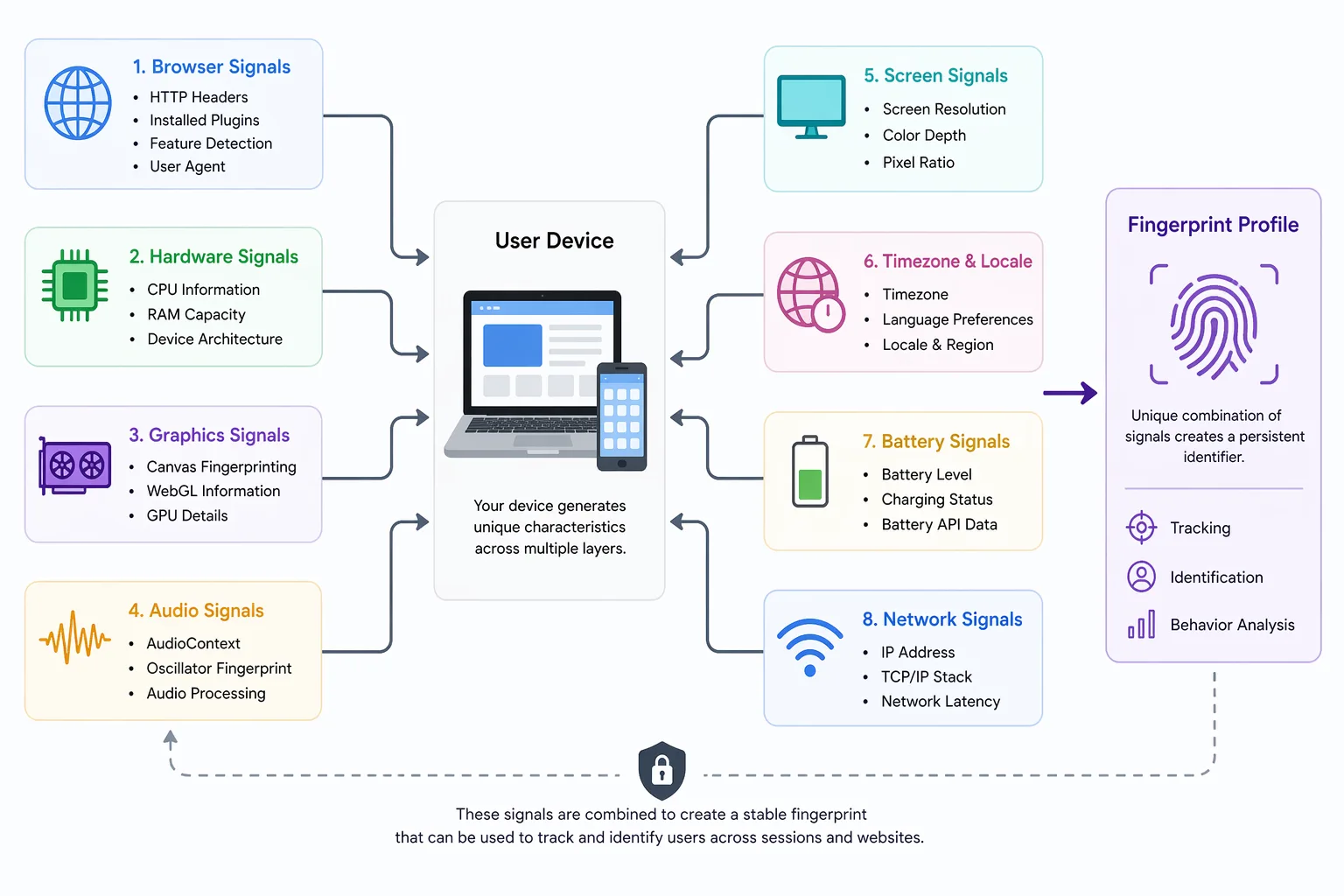
The timezone reflects the region configured on your device and often aligns with your geographic location. While many users share the same timezone, it becomes more useful when combined with other signals such as language, IP address, and system configuration.
Because timezone settings typically remain stable, they provide a consistent signal that helps track users across sessions.
The Core Principle Behind Timezone Fingerprinting
The core principle behind timezone fingerprinting is that system configurations vary across users. Even though timezones are not highly unique on their own, they help narrow down the possible identity of a user when combined with other attributes.
For example, if a user’s IP address suggests one region but the timezone indicates another, this inconsistency can signal suspicious behavior. Detection systems rely on these mismatches to identify automation or fraud.
This makes timezone fingerprinting less about uniqueness and more about consistency within a larger profile.
How Timezone Fingerprinting Differs from Other Methods
Timezone fingerprinting differs from other fingerprinting methods because it provides contextual information rather than high-entropy uniqueness.
While techniques like canvas or WebGL fingerprinting analyze rendering behavior, timezone fingerprinting focuses on system configuration. It is often used to validate other signals rather than act as a primary identifier.
A helpful way to understand this is to think of timezone fingerprinting as a consistency check, ensuring that all parts of a user’s profile align logically.
Why Timezone Fingerprinting Matters
Timezone fingerprinting matters because it plays a critical role in detecting inconsistencies. Even if other signals appear normal, a mismatch in timezone can raise suspicion.
In fraud detection systems, timezone data helps identify unusual behavior, such as accounts appearing to operate from multiple regions simultaneously. This allows platforms to flag potentially malicious activity.
From a privacy perspective, timezone fingerprinting contributes to tracking by narrowing down a user’s location. While it may not uniquely identify a user, it adds valuable context to other signals.
For developers building automation systems, timezone consistency is essential. If the timezone does not match other attributes such as IP address or language settings, detection systems can flag the activity. This is why maintaining a coherent environment is critical.
How Timezone Fingerprinting Works in Practice
Timezone fingerprinting works by collecting timezone data, analyzing it for consistency, and incorporating it into a broader fingerprint.
Collecting Timezone Information
When a user visits a website, scripts query the browser to retrieve timezone information. This is typically done using JavaScript APIs that return the system’s configured timezone.
The retrieved value may include the timezone name or offset from Coordinated Universal Time, providing insight into the user’s region.
Comparing with Other Signals
The collected timezone data is compared with other signals such as IP address, language settings, and system configuration. Detection systems look for consistency across these attributes.
If the signals align, the profile appears normal. If there are mismatches, the system may flag the activity as suspicious.
Building the Fingerprint
The timezone is combined with other attributes to form a fingerprint. While it is not a strong identifier on its own, it strengthens the overall profile by adding contextual information.
Because timezone settings rarely change, they help maintain consistency across sessions.
Common Misconceptions About Timezone Fingerprinting
There are several misconceptions about timezone fingerprinting that can lead to confusion about its role in tracking.
One common belief is that timezone alone can uniquely identify a user, but in reality, it is a low-entropy signal. Its strength comes from how it interacts with other attributes.
Another misconception is that changing your IP address prevents tracking. While this alters your network location, a mismatch with your timezone can actually increase suspicion.
There is also a belief that timezone fingerprinting is difficult to detect, but many systems actively check for inconsistencies, making it a common factor in detection workflows.
Real-World Examples of Timezone Fingerprinting
Timezone fingerprinting is widely used in systems that require accurate identification and consistency.
In financial platforms, it helps detect fraudulent behavior by identifying accounts that operate across mismatched regions. This allows systems to flag suspicious activity even when other signals appear normal.
In social media environments, timezone fingerprinting contributes to detecting automated behavior. Platforms analyze timezone data alongside other attributes to identify bots. Tools like Appilot help address this challenge by running automation on real Android devices, where system-level settings such as timezone naturally align with other signals.
In analytics and tracking systems, timezone data helps provide context for user behavior, improving the accuracy of identification across sessions.
The Technical Side of Timezone Fingerprinting
From a technical perspective, timezone fingerprinting relies on low to moderate entropy. While it does not provide strong uniqueness, it plays a critical role in validating other signals.
The process involves collecting timezone data, normalizing it, and comparing it with other attributes. This allows systems to detect inconsistencies and maintain accurate profiles.
Understanding these technical details helps explain why timezone fingerprinting is an essential part of modern detection systems.
How to Avoid or Reduce Timezone Fingerprinting
Reducing the impact of timezone fingerprinting involves maintaining consistency across all system signals rather than simply changing one attribute.
One approach is to ensure that your timezone matches your IP address and language settings. This reduces the likelihood of mismatches that can trigger detection.
Another approach is to use environments where system configurations are naturally aligned. For example, automation tools that operate on real devices tend to maintain consistent timezone and system settings, reducing detection risks compared to synthetic setups.
It is also important to understand that completely avoiding timezone fingerprinting is difficult. Instead, the goal should be to minimize inconsistencies and maintain a realistic profile.
Frequently Asked Questions
Q: How does timezone fingerprinting work?
It works by collecting your system’s timezone and comparing it with other signals to ensure consistency within your profile.
Q: What is timezone fingerprinting used for?
It is used for tracking users, detecting fraud, and identifying inconsistencies in behavior.
Q: Can you block timezone fingerprinting?
You cannot fully block it, but you can reduce its effectiveness by maintaining consistent system settings.
Q: Is timezone fingerprinting accurate?
It is not highly unique on its own but becomes useful when combined with other fingerprinting methods.
Q: Does changing timezone prevent tracking?
Changing your timezone alone does not prevent tracking and can create mismatches that increase detection risk.
Q: How does timezone fingerprinting affect automation tools?
It can expose automation systems if their timezone does not align with other signals. Tools that use real-device environments, such as Appilot, tend to produce more reliable results because they maintain consistent system configurations.
Key Takeaways
Timezone fingerprinting is a technique that uses your system’s timezone as part of a broader fingerprint to track and identify users. While it is not highly unique on its own, it plays a crucial role in ensuring consistency across signals and detecting mismatches. It is widely used in fraud detection, automation, and analytics systems, making it an essential concept for understanding how modern tracking works and how detection systems identify suspicious behavior.