Traffic Arbitrage Automation with Dolphin Anty and Appilot
Traffic arbitrage often looks simple on the surface. Buy traffic from one source, send it to an offer or landing page, optimize performance, and try to earn more than you spend. The reality is much more complicated once multiple traffic sources, ad accounts, landing pages, browser sessions, proxies, and tracking tools are involved.
Many traffic arbitrage teams manage campaigns across several advertising platforms at the same time. They may be working with Facebook, Google, TikTok, native ads, push traffic, or pop traffic while also rotating between different landing pages, offers, cloaking tools, trackers, and analytics platforms. Once that setup becomes larger, managing everything manually starts creating problems.
That is where Dolphin Anty and Appilot become useful together. Dolphin Anty helps separate browser identities so different ad accounts, traffic sources, and campaign environments stay isolated from each other. Appilot adds the workflow layer that helps automate browser sessions, organize campaign schedules, and reduce repetitive work.
Instead of opening dozens of browser profiles manually every day and trying to remember which campaigns need attention, you can create a cleaner workflow that is easier to scale and easier to manage.
Why Traffic Arbitrage Teams Need Browser Isolation
Traffic arbitrage often involves managing multiple advertising accounts across different platforms. Many buyers use separate accounts for different campaigns, traffic sources, geographies, niches, or testing environments.
The problem is that advertising platforms track browser fingerprints, IP addresses, cookies, device settings, and login behavior very closely. If multiple accounts appear too similar, there is a greater chance they will become connected.
Dolphin Anty helps solve this problem by giving every account its own browser profile with separate cookies, browser fingerprints, proxies, timezone settings, and browsing history. This makes it easier to keep accounts isolated and avoid mixing different campaign environments together.
For example, one browser profile may be dedicated to a Facebook ad account running finance campaigns, another may be used for TikTok campaigns in a different region, and another may be used for Google Ads account management.
This type of separation is important because it creates cleaner campaign environments and reduces the risk of accidental overlap between accounts.
How Appilot Improves Traffic Arbitrage Workflows
Once browser profiles are separated properly, the next challenge is workflow management. Traffic arbitrage campaigns require constant monitoring. Teams often need to check ad account performance, review trackers, update budgets, rotate landing pages, monitor spend, and open analytics dashboards throughout the day.
Doing this manually across many accounts takes a huge amount of time.
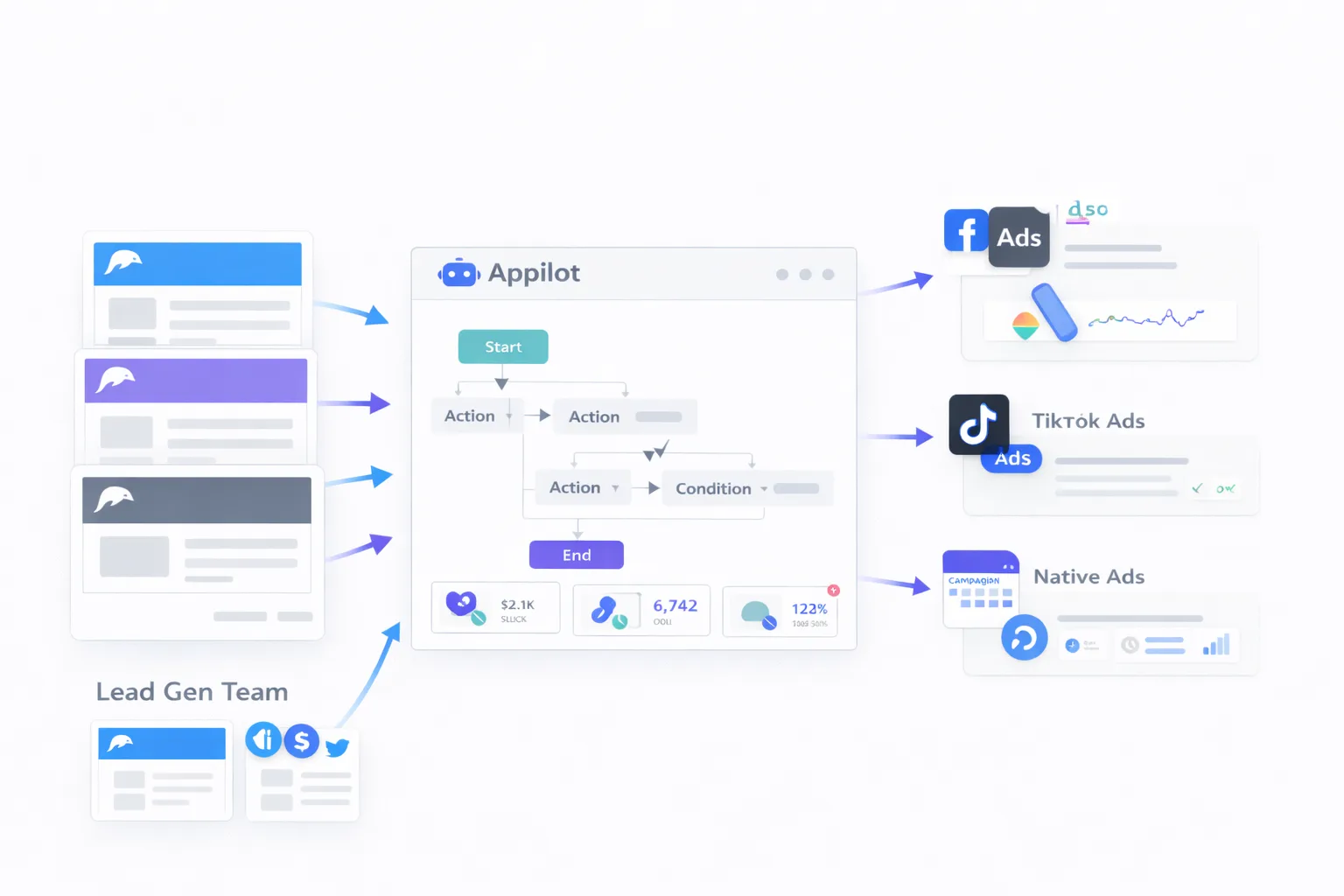
Appilot helps by allowing you to organize browser sessions into repeatable workflows. Instead of opening every account one by one, you can create schedules for different campaign groups and automate routine actions.
For example, you may want one workflow that opens Facebook ad accounts every morning to review spend and performance. Another workflow may open native ad dashboards in the afternoon to check traffic quality. Another may launch landing page monitoring sessions or analytics tools at fixed times throughout the day.
This makes it easier to keep campaigns organized and ensures that important tasks are not forgotten.
Organizing Profiles for Different Campaign Types
One of the best ways to manage traffic arbitrage workflows is to organize your Dolphin Anty profiles into clear groups.
You may want one group of browser profiles for Facebook campaigns, another for TikTok traffic, another for Google Ads, and another for native advertising accounts. You may also want separate browser groups for different verticals such as finance, health, e-commerce, dating, or sweepstakes.
Keeping these groups separated makes it easier to understand which accounts belong to which campaigns and which profiles need to be used for each task.
You can also separate profiles by geography. For example, one group may focus on United States campaigns, another on Europe, and another on Asia. This helps keep timezone settings, language preferences, and proxy locations aligned with the campaigns being managed.
Once these profile groups are organized inside Dolphin Anty, Appilot can be used to assign schedules and workflows to each group separately.
Common Traffic Arbitrage Automation Examples
One of the most common workflows is campaign monitoring. In this setup, Appilot launches groups of browser profiles at scheduled times so users can review campaign spend, click-through rates, conversion rates, and performance metrics.
Another common workflow is landing page review. Some traffic arbitrage teams regularly open landing pages across different browser profiles to make sure everything is loading properly and that no tracking or redirect issues exist.
Many users also automate tracker reviews, offer monitoring, analytics checks, and campaign reporting. Instead of opening dashboards manually, they can create routines that help them keep all important accounts and tools organized.
Some affiliate teams use Appilot to separate traffic source accounts, cloaking tools, spy tools, and landing page builders into different browser groups so that every part of the campaign workflow stays organized.
Best Practices for Traffic Arbitrage Automation
The most important thing is keeping campaign environments separated. Each ad account, traffic source, and vertical should have its own browser profile rather than sharing the same environment.
It is also important to use good proxies that match the geography of the campaigns being managed. If a campaign is targeting one country but the browser profile appears to come from another region, it can create unnecessary issues.
Another good practice is to stagger profile launches. Opening too many advertising accounts at the exact same time can create suspicious behavior patterns and place unnecessary load on your system.
You should also create separate workflows for different traffic sources. Facebook campaigns usually need different schedules and monitoring routines compared to native ads, Google Ads, or TikTok traffic.
Starting with a small number of browser profiles and gradually expanding your workflows is usually much safer than trying to automate everything immediately.
Common Problems and How to Avoid Them
One common problem is mixing different campaign types together inside the same browser profile. This can create confusion and make it harder to track which account belongs to which campaign.
Another common issue is poor proxy quality. Low-quality proxies often lead to account reviews, login problems, or blocked sessions.
Some users also struggle with workflow overload. If too many browser profiles are launched at once, systems can slow down and important tasks may fail.
Timezone mismatches can also create problems when browser profiles, proxies, and advertising accounts are not aligned correctly.
The safest approach is to build a clear structure before scaling. Once browser profiles are organized properly and Appilot workflows are running smoothly, it becomes much easier to expand your traffic arbitrage operation.
Frequently Asked Questions
Q1: Can Dolphin Anty help separate advertising accounts for traffic arbitrage?
Yes. Dolphin Anty allows you to create isolated browser profiles for different traffic sources, ad accounts, geographies, and campaign types.
Q2: Can Appilot automate traffic arbitrage workflows?
Yes. Appilot can help automate campaign monitoring, profile launches, dashboard reviews, analytics checks, and recurring browser tasks.
Q3: Should I use separate browser profiles for different traffic sources?
Yes. It is usually safer to separate Facebook, Google, TikTok, native ads, and other traffic sources into their own browser profiles.
Q4: Do I need coding skills to use Dolphin Anty and Appilot?
No. Most users can organize browser profiles, create workflows, and manage schedules without writing code.
Q5: Can this setup work for affiliate marketing teams?
Yes. Affiliate marketers often use Dolphin Anty and Appilot to manage multiple ad accounts, landing pages, trackers, and browser sessions more efficiently.
Conclusion
Traffic arbitrage becomes much harder once multiple ad accounts, traffic sources, and campaign environments are involved. Dolphin Anty helps by separating browser profiles, while Appilot helps by organizing the workflows that happen inside those profiles.
Together, they create a cleaner setup for campaign management, account organization, and routine monitoring.
The best approach is to keep browser profiles separated, build simple workflows first, and scale slowly over time.