Twitter/X Automation for Crypto Token Launches: What Actually Works
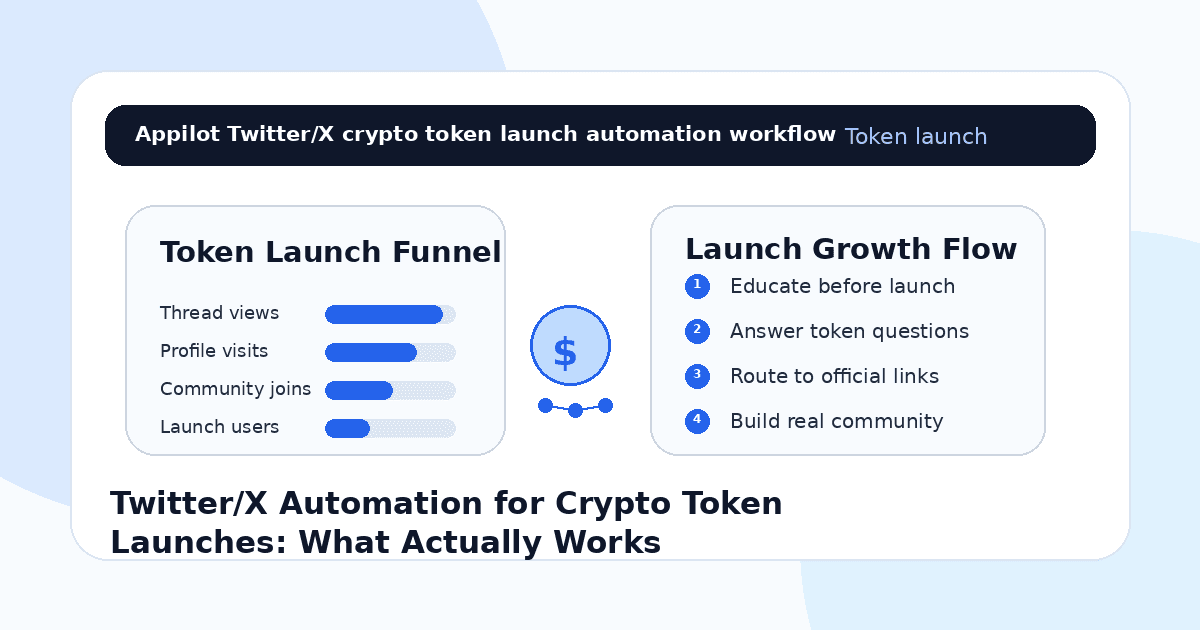
You announce a token launch on Twitter/X. The thread explains the utility, the roadmap, the community links, and the launch timeline.
A few people like it. Someone asks where the official contract will be posted. Another wants the Discord link. A few users ask about tokenomics, vesting, liquidity, staking, airdrops, or eligibility.
Then the replies start moving faster than the team can handle.
That is the challenge with crypto token launches. Twitter/X can create strong awareness, but launch attention is messy, time-sensitive, and trust-heavy. People need fast answers, official links, transparent updates, and clear safety guidance before they take the next step.
Twitter/X automation helps crypto teams manage repeated launch questions, route users to official resources, monitor mentions, and keep community engagement organized. Used carefully, it supports real launch operations instead of creating fake hype.
The goal is not to shill harder. The goal is to help real users, holders, builders, and community members find accurate information quickly.
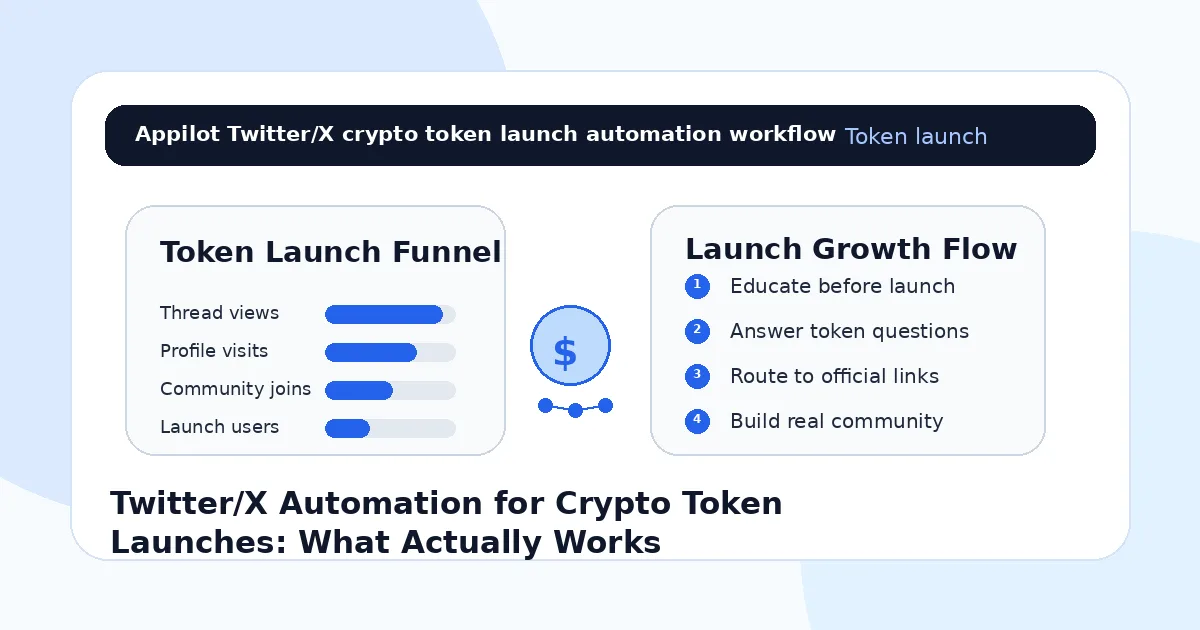
Why Twitter/X Matters for Token Launches
Twitter/X is often the first place people hear about a token launch.
Founders announce the project, communities share threads, partners repost updates, influencers discuss narratives, and users ask questions in public. For many launches, Twitter/X becomes the discovery layer before people move to Discord, Telegram, documentation, waitlists, launch pages, or product onboarding.
But token launches attract noise.
Some users ask serious questions. Some only want airdrops. Some are looking for contract links. Some are confused about eligibility. Some are watching for scams. Some are judging whether the team is transparent enough to trust.
Most crypto teams get launch automation wrong because they use it for generic hype. Repetitive comments, vague replies, and fake urgency can make the project look weak. What actually works is automation that supports education, routing, safety, and community response speed.
What Twitter/X Automation Means for Token Launches
Twitter/X automation means using software to support repeated launch actions like keyword monitoring, reply tracking, community link delivery, launch FAQ routing, mention alerts, DM flows, thread engagement, and official resource sharing.
For token launches, the best use is not mass posting or bot-like replies. It is controlled automation around real user intent, such as someone asking for the official link, tokenomics thread, documentation, eligibility rules, Discord invite, Telegram group, or launch timeline.
Real-device automation is useful because it runs workflows through Android devices or emulators instead of relying only on fragile browser scripts or risky shortcuts. This makes launch workflows easier to manage while keeping activity more controlled.
A platform like Appilot is built for this kind of workflow. It lets crypto teams run Twitter/X automation on Android devices or emulators from a browser dashboard, without coding, ADB setup, or keeping a laptop connected all day. That means launch replies, monitoring, and routing can keep moving while the team focuses on product, token operations, community support, and security.
Automation should support trust. It should not manufacture fake momentum.
Step 1: Educate Before the Launch Window
The best token launch automation starts before launch day.
If the first time users hear about the token is during the launch, the team is already late. People need time to understand what the project does, why the token exists, how it fits the product, what users can do with it, and what the risks are.
Twitter/X threads should explain utility, roadmap, tokenomics, user roles, governance, rewards, eligibility, unlocks, liquidity, security, and community participation in plain language.
Automation can help route people to those explainers when they ask.
For example, if someone replies “tokenomics,” the workflow can send the official tokenomics thread. If someone asks “what does the token do?” it can share the utility explainer. If someone asks “docs?” it can send the official documentation link.
Education lowers confusion before the launch pressure starts.
Step 2: Use Official Link Routing Carefully
Token launches are scam targets.
Fake contract links, phishing websites, impersonator accounts, fake airdrop pages, and malicious wallet prompts can appear quickly around a launch. This is why official link routing is one of the most valuable automation use cases.
The team should make official links easy to find and consistent across posts, bio, pinned tweets, Discord, Telegram, and docs.
Automation can help reply to link requests, but it should only route users to verified official destinations. Never allow random or unreviewed links inside automated flows.
This is where Appilot can fit naturally. Crypto teams can run Twitter/X reply workflows through Android devices or emulators while keeping official launch routing organized from one dashboard.
Speed matters, but safety matters more.
Step 3: Answer Launch FAQs Fast
Token launches create repeated questions.
People ask about date, time, chain, contract address, eligibility, allocation, airdrop criteria, vesting, claim process, staking, liquidity, exchange availability, region restrictions, wallet support, and how to avoid scams.
These questions are perfect for automation because they repeat and directly affect trust.
If someone asks “when launch?” the workflow can send the timeline. If someone asks “eligible?” it can send the eligibility page. If someone asks “contract?” it can explain where the official contract will be posted and warn against fake links.
Keep replies short, factual, and consistent.
A launch reply should feel like a helpful support assistant, not a hype bot.
Step 4: Monitor Mentions and Narratives
During launch week, the conversation can move quickly.
People may tag the project with questions, concerns, praise, criticism, rumors, or confusion. Automation can help monitor mentions and keywords so the team does not miss important issues.
Useful keywords might include the project name, token ticker, “airdrop,” “claim,” “contract,” “scam,” “wallet,” “eligibility,” “vesting,” “tokenomics,” “launch,” “Discord,” and “Telegram.”
The goal is not to jump into every thread. The goal is to find conversations that need clarification, support, or official correction.
A good launch team listens as much as it posts.
Automation helps surface the noise so humans can decide what matters.
Step 5: Avoid Fake Hype and Generic Shilling
Fake hype is one of the fastest ways to lose trust.
Automated replies like “big things coming,” “don’t miss this,” “100x soon,” or “best token launch” make the project look unserious. They may create short-term noise, but they do not build long-term community confidence.
What actually works is useful automation.
Send official links when asked. Answer repeated questions. Route people to docs. Share safety reminders. Help users understand the product. Surface hard questions to the team. Keep community channels organized.
The strongest token launches feel prepared, not artificially loud.
Step 6: Route Users Into the Right Community Channel
Twitter/X is usually the public discovery layer. Deeper launch support often happens elsewhere.
Discord may handle holder roles and community onboarding. Telegram may support fast public discussion. Docs may explain tokenomics and contracts. A launch page may handle eligibility or claiming. A product app may handle usage.
Automation can route users to the correct place based on intent.
If someone asks about community, send Discord or Telegram. If someone asks about tokenomics, send the explainer. If someone asks about claim steps, send the official claim guide. If someone asks about bugs, route them to support.
Do not send everyone the same link. Match the response to the user’s question.
That is what makes automation feel helpful.
Step 7: Keep Founder and Team Communication Human
Token launches need human visibility.
Users want to hear from founders, developers, community leads, and product teams. They want to know who is building, why decisions were made, and how the team handles hard questions.
Automation can support discovery and routing, but sensitive communication should remain human.
Questions about delays, token distribution, security, liquidity, unlocks, legal limitations, or launch issues should not be answered with generic bot messages. They need careful, transparent replies from the team.
Appilot-style workflows help with repeated actions, but trust still comes from real people showing up clearly.
Step 8: Track Community Quality After the Launch
A token launch does not end when the announcement gets impressions.
The real test is whether the launch creates active users, holders, builders, community members, contributors, and long-term participation.
Track quality metrics after the launch. These include official link clicks, docs visits, Discord joins, Telegram activity, claim completions, product usage, support tickets, holder retention, governance participation, community activity, and meaningful replies.
Follower growth alone is not enough.
A launch can look big on Twitter/X and still fail if the community does not understand the product or trust the team.
Automation gives you more launch signals. Tracking tells you which signals represent real momentum.
Common Mistakes Crypto Teams Should Avoid
Automating Hype Instead of Help
Generic hype replies do not build confidence. Use automation for official links, FAQs, routing, safety reminders, and support.
Sharing Unverified Links
Token launches attract scams. Automated flows should only share official, verified links controlled by the project team.
Ignoring Hard Questions
Questions about tokenomics, vesting, security, liquidity, and delays need clear human communication, not vague bot replies.
Sending Everyone to the Same Place
A user asking for docs, a user asking for Discord, and a user asking about eligibility need different next steps.
Measuring Only Impressions
Impressions do not equal launch success. Track community joins, claim completions, product usage, support quality, and holder retention.
Is Twitter/X Automation Right for Token Launches?
Twitter/X automation is a good fit if your crypto project already uses Twitter/X for launch education, community routing, official announcements, tokenomics threads, documentation, and support. It works especially well for DeFi tokens, gaming tokens, DAO launches, infrastructure projects, NFT-linked tokens, wallet projects, and Web3 apps with active communities.
It may not be right if the project only wants fake hype or low-quality shilling. Automation can support real launch operations, but it cannot replace transparency, product value, or community trust.
Think of automation as launch infrastructure. It keeps repeated actions organized while humans handle the high-trust decisions.
Final Thoughts
Twitter/X automation for crypto token launches works when it helps users get accurate information quickly.
The strongest workflow starts with education before launch, official link routing, fast FAQ replies, mention monitoring, community channel routing, human communication for sensitive topics, and post-launch quality tracking. Automation handles repeated launch operations while the team protects trust.
If you want to run Twitter/X automation without coding, ADB setup, or manual device management, Appilot gives crypto teams a browser-based way to control Android devices, emulators, and ready-to-use bots for Twitter/X, Discord, Telegram, Reddit, and other platforms. You can check it out at appilot.app.
FAQs
Q1: Can Twitter/X automation help crypto token launches?
Yes, it can help answer repeated questions, route users to official links, monitor mentions, and guide people into community channels.
Q2: What should crypto teams automate first for launches?
Start with official link replies, tokenomics routing, launch FAQs, Discord or Telegram links, safety reminders, and mention monitoring.
Q3: Is Twitter/X automation safe for token launches?
It is safer when activity is transparent, gradual, and useful. Fake hype, spam replies, or unverified links can damage trust.
Q4: Can Appilot help automate Twitter/X launch workflows?
Yes, Appilot can run Twitter/X workflows on Android devices or emulators from a browser dashboard without coding or ADB setup.
Q5: Should bots answer tokenomics or security questions?
Bots can route to official docs, but detailed tokenomics, security, liquidity, or legal questions should get human-reviewed answers.