Understanding Bot Detection APIs: DataDome, PerimeterX, and Cloudflare
Bot detection rarely feels fair. One request works, then the next is blocked even though nothing appears to have changed.
That is because modern bot protection does not judge single actions in isolation. Instead, it evaluates patterns, consistency, context, and history.
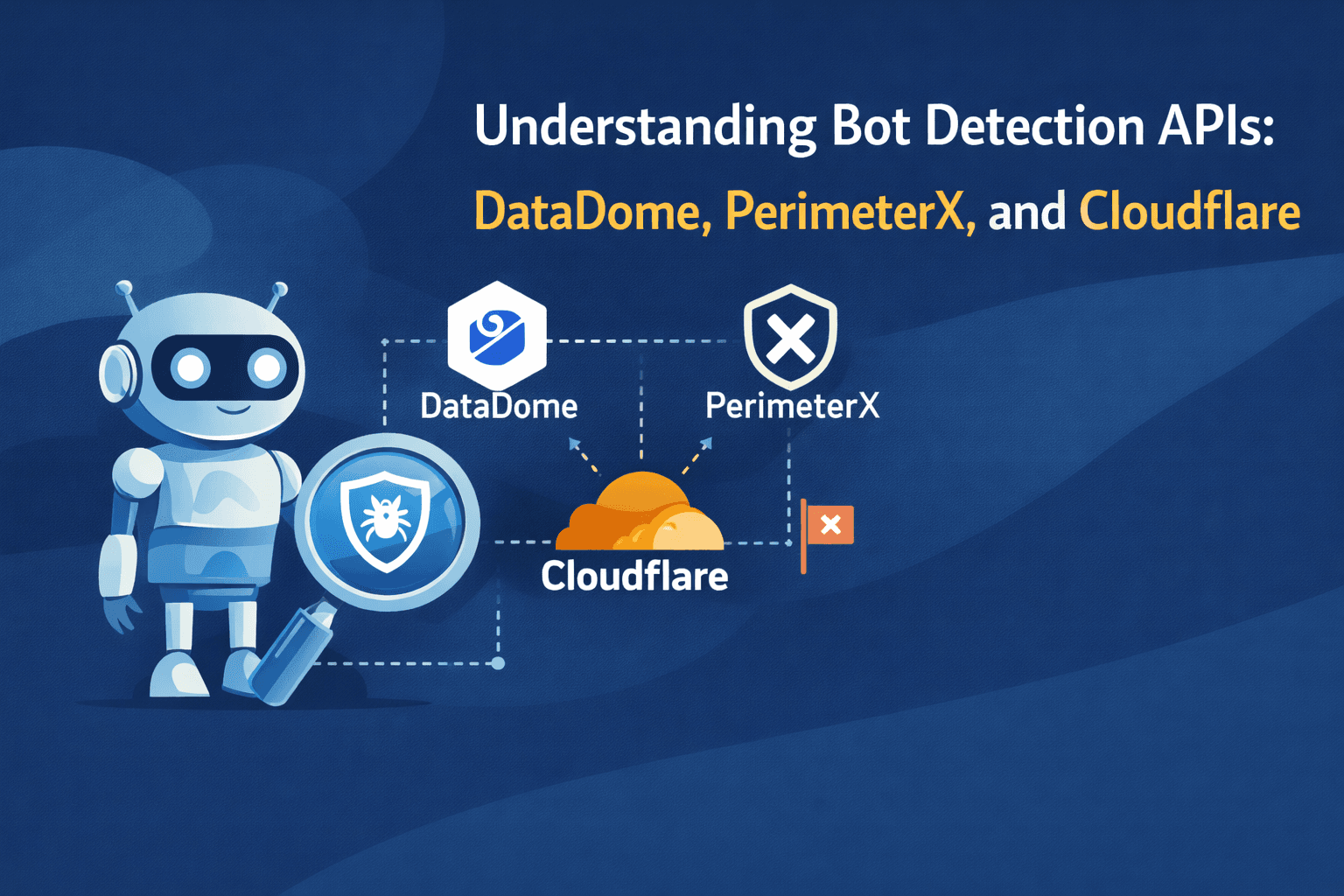
Behind many of those decisions are specialised bot detection APIs such as DataDome, PerimeterX, now known as Human Security, and Cloudflare Bot Management. These systems do not just sit at the network edge. They continuously score risk by analysing dozens of signals in real time.
For this guide, I’ll occasionally refer to Appilot where relevant because platforms like Appilot rely on stable browser and mobile automation that must work alongside modern bot detection systems. While Appilot focuses on mobile automation rather than browser scraping, many of the same principles around session continuity, behavioural diversity, and identity alignment still apply.
This guide explains how bot detection APIs work, what they actually measure, how the major providers differ, and how to design automation that survives their scrutiny.
Understanding Bot Detection APIs
Bot detection APIs are essentially real-time risk engines. They analyse incoming traffic, whether browser-based or mobile-based, and decide whether to allow, challenge, degrade, or block a request.
They do not rely on a single giveaway. Instead, they combine request metadata, browser or device fingerprints, behavioural patterns, and session history.
You can think of them as traffic-intelligence layers that sit between users and applications.
The Core Principle Behind Bot Detection
Detection is probabilistic rather than binary.
Every request contributes to a risk score. As signals accumulate, confidence rises, thresholds are crossed, and enforcement activates.
When signals align with automation, the result may be a challenge, a throttle, a block, or even silent degradation.
This is cumulative evaluation rather than a simple rule violation.
Why These APIs Are So Effective
1. Cross-Request Visibility
Detection APIs see traffic across multiple pages, sessions, IPs, and accounts.
What looks isolated from inside your automation script often appears highly correlated from the outside.
2. Signal Fusion
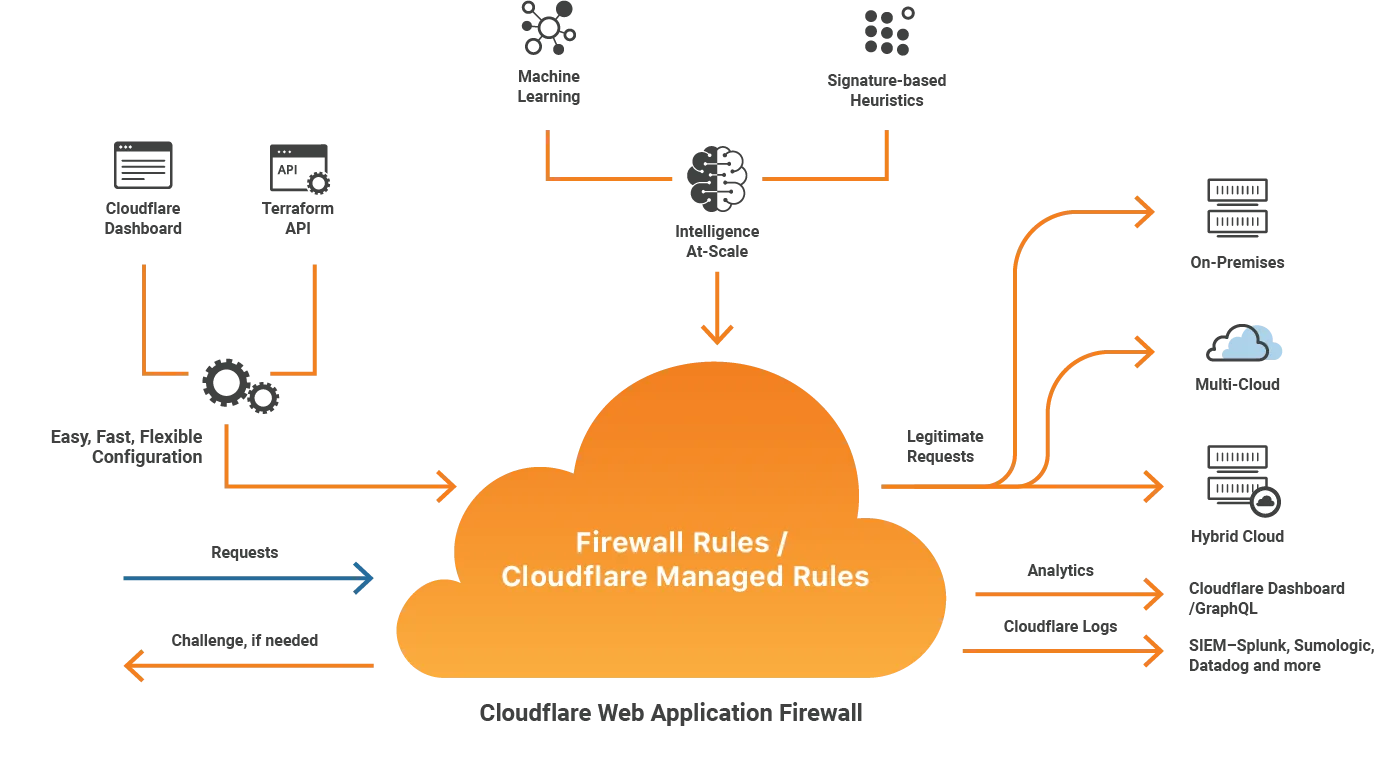
These systems combine weak signals into strong confidence.
They analyse factors such as canvas fingerprints, WebGL fingerprints, audio fingerprints, user-agent alignment, TLS fingerprints, header order, and behavioural timing.
Each signal on its own may be weak, but together they become highly decisive.
3. Adaptive Learning
These systems are constantly evolving.
Techniques that worked last month may quietly become ineffective as detection models retrain.
There is usually no announcement when protection systems improve.
How Major Bot Detection APIs Work
While implementations differ, the overall architecture tends to follow similar layers.
Layer 1 – Request & Network Analysis
The first layer usually inspects IP reputation, ASN patterns, TLS handshake fingerprints, and header order or consistency.
This layer filters obvious abuse, but it rarely blocks traffic on its own.
Layer 2 – Browser & Device Fingerprinting
Advanced fingerprinting evaluates canvas rendering, WebGL, audio behaviour, user-agent consistency, and overall feature presence.
Any mismatch or duplication increases correlation risk very quickly.
Layer 3 – Behavioural Modelling
This is often the strongest layer.
Models observe navigation paths, timing variability, scroll patterns, input realism, and interaction order.
This is the layer where “slow but identical” bots often fail.
Layer 4 – Session Memory
Risk persists over time.
Solving a challenge does not automatically reset trust. Session history compounds into future scoring.
Platform-Specific Perspectives
Each provider emphasises different strengths.
DataDome
DataDome focuses heavily on behavioural analysis, fingerprint correlation, and real-time scoring.
It is commonly used in e-commerce, content platforms, and marketplaces.
It is particularly effective at detecting misconfigured headless browsers, repeated “clean” sessions, and identical automation stacks operating at scale.
PerimeterX (Now Human Security)
PerimeterX leans strongly into client-side instrumentation.
It injects JavaScript to observe execution timing, environment integrity, event authenticity, and JavaScript runtime behaviour.
Partial emulation tends to fail quickly under this model.
Cloudflare Bot Management
Cloudflare benefits from having massive network visibility.
It correlates behaviour across sites, regions, and traffic patterns.
Cloudflare often selectively challenges traffic, degrades responses instead of blocking them outright, and uses managed challenges as data probes.
That is why blocks may feel inconsistent even when they are intentional.
Common Misconceptions About Bot Detection APIs
Misconception #1: “One Fix Is Enough”
No single fix, whether it is proxies, user agents, or CAPTCHA solvers, works alone.
Weak alignment across different layers will still fail.
Misconception #2: “CAPTCHA Equals Detection”
CAPTCHA is only a response.
Detection happened before it appeared.
Misconception #3: “Headless Equals Blocked”
Misaligned headless environments get blocked, while properly aligned ones often pass.
The problem is not headless mode itself. The problem is mismatch.
Designing Automation That Survives Detection APIs
Strategy 1 – Align Identity Signals
User agents, JavaScript behaviour, rendering fingerprints, and input models all need to agree.
Your automation should never claim to be one thing while behaving like something else.
Strategy 2 – Break Correlation, Not Speed Limits
Avoid synchronised actions, identical workflows, and perfectly uniform timing.
Variability matters more than simply slowing everything down.
Strategy 3 – Respect Session Continuity
Frequent resets raise suspicion, increase fingerprint reliance, and trigger more challenges.
Stable, long-lived sessions build trust.
This is one of the reasons platforms like Appilot emphasise stable session handling and real-device execution rather than relying on constant resets or disposable environments.
Strategy 4 – Treat Challenges as Feedback
When challenged, it is usually better to slow down, reduce scope, or modify behaviour.
Aggressive retries often escalate enforcement.
Prevention scales much better than recovery.
Real-World Scenarios
Scraping Behind Cloudflare
Static scrapers tend to fail quickly.
State-aware browser automation can survive longer if behavioural correlation is controlled.
Account Automation Under DataDome
Identical stacks across multiple accounts often get linked.
Environment separation and behavioural diversity reduce detection risk.
Login Flows with PerimeterX
Partial session restores often fail.
Persisting full browser context generally improves stability.
When Bot Detection APIs Are Most Aggressive
1. High-Value Endpoints
Endpoints such as login pages, checkout pages, search systems, and APIs usually see much stricter enforcement.
2. Abuse-Prone Industries
Industries such as e-commerce, ticketing, fintech, and social platforms often use much more aggressive signal weighting.
3. Scale Without Architecture
Small scripts may work during testing, but production scale exposes patterns very quickly.
That is why something can work perfectly in development but fail in production.
Detection evaluates patterns rather than isolated success.
Tools That Help With Detection-Resistant Automation
There are several approaches to building more resilient automation systems.
Puppeteer is useful for browser-based automation when you need full control over Chromium.
Playwright offers stronger cross-browser support and better session management.
Selenium remains a strong option for broad browser compatibility.
Appilot is useful when you need mobile automation with real-device execution, stable session handling, and reduced behavioural correlation across multiple Android devices.
The right choice depends on whether your focus is browser automation, mobile automation, or long-term session stability.
Key Takeaways
Bot detection APIs do not simply hunt bots. They measure trust.
Detection is cumulative, signal fusion matters more than single tricks, behaviour and consistency dominate, and architecture matters more than the specific tools being used.
Understanding systems like DataDome, PerimeterX, and Cloudflare reduces guesswork and shifts the focus toward structural alignment.
If you are running large-scale automation, tools like Appilot can help by providing stable sessions, real-device execution, and more natural behavioural separation across workflows.
Frequently Asked Questions
Q: Are bot detection APIs rule-based or AI-based?
They usually combine heuristics, rules, statistical models, and machine learning.
Q: Does solving CAPTCHAs reduce future detection?
Rarely. It usually allows limited continuation while the risk score still persists.
Q: Can automation fully bypass these systems?
No. The goal is risk reduction rather than invisibility.
Q: Why do blocks feel inconsistent?
Because enforcement adapts based on confidence, sampling, and context.
Q: When should automation stop entirely?
Automation should stop when escalation patterns repeat or when the value of the account outweighs the testing risk.