Using Instagram DM Automation to Sell Online Fitness Programs
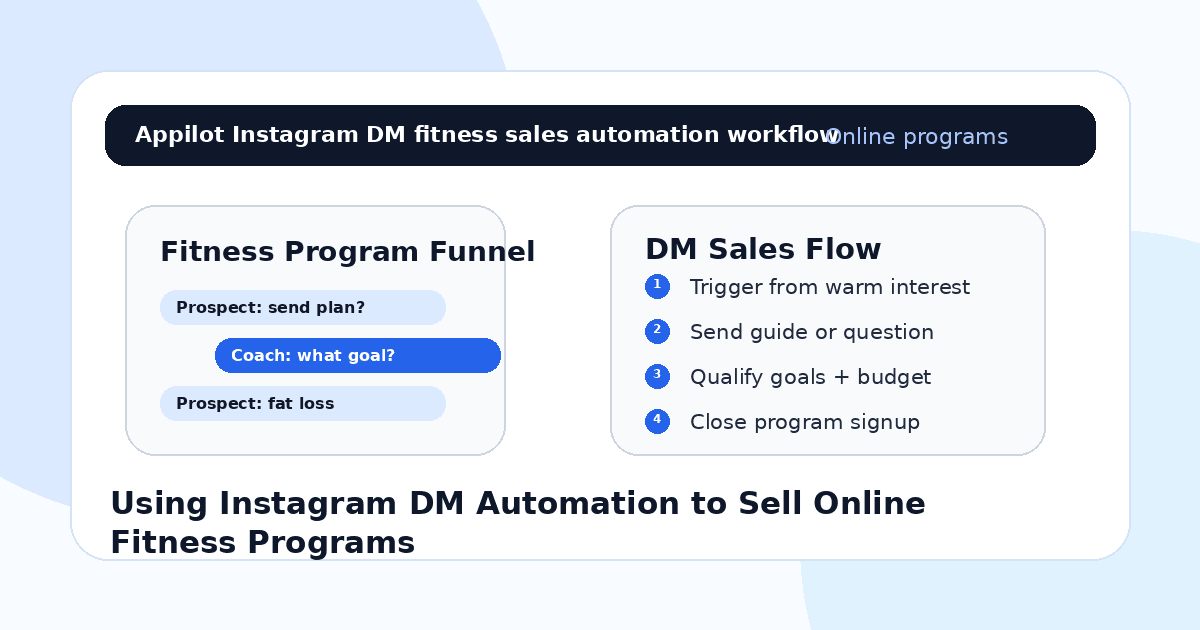
You post a transformation, share a workout tip, add a story about your online coaching program, and invite people to message you for details.
A few people reply. Someone comments “send me the plan.” Another asks how much it costs. A few people vote in your poll but never take the next step.
Then the conversations slow down.
That is the problem with selling online fitness programs through Instagram. The interest is there, but if you reply late, forget follow-ups, or send the same manual explanation again and again, warm leads disappear before they become clients.
Instagram DM automation helps coaches respond faster, qualify leads, send resources, and guide interested followers toward program signups or consultation calls. Used carefully, it makes your sales process more consistent without making your coaching brand feel robotic.
The goal is not to spam people with fitness offers. The goal is to turn real interest into structured conversations.
Why Instagram DMs Matter for Online Fitness Sales
Online fitness programs are personal. People are not just buying a PDF or workout plan. They are buying guidance, accountability, confidence, and trust.
That is why DMs matter.
A follower may not be ready to buy from a caption alone. They may need to ask if the program fits beginners, whether nutrition is included, how check-ins work, how much time they need, or whether the plan works for their goal.
If those questions are answered quickly and clearly, the follower is more likely to move forward. If the reply comes hours later, the motivation can fade.
Most coaches lose sales because they do not have a repeatable DM process. They answer manually when they can, forget who needs a follow-up, and rewrite the same program explanation every day.
DM automation fixes the repetitive parts of that process.
What Instagram DM Automation Actually Does
Instagram DM automation uses rules and workflows to respond to specific actions. Those actions might include story replies, comment keywords, poll responses, quiz answers, lead magnet requests, or direct messages with words like “program,” “coaching,” “meal plan,” “fat loss,” “price,” or “send.”
For online fitness programs, automation can send a free guide, ask a qualifying question, explain the next step, share an application link, or route the lead toward a human conversation.
Real-device automation is especially useful because it runs through the Instagram mobile app on Android devices or emulators. That behaves more like normal mobile usage than basic desktop scripts or fragile API shortcuts.
A platform like Appilot is built for this kind of workflow. It lets fitness coaches run Instagram DM automation on Android devices or emulators from a browser dashboard, without coding, ADB setup, or keeping a laptop connected all day. That means coaches can keep sales conversations moving while focusing on content, programming, check-ins, and client results.
Automation should support your coaching voice. It should not replace it.
Step 1: Build the DM Flow Around Warm Triggers
The best DM automation starts from real interest.
Do not send cold messages to random followers asking if they want to lose weight. That can feel intrusive and damage trust. Instead, use warm triggers from people who already interacted with your content.
A warm trigger might be someone commenting “plan” under a reel, replying “coaching” to your story, tapping a poll about fat loss, asking for a meal guide, or sending “price” in DMs.
These actions show intent.
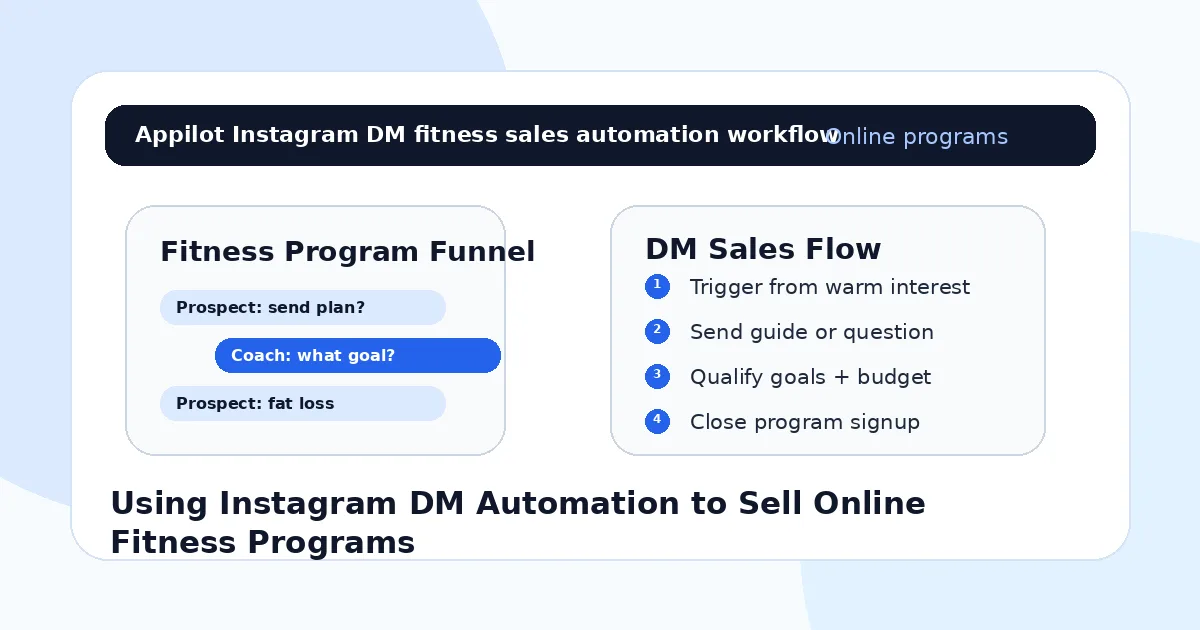
For example, you can post a story saying, “Want my 3-day beginner workout plan? Reply START.” When someone replies, the automation sends the plan and asks what goal they are working on. That creates a natural path into a conversation.
The key is that the prospect starts the interaction. Automation simply helps you respond faster.
Step 2: Use Lead Magnets to Start Conversations
Lead magnets work well for fitness programs because they give followers a low-pressure reason to message you.
A lead magnet could be a meal guide, beginner workout plan, fat-loss checklist, mobility routine, gym confidence guide, protein calculator, or 7-day habit tracker.
The lead magnet should connect directly to your paid program. If you sell fat-loss coaching, offer a fat-loss resource. If you sell strength programs, offer a strength guide. If you sell postpartum fitness coaching, offer a beginner-safe movement checklist.
Automation can deliver the resource instantly, then ask a simple qualifying question.
For example, after sending a free guide, the DM can ask, “Are you mainly trying to lose fat, build muscle, or get consistent again?” That keeps the conversation useful instead of jumping straight into a sales pitch.
This is where Appilot’s Instagram automation can fit naturally. You can run these reply and lead-magnet workflows through Android devices or emulators while managing the process from one dashboard.
Step 3: Qualify Before Pitching the Program
Not every person who asks for a guide is ready to buy.
Some people are curious. Some want free information. Some are serious but need help choosing the right program. Some are perfect-fit clients.
That is why qualification matters.
Your DM flow should ask simple questions before presenting the offer. Ask about their goal, timeline, current routine, biggest obstacle, training experience, and whether they want coaching or a self-paced program.
For example, a good question might be, “What are you mainly struggling with right now: staying consistent, knowing what to eat, or following the right workouts?” That tells you what they need and gives you a better way to explain your program.
Automation can collect the first answers, but once someone gives a serious response, a human should step in.
Fitness sales depend on trust. The bot should open the door, not close the deal alone.
Step 4: Send the Right Offer Based on the Lead
Online fitness programs are not all the same.
Some leads want a low-ticket self-paced workout plan. Some want full coaching with check-ins. Some need nutrition support. Some want a challenge. Some want in-person training. Some are not ready yet.
Your DM automation should route people based on what they need.
A beginner might receive a starter plan and a simple application. A serious transformation lead might be invited to a consult call. Someone asking about price might get a short explanation of program options. Someone who is not ready might receive a free resource and stay in your nurture path.
This makes the sales process feel more personal.
A one-size-fits-all pitch is usually weaker. The more your DM flow matches the lead’s goal, the more natural the offer feels.
Step 5: Keep the Program Explanation Short
Do not overwhelm people inside Instagram DMs.
A long message explaining every feature, bonus, call, check-in, meal plan, and testimonial can feel like too much. The prospect usually needs clarity first.
Explain the program in simple terms. Tell them who it is for, what result it helps with, how support works, and what the next step is.
For example, “My online coaching program is for busy people who want fat loss without extreme dieting. You get workouts, nutrition guidance, weekly check-ins, and message support. The next step is a short application so I can see if it fits.”
That is clear enough to continue.
Automation can send this kind of message when the lead is ready, but avoid sending it too early. Context matters.
Step 6: Follow Up Without Sounding Pushy
Follow-ups help, but fitness prospects are sensitive to pressure.
A person may be nervous about starting, unsure about price, or embarrassed about their current habits. Pushy follow-ups can make them retreat.
Use follow-ups that feel supportive.
Instead of saying, “Are you joining or not?” say something like, “Just checking if you still wanted help choosing the right program. No pressure either way.” Or, “Did you want me to explain the difference between the self-paced plan and coaching option?”
One or two follow-ups are usually enough.
Appilot-style workflows can help manage these repeated follow-up actions so leads do not fall through the cracks. But the tone should always feel human, respectful, and coaching-led.
The goal is to help the prospect decide, not force them.
Step 7: Track the DM Metrics That Matter
Do not measure Instagram DM automation only by how many messages are sent.
For online fitness programs, better metrics include keyword replies, guide requests, qualified conversations, application clicks, consult calls booked, program signups, close rate, and revenue from DM leads.
You should also track which trigger creates the best buyers. A transformation post may create serious coaching leads. A free meal guide may attract colder leads. A story poll may create fast conversations. A workout reel may bring many comments but fewer buyers.
This helps you improve your sales system.
Automation gives you more conversations. Tracking tells you which conversations are worth scaling.
Common Mistakes Coaches Should Avoid
Sending Cold DMs About Weight Loss
Cold body-based messages can feel invasive. Use warm triggers from people who ask, reply, comment, or request a resource.
Pitching Too Early
Do not sell the program before understanding the prospect’s goal. Qualify first, then offer the right next step.
Making the DM Flow Too Long
People do not want a full sales page in their inbox. Keep messages short, clear, and easy to answer.
Ignoring Serious Replies
Automation can start the conversation, but serious leads need real human attention. Step in when someone shows buying intent.
Forgetting the Checkout Path
If your application, booking link, or payment page is confusing, the DM flow will lose sales. Make the next step simple.
Is Instagram DM Automation Right for Online Fitness Programs?
Instagram DM automation is a good fit if you already post fitness content, get story replies, receive coaching questions, or use lead magnets to attract prospects. It works especially well for online coaches, personal trainers, transformation coaches, nutrition coaches, gym creators, and fitness educators.
It may not be right if you have no offer, no content, or no clear client type. Automation can speed up conversations, but it cannot replace a strong program, clear positioning, and real client proof.
Think of DM automation as a sales assistant. It helps organize warm interest, but your coaching value closes the sale.
Final Thoughts
Instagram DM automation can help fitness coaches sell more online programs by turning interest into structured conversations.
The best workflow starts with warm triggers, delivers useful resources, asks qualifying questions, routes leads to the right offer, and hands serious prospects to a human coach. That keeps the process fast without making it feel cold.
If you want to run Instagram DM automation without coding, ADB setup, or manual device management, Appilot gives fitness coaches a browser-based way to control Android devices, emulators, and ready-to-use bots for Instagram and other platforms. You can check it out at appilot.app.
FAQs
Q1: Can Instagram DM automation sell online fitness programs?
Yes, it can help deliver resources, qualify leads, answer common questions, and guide interested prospects toward coaching or program signup.
Q2: What should fitness coaches automate first?
Start with story replies, comment keywords, lead magnet delivery, basic qualifying questions, and follow-ups for warm leads.
Q3: Is Instagram DM automation safe for fitness coaches?
It is safer when messages are triggered by real interest. Cold spam, body-based messages, or aggressive follow-ups can create account risk.
Q4: Can Appilot help automate Instagram DMs?
Yes, Appilot can run Instagram DM workflows on Android devices or emulators from a browser dashboard without coding or ADB setup.
Q5: Should bots close fitness program sales automatically?
Usually no. Bots can qualify and guide leads, but serious prospects should get human replies before payment or coaching signup.