Why Automated Comments Get Ignored
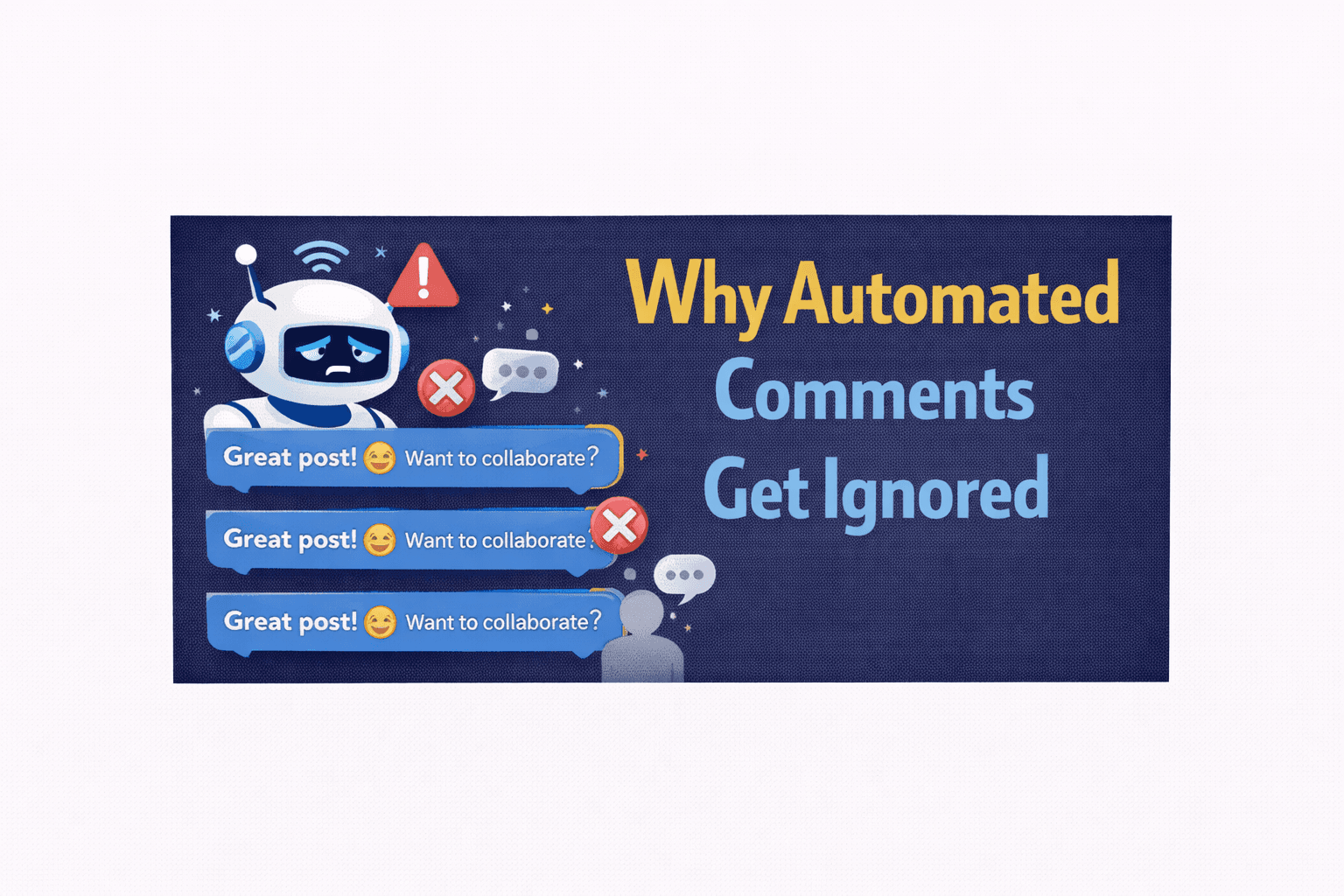
You Are Commenting More But Getting Less Back
At first, automated comments seem like an easy way to increase visibility.
You can comment on more posts, interact with more people, stay active across more accounts, and save time compared to doing everything manually.
Then eventually you notice that almost nobody is replying.
The comments are still being posted. The accounts are still active. The workflows are still running.
But the comments are getting ignored.
That is one of the biggest problems with automated engagement because activity alone does not create attention.
The issue is usually not that comments are automated.
The problem is that most automated comments feel too generic, too repetitive, and too disconnected from the actual post.
Why Manual Comments Usually Perform Better
Manual comments usually perform better because they feel more relevant.
A real person commenting manually will often react to something specific in the post.
They may mention a detail, ask a question, share a short opinion, or connect the post to a real experience.
That immediately makes the comment feel more natural.
Automated comments often lose that feeling.
The same phrases get reused over and over again.
“Great post.”
“Very helpful.”
“Thanks for sharing.”
“Completely agree.”
Those comments do not add anything.
People have seen them thousands of times before.
That is why they usually get ignored.
The Biggest Mistake: Commenting Without Adding Value
One of the biggest reasons automated comments fail is because they do not give the reader a reason to respond.
A comment should add something.
It may add an opinion, a question, an example, a disagreement, a short story, or a useful detail.
If the comment only repeats what the original post already said, there is no reason for anyone to engage with it.
That is why short generic comments almost never work.
People respond to comments that make them think, make them curious, or make them want to continue the conversation.
The easiest way to improve comment quality is to create several comment styles instead of using the same pattern every time.
Some comments can ask questions.
Some can add a small insight.
Some can share a related experience.
Some can politely disagree.
That variety is what makes comments feel more human.
Why Repetition Makes Automated Comments Obvious
One of the biggest signs of comment automation is repetition.
The same sentence structure appears repeatedly. The same type of compliment gets reused. The same style of question keeps showing up.
Eventually, people stop paying attention.
Even if the comment is technically relevant, it still feels automated because the style never changes.
That is why the best comment systems include variation.
You should rotate between different comment lengths, different tones, different openings, and different styles of response.
Sometimes the comment can be short.
Sometimes it can be longer.
Sometimes it can sound more curious, more direct, more opinionated, or more conversational.
That is what keeps comments from feeling robotic.
The System That Makes Automated Comments Work Better
The easiest way to improve automated comments is to connect them to the actual content of the post.
Instead of using one generic template, create multiple comment modules based on what the post is about.
For example, if the post is about growth, the comment could mention a specific growth challenge.
If the post is about automation, the comment could mention a common mistake people make.
If the post is about content, the comment could ask a question about engagement or consistency.
That makes the comment feel much more connected to the original post.
You should also avoid commenting too quickly.
If every comment appears seconds after the post goes live, it looks suspicious.
Natural timing, account warm-up, and varied engagement patterns all make automated comments feel more believable.
Why Centralization Makes This Easier
Comment performance becomes much harder to improve when browser profiles, engagement schedules, account notes, posting history, and comment templates are spread across different tools.
You may have one system for browser automation, another for scheduling, another for tracking engagement, and another for content notes.
That makes it difficult to see which comment styles are working and which ones are getting ignored.
This is one of the reasons Appilot becomes useful when engagement operations start scaling.
Instead of keeping browser profiles, Android workflows, engagement schedules, comment templates, account notes, and posting history spread across multiple systems, everything can stay visible from one dashboard. That makes it easier to test different comment styles, identify repetitive patterns, and improve engagement across multiple accounts.
Conclusion: Automated Comments Only Work When They Feel Relevant
If your automated comments keep getting ignored, the issue is usually not the automation itself.
The problem is that the comments became too generic, too repetitive, and too disconnected from the actual post.
Once you start adding more value, more variation, and more relevance into the comment system, people become much more likely to notice and respond.
That is what allows you to scale engagement without making every interaction feel robotic or obvious.