Why Automation Didn't 10x Your Results Like Promised
The Promise Always Sounds Bigger Than The Reality
A lot of people get into automation because they hear the same promise over and over again.
Automate your content and you will grow faster.
Automate your outreach and you will get more leads.
Automate your accounts and you will scale without hiring.
Automate everything and suddenly the business will become easier, faster, and much more profitable.
That sounds great in theory.
Then the automation is built, the workflows are running, the schedules are active, and the browser profiles are working.
But the business does not suddenly grow 10x.
In some cases, results barely improve at all.
That is when people start feeling disappointed because the reality does not match the promise.
The issue is usually not that automation failed.
The problem is that people misunderstand what automation is actually supposed to do.
Why Automation Rarely Creates Huge Results By Itself
Automation is not magic.
It does not automatically make weak content strong, bad offers attractive, low-quality leads valuable, or poor workflows profitable.
Automation is a multiplier.
That means it usually makes existing systems faster, cheaper, and easier to manage.
If the underlying system is already strong, automation can make it much stronger.
If the underlying system is weak, automation usually just makes the weakness happen faster.
For example, if your content strategy is weak, posting more often will not fix it.
If your outreach messages are bad, sending more messages will not improve conversions.
If your account setup is unstable, scaling to more accounts will usually create more bans, more restrictions, and more operational problems.
That is why some people automate heavily and still struggle.
The automation is working, but the system underneath it is not strong enough.
The Biggest Mistake: Expecting Automation To Replace Strategy
One of the biggest mistakes people make is expecting automation to solve problems that are actually strategic problems.
For example, if your offer is weak, automation will not suddenly make people interested.
If your content is generic, automation will not suddenly make people engage.
If your outreach targets the wrong audience, automation will not suddenly make those leads convert.
Automation can only scale what already exists.
That means strategy still matters first.
You still need good content, strong offers, good targeting, stable browser setups, reliable proxies, effective messaging, and a clear understanding of what works manually before you try to scale it.
That is why the best automation systems are usually built after the process is already proven.
First, you find something that works manually.
Then you automate it.
That is when automation becomes powerful.
Why More Activity Does Not Always Mean More Results
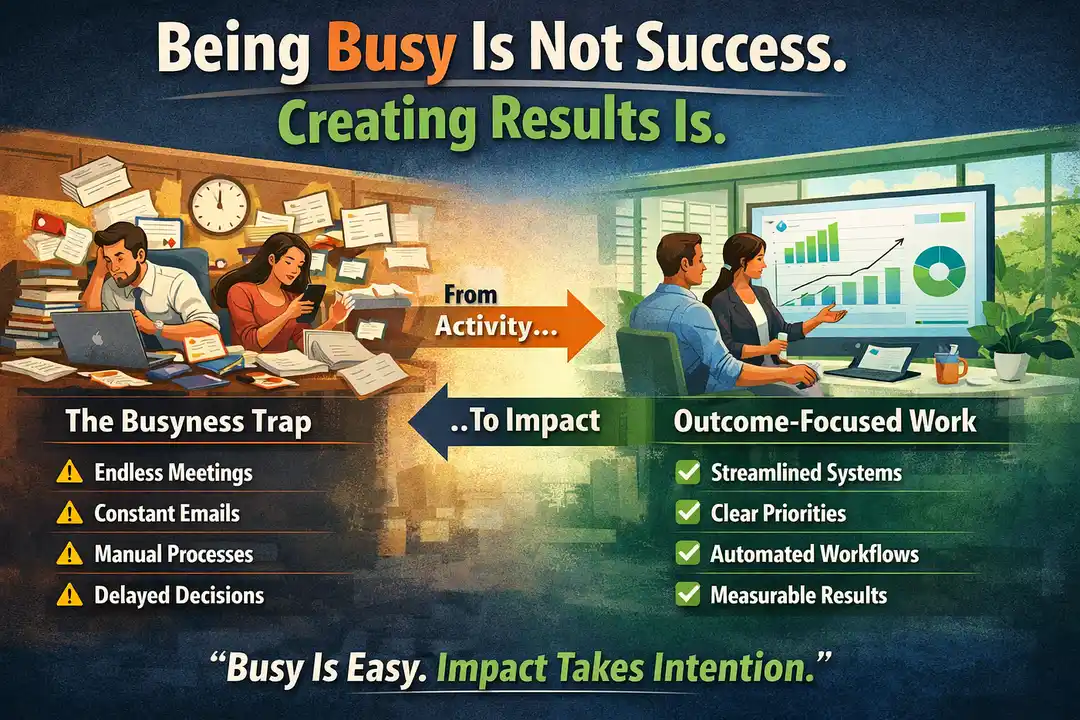
One of the biggest traps in automation is mistaking activity for progress.
You see more browser profiles running, more content publishing, more scraping jobs completing, more leads entering the system, and more workflows happening every day.
That creates the feeling that everything is improving.
But if engagement is flat, replies are weak, bans are increasing, or sales are not improving, then all that activity may not actually matter.
Busy systems can still produce weak outcomes.
That is why it is important to track what actually changed after automation was introduced.
Did content perform better?
Did conversion rates improve?
Did account bans decrease?
Did response rates improve?
Did the business save time?
Did revenue increase?
If those things are not improving, then the automation may be creating more work without creating more value.
The System That Actually Makes Automation Valuable
The easiest way to make automation more effective is to connect every workflow to a specific business outcome.
Do not automate content just to publish more often. Automate it to improve reach, engagement, or authority.
Do not automate outreach just to send more messages. Automate it to increase qualified replies.
Do not automate browser profiles just to scale account volume. Automate them to improve stability, reduce bans, and save time.
Every automation should have a clear reason behind it.
You should also review performance regularly.
If something is not working, do not keep scaling it.
Fix the strategy first.
That means improving the content, changing the messaging, adjusting the targeting, improving the proxy setup, or changing the workflow entirely.
Once the underlying process works, then automation becomes much more valuable.
Why Centralization Makes This Easier
It is much harder to understand whether automation is helping when schedules, content, browser profiles, Android workflows, account health, and reporting are spread across different tools.
You may have one platform showing content activity, another tracking browser sessions, another tracking leads, and another showing results.
That makes it difficult to understand what is actually improving.
This is one of the reasons Appilot becomes useful when automation starts scaling.
Instead of keeping browser profiles, Android workflows, schedules, account assignments, and task history spread across multiple systems, everything can stay visible from one dashboard. That makes it easier to compare activity against results, identify weak workflows, and see which automations are actually creating value.
Conclusion: Automation Is A Multiplier, Not A Shortcut
If automation did not 10x your results, the issue is usually not the automation itself.
The problem is that automation can only amplify what is already there.
If the strategy is weak, the content is generic, the targeting is poor, or the workflow is unstable, automation will usually just make those problems happen faster and at a larger scale.
Once you build a process that already works manually, connect automation to clear business outcomes, and focus on improving quality before quantity, automation becomes much more valuable.
That is what allows automation to create real growth instead of just creating more activity.