Why Cloud Solutions Aren’t Solving Your Scaling Problem (And What Actually Will)

At some point, scaling your setup starts to feel impossible on your local machine, profiles slow down, automation becomes unstable, and every attempt to increase workload results in diminishing performance, so naturally you look toward the cloud as the obvious solution, expecting that moving everything off your computer will remove all limitations.
You set up a cloud server, maybe even a powerful one with high RAM and CPU, deploy your automation, start running multiple profiles, and for a brief moment it feels like the problem is solved, everything runs faster, smoother, and more efficiently than before.
Then slowly, almost predictably, the same issues begin to resurface, profiles start lagging again, resource usage spikes, performance becomes inconsistent, and you realize that despite moving to the cloud, you are still hitting limits that look suspiciously similar to what you experienced locally.
What makes this particularly frustrating is that cloud solutions are supposed to eliminate hardware constraints, yet here you are dealing with the same bottlenecks, just on a remote machine instead of your own.
You are not alone in this, and more importantly, this is not because cloud computing does not work, but because the way it is typically used for automation and multi-profile setups does not actually solve the underlying problem.
Once you understand why cloud solutions fail to deliver true scalability in this context, you can shift toward an approach that actually works.
Why Cloud Setups Still Hit Scaling Limits
Most people assume that moving to the cloud removes all constraints, but in reality, cloud environments still operate under the same fundamental principles as local machines.
You’re Still Running a Centralized System
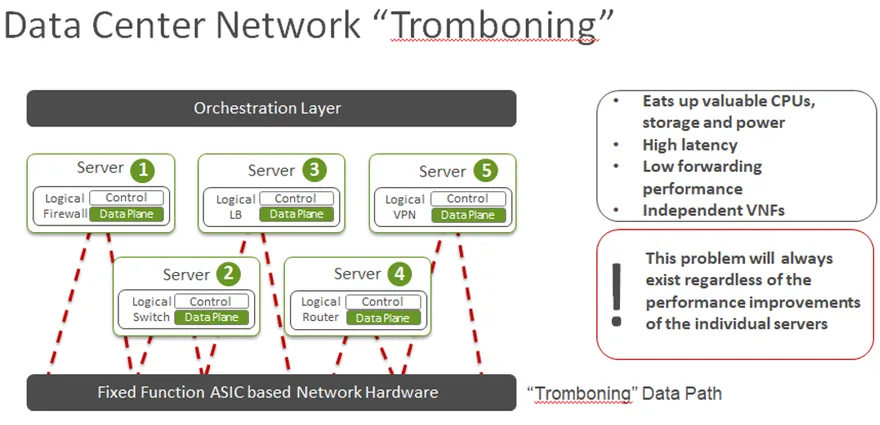
Even in the cloud, you are typically running all profiles and automation on a single virtual machine, which means that all processes still compete for the same CPU, memory, disk, and network resources.
This creates the same bottleneck you had locally, just on a different machine.
Resource Limits Still Exist
Cloud servers may offer more resources, but they are not unlimited, and as you increase workload, you eventually reach the same saturation point where performance degrades. Scaling vertically by upgrading your instance only delays the problem rather than solving it.
Network and Latency Overhead
Running automation in the cloud introduces additional network complexity, where latency, bandwidth limits, and connection stability can impact performance, especially when interacting with platforms that expect local or mobile behavior.
Detection Risks Increase
Cloud environments often use shared IP ranges that are more likely to be flagged by platforms, which can lead to increased detection, throttling, or restrictions, further reducing the effectiveness of your setup.
The Hidden Cost of Relying on Cloud Alone
While cloud solutions can improve performance initially, they often come with increasing costs, where scaling requires upgrading instances or adding more servers, leading to higher monthly expenses without guaranteed stability.
You also face operational complexity, managing servers, configurations, and deployments, which takes time and effort away from actual workflow execution.
More importantly, you are still operating within a centralized model, which means the same fundamental limitations continue to apply.
The Complete Solution: What Actually Works Instead
The core issue with both local and cloud setups is not where the automation runs, but how it is structured, because running everything in one place will always create a bottleneck.
The solution is to move from centralized execution to distributed execution, where workloads are spread across multiple independent environments rather than concentrated in a single system.
This is where mobile-native automation provides a fundamentally different approach, because instead of running browser profiles on a server, you run workflows directly on real devices, each operating independently with its own resources and network.
A practical way to implement this is by using a platform like Appilot, which allows you to run automation on Android devices without managing infrastructure, effectively bypassing the limitations of both local machines and cloud servers.
With this approach, scaling is no longer about increasing the power of a single system, but about adding more independent nodes, each contributing to overall capacity without creating a central bottleneck.
This not only improves performance but also enhances stability, because failures in one environment do not affect others.
How to Prevent Scaling Issues in the Future
Preventing scaling issues requires designing your system with distribution in mind, ensuring that workloads are never concentrated in a single point.
By maintaining separation between environments and avoiding dependency on a single machine or server, you eliminate the bottlenecks that cause performance issues.
Monitoring helps you track performance across environments and identify potential issues early, allowing you to scale proactively.
Common Mistakes That Keep Cloud Setups Failing
One of the most common mistakes is assuming that upgrading cloud resources will solve scaling issues, which leads to higher costs without addressing the underlying problem.
Another is running all automation through a single instance, which recreates the same bottleneck as a local machine.
There is also a tendency to ignore detection risks associated with cloud environments, which can impact performance and reliability.
Real Success Stories: Before and After
A user who migrated their automation workflows to a cloud server initially saw improved performance, but quickly encountered the same scaling limitations as their local setup, along with increasing costs.
After transitioning to a distributed approach using Appilot, they were able to scale more efficiently without relying on expensive cloud infrastructure.
Another example involved a team managing large-scale automation campaigns, where cloud limitations prevented them from scaling effectively, but after restructuring their system, they achieved stable performance at higher volumes.
Frequently Asked Questions
One common question is whether cloud solutions are useless for automation, and the answer is no, they can be useful for certain tasks, but they are not a complete solution for scaling multi-profile workflows.
Another question is whether distributed setups are more complex, and while they require a different approach, platforms like Appilot simplify the process significantly.
There is also the concern about cost, and while distributed systems may require initial setup, they often reduce long-term expenses compared to continuously upgrading cloud resources.
Conclusion: Stop Scaling Vertically, Start Scaling Smart
If cloud solutions are not solving your scaling problem, it is not because cloud technology is flawed, but because it is being used in a way that does not address the root issue.
Once you shift from a centralized model to a distributed one, the limitations disappear, and scaling becomes a matter of structure rather than power.
If you are stuck right now, trying to push your cloud setup further, the best step forward is not to upgrade again, but to rethink your approach, because once you do, scaling becomes predictable, stable, and far more efficient.