Why “Working Harder” Stopped Working (And What Actually Does)
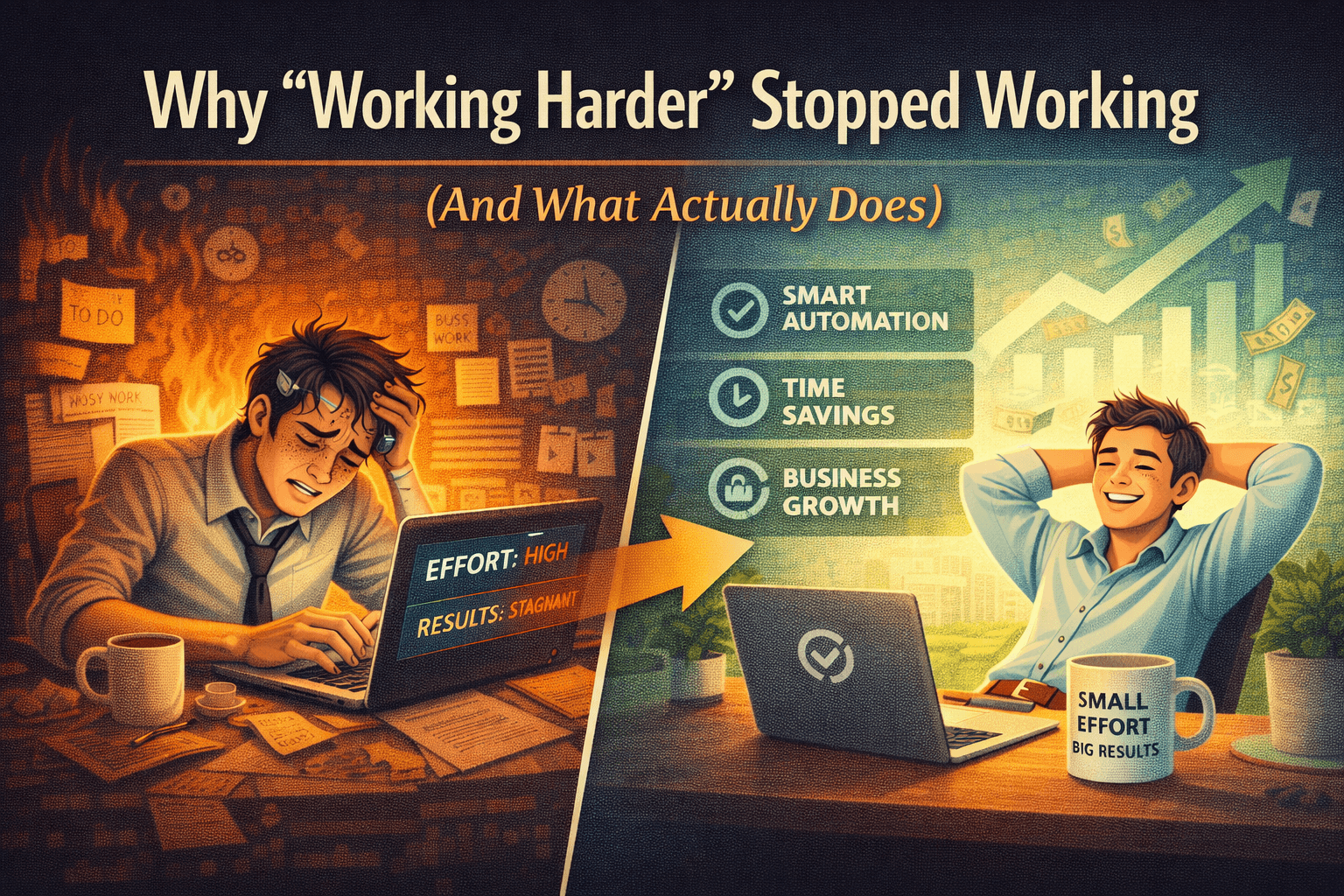
There was a time when working harder clearly translated into better results, you put in more hours, handled more tasks, pushed through more work, and you could see the direct impact of that effort, but at some point, that relationship starts to break down.
You work longer, take on more responsibilities, and try to move faster, yet the results do not scale in the same way, progress feels slower, growth plateaus, and despite increasing effort, the outcome remains relatively unchanged.
This creates a frustrating disconnect, because your instinct tells you to push harder, but pushing harder no longer produces the same effect, making it feel like something fundamental has shifted.
You may start questioning whether you are doing something wrong, whether you need more discipline, or whether the market has changed, but the reality is simpler and more structural than that.
You are not alone in this, and more importantly, this is not a personal limitation, it is a natural limit of effort-based systems, because at a certain point, working harder stops being the solution.
The good news is that once you understand why effort alone no longer works and what replaces it, you can shift your approach and start seeing results again.
Why Working Harder Stops Working
Effort-based growth has limits, and those limits become more visible as you scale.
Time Is a Fixed Resource
No matter how efficient you become, there are only so many hours in a day, which means that effort cannot increase indefinitely.
Tasks Don’t Scale Linearly
Manual tasks require repeated effort, which means that doing more work requires proportionally more time and energy.
Complexity Increases With Growth
As your business grows, systems become more complex, requiring more coordination, oversight, and management.
Diminishing Returns Set In
Beyond a certain point, additional effort produces smaller and smaller improvements, making it harder to achieve meaningful growth.
The Hidden Cost of Relying on Effort
Relying on effort alone does not just limit growth, it creates fatigue, reduces efficiency, and makes it harder to sustain performance over time.
You may feel stuck, working hard without seeing proportional results, which can lead to frustration and burnout.
More importantly, it prevents you from building systems that could multiply your impact.
The Complete Solution: Shift From Effort to Leverage
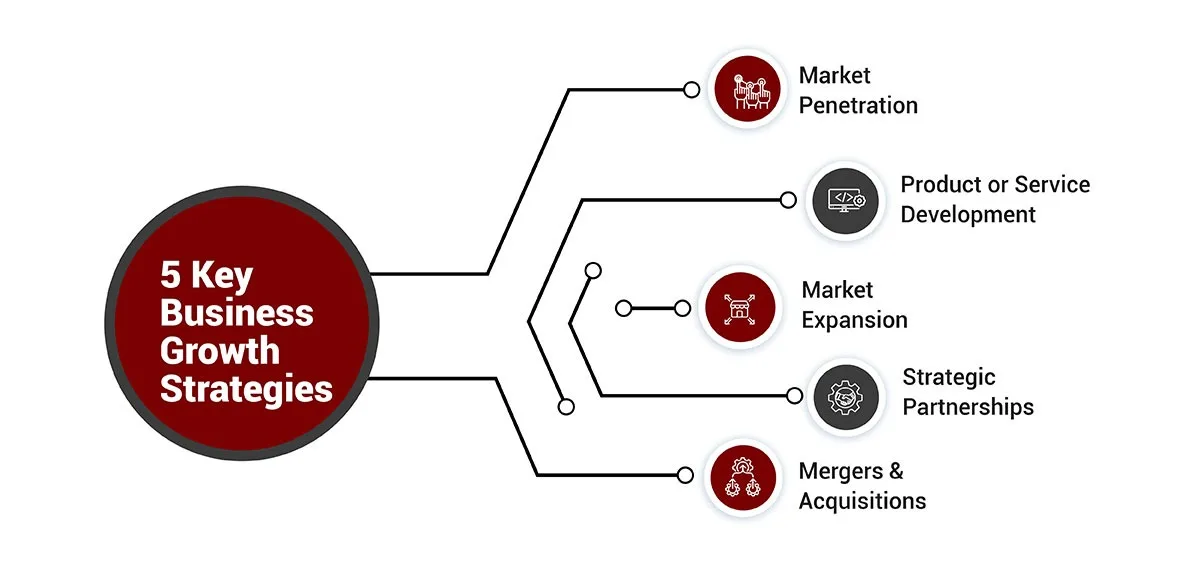
The way forward is not to work harder, but to create leverage, where each action produces ongoing results rather than one-time outcomes.
The first step is identifying tasks that are repeated frequently, because these are the areas where effort can be replaced with systems.
Once identified, the next step is standardizing processes, ensuring that tasks follow consistent patterns that can be replicated.
Automation becomes the execution layer, allowing these processes to run independently and scale without additional effort.
A practical way to implement this is by using a platform like Appilot, which enables you to run workflows on real devices, reducing manual effort and increasing scalability.
By introducing leverage into your system, you shift from effort-based growth to system-driven growth, where results compound over time.
The next step is reallocating your time, focusing on strategy, optimization, and decision-making rather than execution.
How to Prevent Falling Back Into the Same Trap
Prevention starts with maintaining a focus on leverage, ensuring that new tasks are evaluated for scalability before being added to your workflow.
Regular reviews help you identify areas where manual work is creeping back in, allowing you to address it early.
Automation ensures that repetitive tasks remain efficient and scalable.
Common Mistakes That Keep You Stuck
One of the most common mistakes is trying to optimize manual work instead of replacing it.
Another is delaying system building, which keeps you tied to effort-based growth.
There is also a tendency to equate effort with progress, which can be misleading.
Real Success Stories: Before and After
A business owner who relied heavily on manual work found that increasing effort did not lead to proportional growth.
After implementing automation using Appilot, they were able to create leverage and achieve more consistent results.
Another example involved a team that struggled with scaling, but after restructuring their system, they achieved more efficient and sustainable growth.
Frequently Asked Questions
One common question is whether hard work is still important, and while effort is necessary, it needs to be applied strategically.
Another question is how to identify leverage opportunities, and the answer lies in recognizing repetitive tasks and inefficiencies.
There is also the concern about complexity, and well-designed systems simplify operations rather than complicate them.
Conclusion: Work Smarter, Not Just Harder
If working harder is no longer producing results, it is not because effort has no value, but because it has reached its limit.
Once you shift to a system that creates leverage, your work becomes more efficient, scalable, and impactful.
If you are dealing with this right now, the best step forward is not to push harder, but to change how your work is structured, because once you do, growth becomes possible again.