Why You Can’t Onboard Clients Fast Enough (And How to Fix It)

You are getting leads, conversations are happening, clients are interested, and everything on the front end of your business seems to be working, but the moment someone says yes, the process slows down in a way that feels completely out of sync with the momentum you just built.
Instead of a smooth transition from agreement to execution, onboarding turns into a fragmented sequence of steps, collecting details, setting up accounts, configuring systems, sending instructions, waiting for responses, and constantly going back and forth to fill gaps that should have been handled upfront.
What should take a few hours stretches into days, sometimes even weeks, and during that time, clients become less engaged, delays start to create friction, and the energy from the initial sale begins to fade.
You start to feel the pressure from both sides, clients expecting fast results and your internal system struggling to keep up, which makes onboarding feel like a bottleneck that limits how many clients you can realistically handle.
You are not alone in this, and more importantly, this is not because onboarding is inherently complex, but because most onboarding processes are not designed for speed or scale.
The good news is that once you understand why onboarding slows down and where the friction actually comes from, you can redesign it into a system that moves quickly, consistently, and without constant intervention.
Why Your Onboarding Process Is Slowing You Down
Most onboarding delays are not caused by one big issue, but by multiple small inefficiencies that compound over time.
Information Collection Is Fragmented
Instead of gathering everything upfront, information is collected in pieces, through emails, messages, and follow-ups, which creates delays and increases the chance of missing details.
Setup Is Manual and Repetitive
Every new client requires similar setup steps, yet these steps are often performed manually each time, which slows down the process and increases the risk of errors.
Dependency on You
When onboarding requires your involvement at every step, it creates a bottleneck where progress depends on your availability, delaying the entire process.
Lack of Standardization
Without a consistent onboarding framework, each client is handled differently, making it difficult to optimize or scale the process.
The Hidden Cost of Slow Onboarding
Slow onboarding does not just delay execution, it impacts client experience, reduces trust, and limits your ability to scale.
Clients who wait too long may lose confidence, become less responsive, or even reconsider their decision, while your team struggles to manage multiple onboarding processes simultaneously.
More importantly, it creates a capacity limit, because you can only onboard as many clients as your process allows, regardless of demand.
The Complete Solution: How to Speed Up Client Onboarding
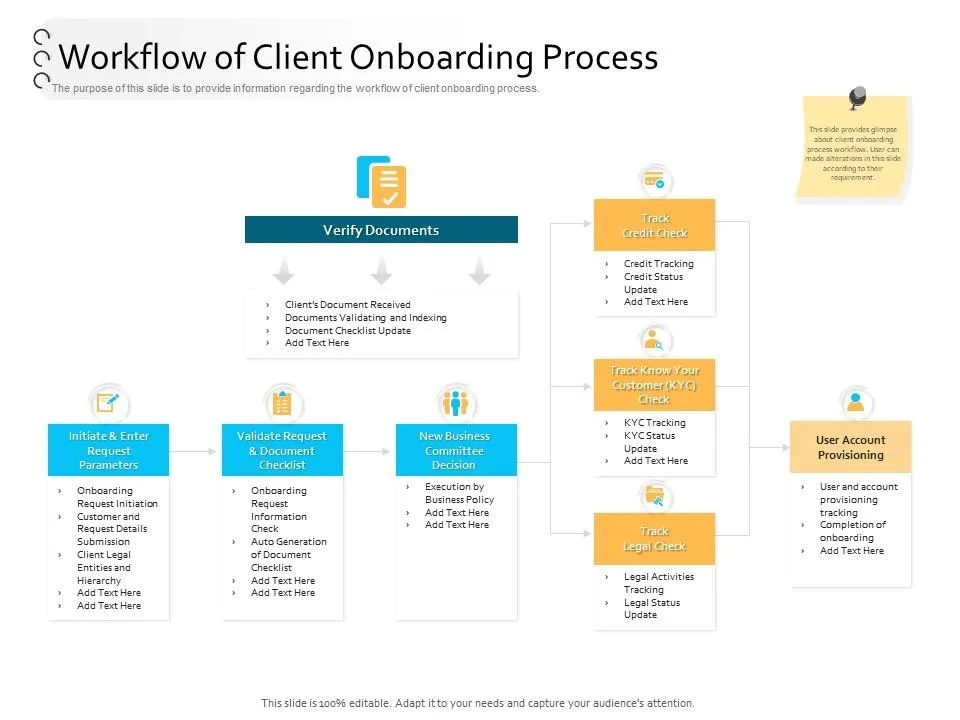
Fixing onboarding requires shifting from a reactive process to a structured system that handles most steps automatically.
The first step is consolidating information collection into a single, structured form or system, ensuring that all required details are gathered upfront rather than through multiple interactions.
Once information is collected, the next step is automating repetitive setup tasks, reducing the need for manual work and ensuring consistency across clients.
This is where automation becomes a critical component, allowing you to handle tasks such as account creation, configuration, and initial setup without manual intervention.
A practical way to implement this is by using a platform like Appilot, which enables you to automate onboarding workflows on real devices, reducing setup time and improving efficiency.
By combining structured data collection with automation, you create a system where onboarding becomes a predictable, repeatable process that does not rely heavily on manual effort.
The final step is defining clear roles and responsibilities, ensuring that each part of the onboarding process is handled by the appropriate person or system, reducing dependency on you.
How to Prevent Onboarding Bottlenecks From Returning
Prevention starts with maintaining a standardized onboarding process, ensuring that every client goes through the same structured steps.
Regularly reviewing and optimizing your workflow helps you identify inefficiencies and improve speed over time.
Automation ensures that repetitive tasks remain efficient and do not reintroduce delays into the system.
Common Mistakes That Slow Down Onboarding
One of the most common mistakes is trying to customize onboarding for every client, which reduces efficiency and increases complexity.
Another is relying too heavily on manual processes, which creates unnecessary delays and increases workload.
There is also a tendency to underestimate the importance of onboarding, treating it as a secondary process rather than a critical part of the client experience.
Real Success Stories: Before and After
A business owner struggling with slow onboarding found that it took several days to fully set up each client, limiting their ability to scale.
After implementing structured workflows and automation using Appilot, they were able to reduce onboarding time significantly and handle more clients without increasing workload.
Another example involved a team that faced delays due to fragmented processes, but after standardizing their onboarding system, they achieved faster and more consistent results.
Frequently Asked Questions
One common question is how long onboarding should take, and while it varies, a well-structured process should be completed within hours rather than days.
Another question is whether automation can handle all onboarding tasks, and while not everything can be automated, a significant portion can be, reducing manual effort.
There is also the concern about losing personalization, and in reality, standardization creates a strong foundation that can still allow for customization where needed.
Conclusion: Turn Onboarding Into a Strength
If you cannot onboard clients fast enough, it is not because you lack capacity, but because your system is not designed for speed.
Once you shift from a fragmented, manual process to a structured, automated system, onboarding becomes efficient, consistent, and scalable.
If you are facing this issue right now, the best step forward is not to push harder, but to redesign your onboarding process, because once you do, you will not just move faster, you will unlock the ability to grow without limits.