Why Your Automation Attracts Bots Instead of Real Users
More Activity Does Not Always Mean Better Results
At first, the numbers can look impressive.
You start automating outreach, comments, follows, DMs, content posting, or traffic generation, and suddenly there is much more activity happening across your accounts.
More people are viewing the profile. More people are replying. More people are following. More people are clicking.
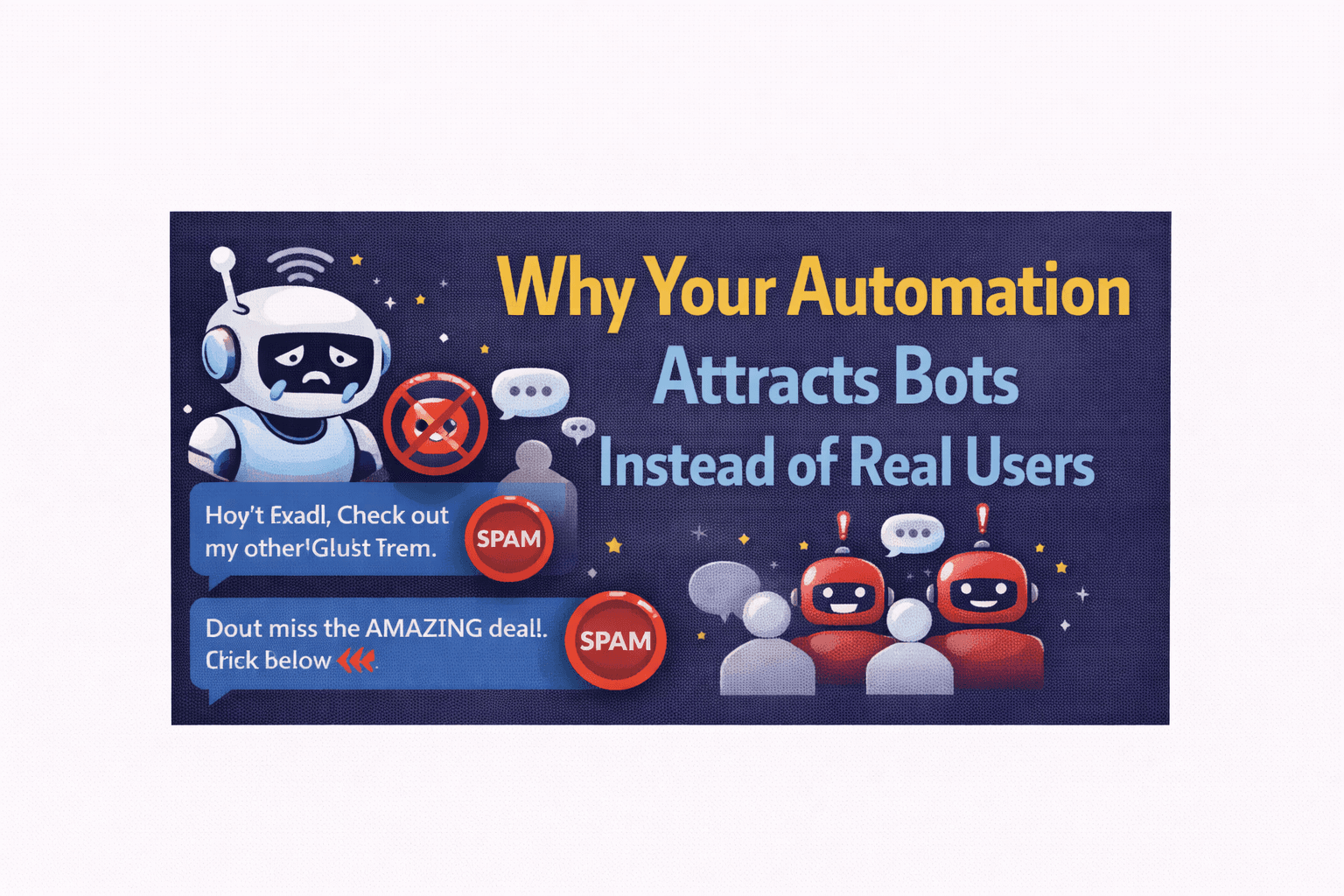
Then eventually you realize that most of those people are useless.
The followers are fake. The replies are spam. The DMs are from other bots. The comments are low quality. The traffic does not convert.
That is one of the most frustrating problems with automation because it creates the feeling that the system is working when the actual results are getting worse.
The issue is usually not that automation itself is bad.
The problem is that certain types of automation naturally attract other automated systems.
Why Bots Usually Find Automated Systems First
Most bots are designed to look for predictable behavior.
They search for accounts that post in repetitive patterns, use the same types of comments, send similar DMs, follow large numbers of people, or repeatedly interact with the same type of content.
That means automated accounts often become easier for other bots to detect.
For example, if your account comments on hundreds of posts with the same type of message, spam accounts will often start replying.
If your DMs follow the same format every time, low-quality leads and automated responders may start interacting with them.
If your account follows large numbers of people quickly, fake engagement accounts often follow back.
That creates an audience full of low-quality users instead of real people.
The Biggest Mistake: Optimizing For Activity Instead Of Relevance
One of the biggest reasons automation attracts bots is because people focus too much on volume.
They want more followers, more replies, more DMs, more comments, and more clicks.
That sounds good in theory, but higher numbers do not always mean higher quality.
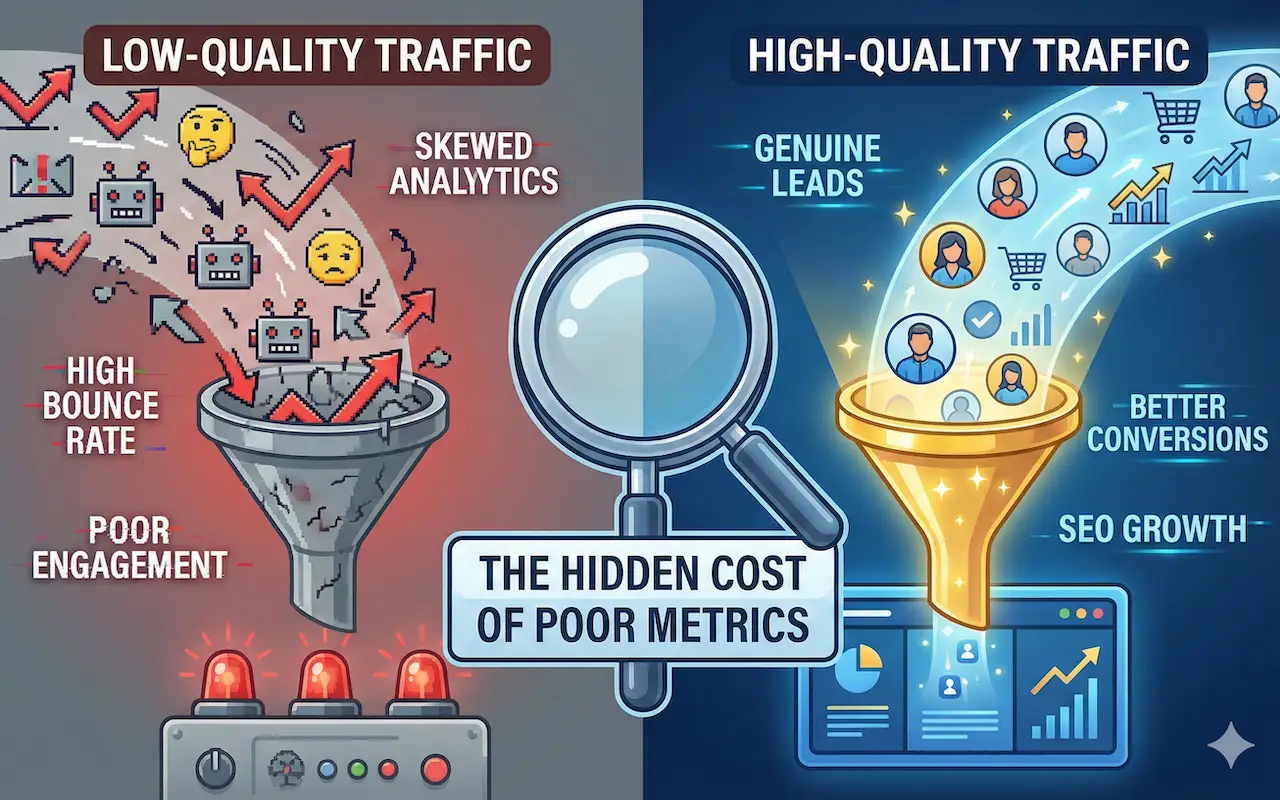
A system that generates one hundred low-quality interactions is often much worse than a system that generates ten strong interactions from real users.
When the targeting is weak, the automation usually starts pulling in anyone who reacts.
That often includes spam accounts, fake engagement accounts, scraper bots, and low-quality leads.
The easiest way to fix this is by making the targeting much narrower.
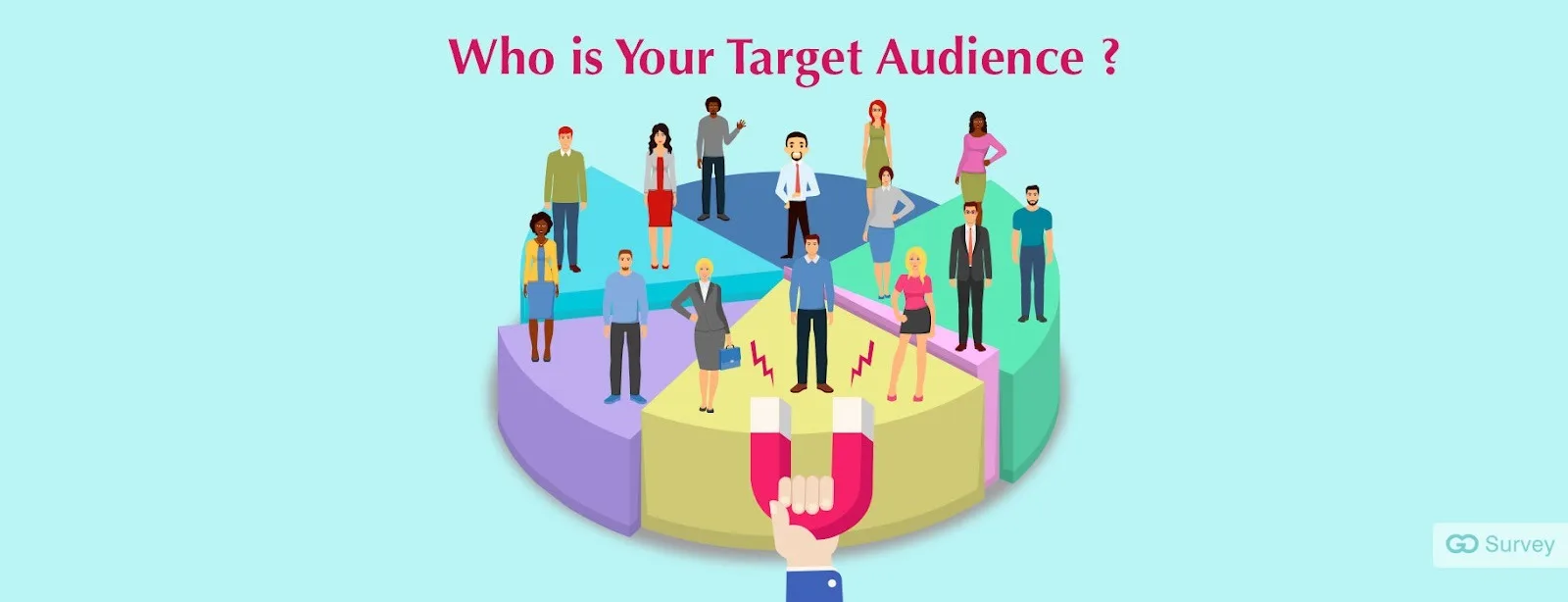
Instead of engaging with everyone, focus on very specific audiences, industries, interests, account types, and communities.
That usually reduces the total volume, but it improves the quality dramatically.
Why Generic Outreach Attracts The Wrong Audience
Another major reason automation attracts bots is because the messaging is too generic.
Spam accounts respond well to generic content because generic content feels broad enough to apply to anyone.
Messages like “Let’s connect,” “Great profile,” or “We can help you grow” are so vague that they attract low-quality interactions.
Real users are much more selective.
They usually respond when the content feels specific to them.
For example, an e-commerce store owner is much more likely to respond to a message about inventory management, pricing updates, or multi-store operations than a vague message about “growing faster.”
The more specific the message becomes, the more likely it is to attract real people instead of bots.
Why Engagement Pods And Fake Networks Make The Problem Worse
A lot of people unknowingly make this problem worse by using low-quality engagement networks.
They buy followers, use engagement groups, run mass-follow systems, or rely on fake interaction tools to make the account look bigger.
That may increase numbers in the short term, but it usually damages the account over time.
Platforms notice when engagement looks unnatural.
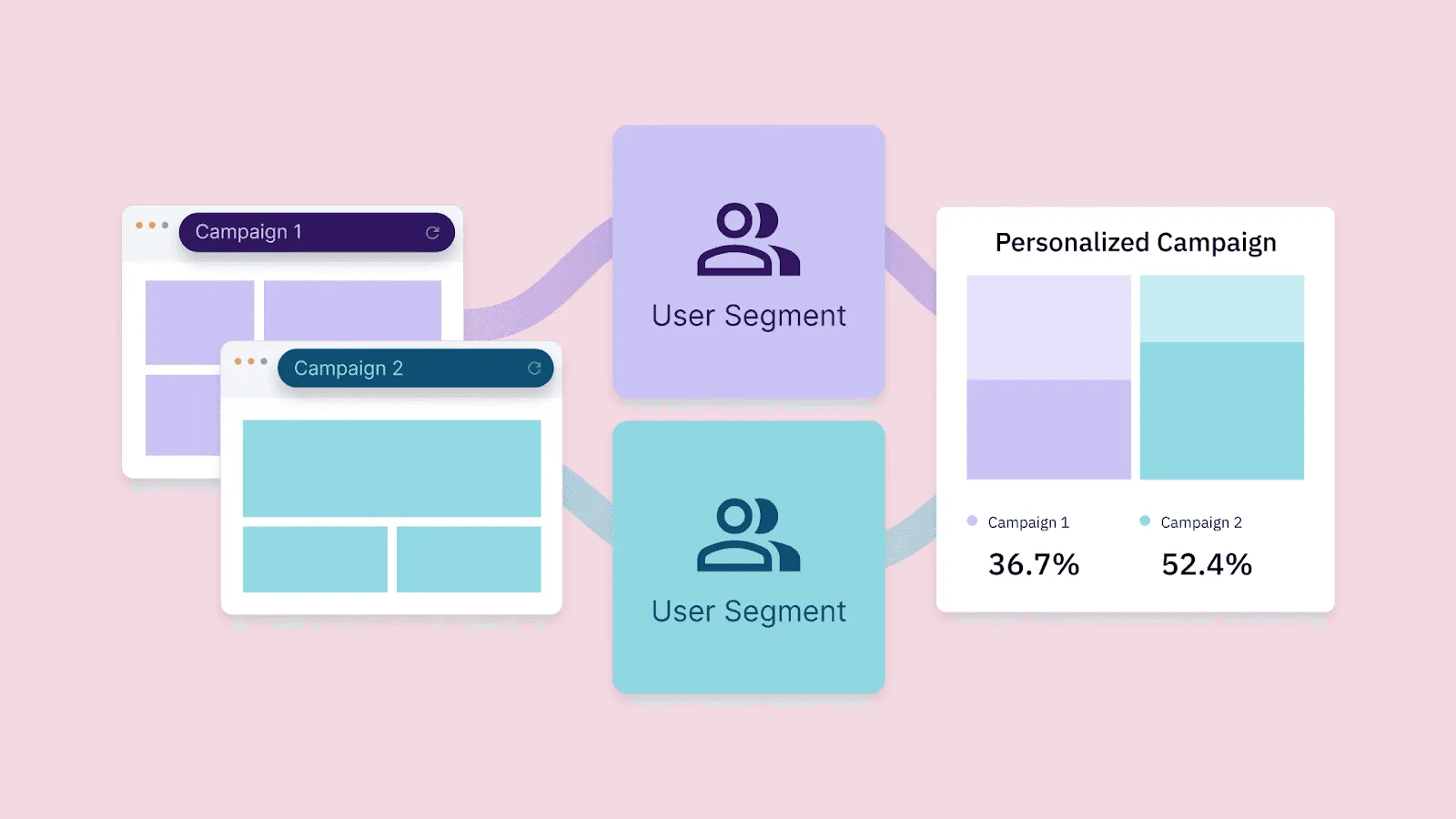
You may end up with thousands of followers but almost no real comments, no real clicks, and no real sales.
That creates an account that looks active on the surface but performs very badly underneath.
Real users can usually feel this too.
If an account has huge follower counts but weak engagement quality, people often become less likely to trust it.
The System That Attracts Better Users
The easiest way to attract better users is to make the automation feel more selective.
Target smaller groups of highly relevant people.
Use more specific content.
Reference real problems.
Comment in ways that add value.
Send messages that feel personal.
Avoid generic phrases, mass engagement tactics, and fake growth strategies.
You should also spend time looking at which types of users are actually converting.
Which followers turn into customers?
Which replies lead to real conversations?
Which traffic sources create sales?
Those patterns should shape the next version of the system.
The goal should not be attracting the largest number of people.
The goal should be attracting the right people.
Why Centralization Makes This Easier
It becomes much harder to separate real users from bots when browser profiles, lead lists, outreach schedules, account notes, engagement history, and reporting are spread across different tools.
You may have one platform for outreach, another for browser automation, another for analytics, and another for content management.
That makes it difficult to understand which workflows are attracting valuable users and which ones are only attracting noise.
This is one of the reasons Appilot becomes useful when automation starts scaling.
Instead of keeping browser profiles, Android workflows, outreach schedules, content history, account notes, and performance tracking spread across multiple systems, everything can stay visible from one dashboard. That makes it easier to compare lead quality, identify fake engagement patterns, spot weak targeting, and see which automations are bringing in real users instead of bots.
Conclusion: Better Automation Attracts Better Users
If your automation keeps attracting bots instead of real users, the issue is usually not the automation itself.
The problem is that the targeting, messaging, and engagement patterns became too broad, too repetitive, and too easy for spam systems to find.
Once you narrow the audience, improve the quality of the messaging, and focus more on relevance than raw activity, it becomes much easier to attract real people.
That is what allows you to grow without filling your accounts with fake followers, spam replies, and useless traffic.