Why Your Automation Costs More Than Hiring a VA (And How to Fix It)

You Automated to Save Money… But Your Costs Went Up
Automation is supposed to be the efficient choice. You invest in tools, set up workflows, and expect everything to run faster, cheaper, and with less effort.
At first, it feels like progress. Tasks are automated, processes are streamlined, and you rely less on manual work. But then the costs start to add up.
You are paying for multiple tools, subscriptions, integrations, and maintenance, and when you compare it to hiring a virtual assistant, the numbers no longer make sense.
What was supposed to reduce cost has created a different kind of expense, one that is less visible but more persistent.
This is not a failure of automation. It is a failure of how automation is implemented.
Why Automation Ends Up Costing More
The issue is not automation itself, but how systems are built around it.
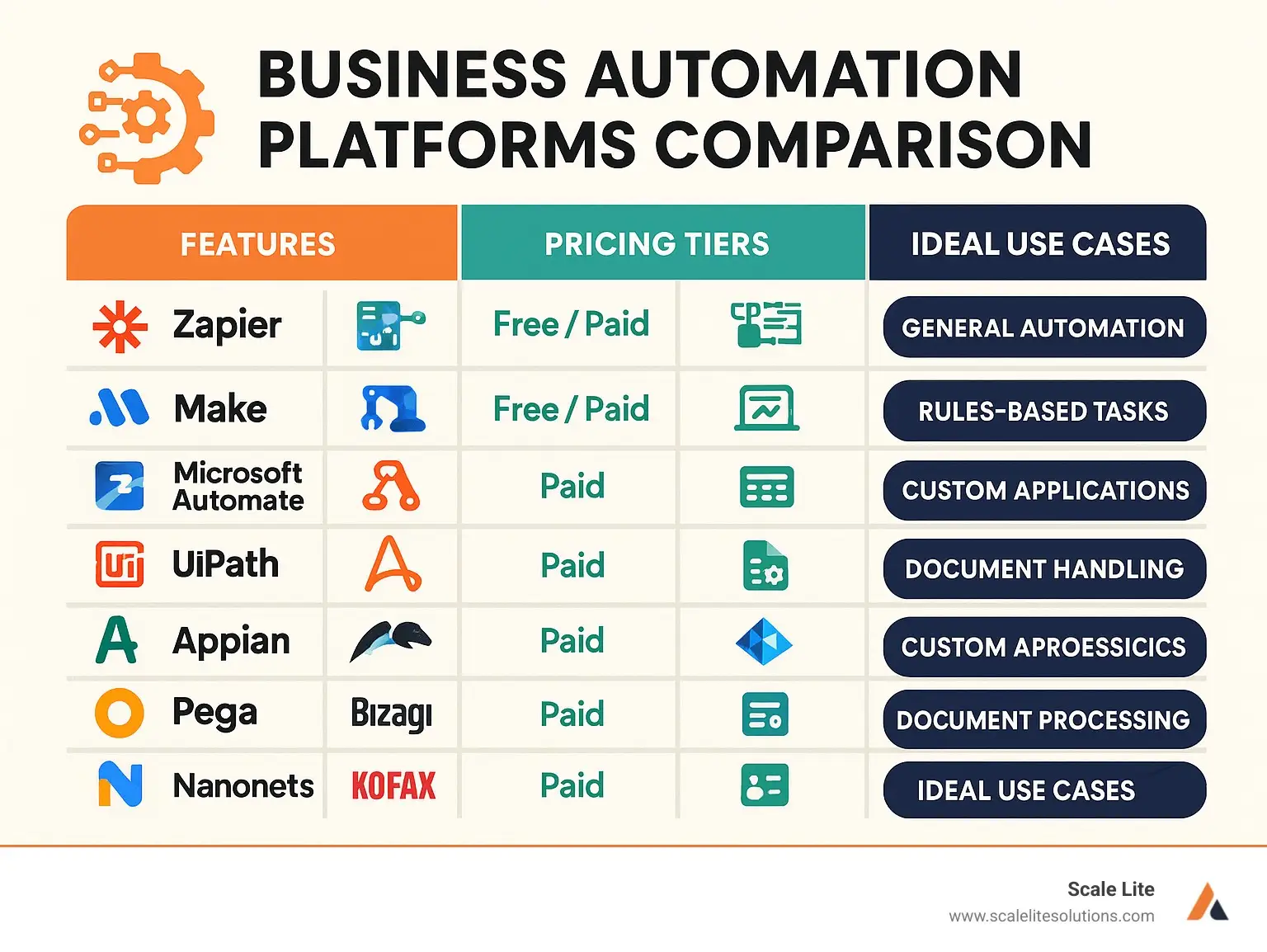
The first cause is tool stacking. Instead of using a single system, multiple tools are combined to handle different parts of a workflow, which increases cost.
The second cause is overengineering. Workflows are designed to handle every possible scenario, even when simpler solutions would be sufficient.
The third cause is maintenance overhead. Automated systems require updates, monitoring, and troubleshooting, which adds ongoing cost.
The fourth cause is underutilization. Many automation tools are used for only a fraction of their capabilities, but the full cost is still paid.
The Hidden Cost of Over-Automation
When automation is poorly structured, it creates inefficiencies instead of eliminating them.
You spend time managing tools instead of focusing on output. Debugging workflows, fixing integrations, and maintaining systems becomes part of your workload.
There is also a flexibility problem. Automated systems can be rigid, requiring adjustments when conditions change, which adds complexity.
From a financial perspective, costs scale with your tool stack rather than your output, which reduces efficiency.
Most importantly, you lose the simplicity that automation was supposed to provide.
The Real Problem: You Automated Tools, Not Workflows
The core issue is that automation is often built around tools instead of being designed around the actual work.
When each tool handles a small part of the process, you end up with a fragmented system that requires coordination between multiple components.
This increases both cost and complexity.
What you need is not more automation, but better-structured automation.
The Complete Solution: Simplify and Centralize Execution
The only way to make automation cost-effective is to reduce fragmentation and focus on structured workflows.
The first step is auditing your automation stack. You identify which tools are essential and which are redundant.
The second step is simplifying workflows. Instead of building complex systems, you focus on the simplest approach that achieves the desired outcome.
The third step is centralizing execution. Instead of spreading automation across multiple tools, you move toward a system that handles execution directly.
This is where many teams struggle, because replacing multiple automation tools requires a system that can handle workflows efficiently.
This is also where tools like Appilot become relevant.
Instead of relying on multiple automation tools and integrations, Appilot allows you to run workflows on real devices within a centralized system, reducing the need for complex setups and multiple subscriptions.
You could attempt to simplify your stack manually by removing tools and restructuring workflows, but maintaining that balance becomes difficult as you scale. Appilot simplifies this by acting as a unified execution layer that reduces both cost and complexity.
The key shift is moving from tool-based automation to system-based execution.
Why Simpler Automation Costs Less
Once automation is structured correctly, costs begin to align with value.
You eliminate redundant tools that were previously handling overlapping tasks.
You reduce maintenance overhead because the system is simpler and more predictable.
You improve efficiency because workflows are streamlined instead of fragmented.
Most importantly, your automation starts delivering the cost savings it was supposed to provide.
When a VA Is Actually the Better Choice
It is important to recognize that automation is not always the best solution.
For tasks that require flexibility, judgment, or low volume, a virtual assistant can often be more cost-effective.
Automation works best for repetitive, high-volume tasks where consistency matters.
The goal is not to replace humans entirely, but to use automation where it makes sense and avoid it where it does not.
How to Prevent Automation Costs from Growing Again
Fixing your automation stack once is not enough. You need to maintain simplicity as your system evolves.
You ensure that new automation tools are only added when necessary and after evaluating existing capabilities.
You regularly review your workflows to identify opportunities for simplification.
You focus on outcomes rather than tools, ensuring that automation serves your process instead of defining it.
Common Mistakes That Make This Worse
One of the most common mistakes is adding more automation tools to fix problems created by existing ones.
Another mistake is overengineering workflows, which increases complexity without improving results.
Some teams ignore maintenance costs, focusing only on subscription prices.
The most critical mistake is assuming that more automation always means more efficiency.
Conclusion: Automation Should Reduce Cost, Not Increase It
If your automation costs more than hiring a VA, it is not because automation is ineffective, it is because your system is too complex.
Once you simplify your workflows, eliminate redundant tools, and centralize execution, automation becomes efficient again.
You can continue adding tools and building complex systems, but the cost will grow with it.
At some point, you either design automation to be simple and scalable or accept that it will become an expensive alternative to manual work.
That is where platforms like Appilot fit in, not as another automation tool, but as a way to simplify execution, reduce complexity, and ensure that automation actually delivers the savings it promises.