Why Your Google Ads Quality Score Keeps Dropping
The Campaign Is Running But Your Costs Keep Rising
One of the most frustrating things in Google Ads is seeing your Quality Score slowly decline even when your campaigns are still active. At first the drop may not seem important. Then suddenly your cost per click increases, your average position becomes worse, impressions start falling, and the whole account becomes more expensive to run.
This happens because Quality Score plays a major role in how Google decides which ads to show and how much advertisers need to pay.
A high Quality Score usually means lower costs, stronger rankings, and better delivery. A low Quality Score often means the opposite.
The important thing to understand is that Quality Score usually does not drop randomly. In most cases, it happens because the keywords, ads, landing pages, or user experience stopped feeling relevant to Google.
Why Google Ads Quality Score Matters So Much
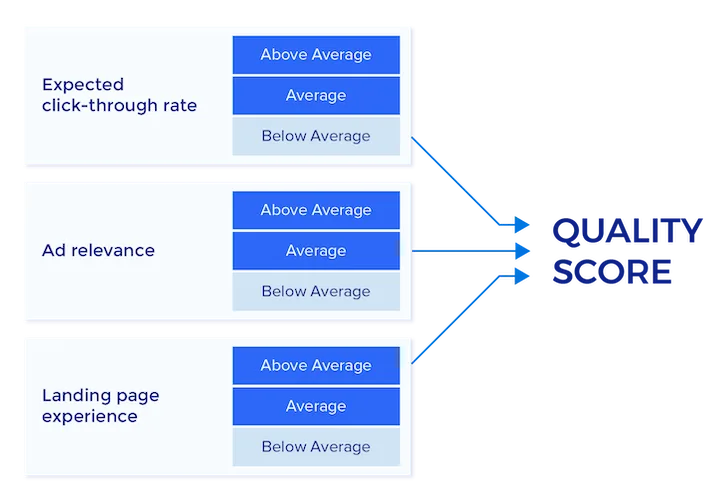
Quality Score is based mainly on three things.
Google looks at expected click-through rate, ad relevance, and landing page experience.
If people are not clicking the ad, Google assumes the ad is less useful.
If the keyword does not match the ad copy closely enough, Google sees the ad as less relevant.
If the landing page loads slowly, feels confusing, or does not match the search intent, the Quality Score becomes weaker.
That means Quality Score is not really about how much you spend. It is more about how well the campaign matches what users are searching for.
The Biggest Mistake: Using One Generic Ad Group For Too Many Keywords
One of the biggest reasons Quality Score drops is because advertisers group too many different keywords into the same ad group.
For example, one ad group may target “running shoes,” “sports shoes,” “cheap sneakers,” “men’s sneakers,” and “trail running shoes” all with the same ad copy.
That usually weakens relevance.
Google wants to see strong alignment between the keyword, the ad, and the landing page.
If the user searches for “trail running shoes” but the ad only talks generally about shoes, the Quality Score may drop because the ad does not feel specific enough.
The stronger approach is creating tighter ad groups with more focused keyword themes.
That makes it easier to write ad copy that matches what the user is actually searching for.
Why Weak Click-Through Rates Hurt Quality Score
Click-through rate is one of the biggest Quality Score signals.
If people see the ad but do not click it, Google assumes the ad is not very relevant or interesting.
This is why old ads often lose performance over time.
At first the ad may perform well. Then gradually the messaging becomes stale, competitors launch stronger ads, or the audience stops responding.
Once click-through rates fall, Quality Score often follows.
The easiest way to improve this is by refreshing headlines, adding stronger offers, improving extensions, and making the ad more relevant to the search term.
Why Landing Pages Cause So Many Quality Score Problems
A lot of Quality Score issues happen because of the landing page.
Google wants the page to load quickly, work well on mobile, match the keyword, and make it easy for users to find what they expected.
If the landing page is slow, confusing, filled with popups, missing information, or unrelated to the keyword, Quality Score often drops.
For example, if the user searches for “free CRM software” but lands on a generic homepage that barely mentions CRM software, Google may see that as a weak landing page experience.
The stronger approach is making sure every important keyword leads to a page that clearly matches the search intent.
Why Better Campaign Structure Matters
Quality Score problems become much harder to manage when keywords, ad copy, landing pages, search terms, and reporting are spread across different systems. You may have one place for keyword research, another for ad copy, another for landing page updates, and another for analytics. That makes it difficult to see which parts of the campaign are causing the score to drop.
This is one of the reasons Appilot becomes useful when advertising operations start scaling. Instead of keeping browser workflows, Android automations, keyword notes, landing page reviews, campaign history, and task logs spread across different systems, everything can stay visible from one dashboard. That makes it easier to compare Quality Score patterns, identify weak keywords, monitor landing page issues, and improve campaign structure across multiple accounts.
Conclusion: Quality Score Usually Drops When Relevance Gets Weaker
If your Google Ads Quality Score keeps dropping, the issue is usually not that Google suddenly dislikes the campaign. The problem is that the keyword, ad copy, click-through rate, or landing page experience became less relevant over time.
Once you tighten ad groups, improve ad copy, refresh headlines, increase click-through rates, and make landing pages match search intent more closely, it becomes much easier to improve Quality Score without simply increasing bids.