Why Your Twitter Reach Suddenly Dropped by 90%
You log into Twitter, expecting to see your usual likes, retweets, and comments, only to find that engagement has cratered. Posts that once reached thousands of people are now barely seen by a handful. If this sounds familiar, you’re not alone. Many marketers, influencers, and business accounts notice sudden drops in reach, often exceeding 80–90%, without any clear explanation.
The sudden decline is alarming because reach directly impacts your visibility, engagement, and ultimately your ability to attract new followers or leads. Unlike gradual engagement dips caused by seasonal trends, a sharp 90% drop usually signals an underlying issue that needs immediate attention. Understanding why it happened, how to fix it, and how to prevent future drops is crucial for anyone serious about maintaining a strong presence on Twitter.
Several factors can contribute to this dramatic decline. It could be algorithmic changes, temporary account restrictions, issues with automation tools, or even content-related problems. Regardless of the cause, the key to recovery lies in identifying the root issue, taking corrective action, and adopting strategies that align with Twitter’s evolving rules and user behavior patterns.
In this guide, you’ll learn why such steep drops in reach occur, how to troubleshoot the problem, and how to implement strategies—both manual and automated—to restore and improve your Twitter visibility. You’ll also see how to use tools like Appilot to structure engagement workflows safely, reducing the risk of further drops while maintaining efficiency.
Understanding Twitter’s Algorithm and Reach
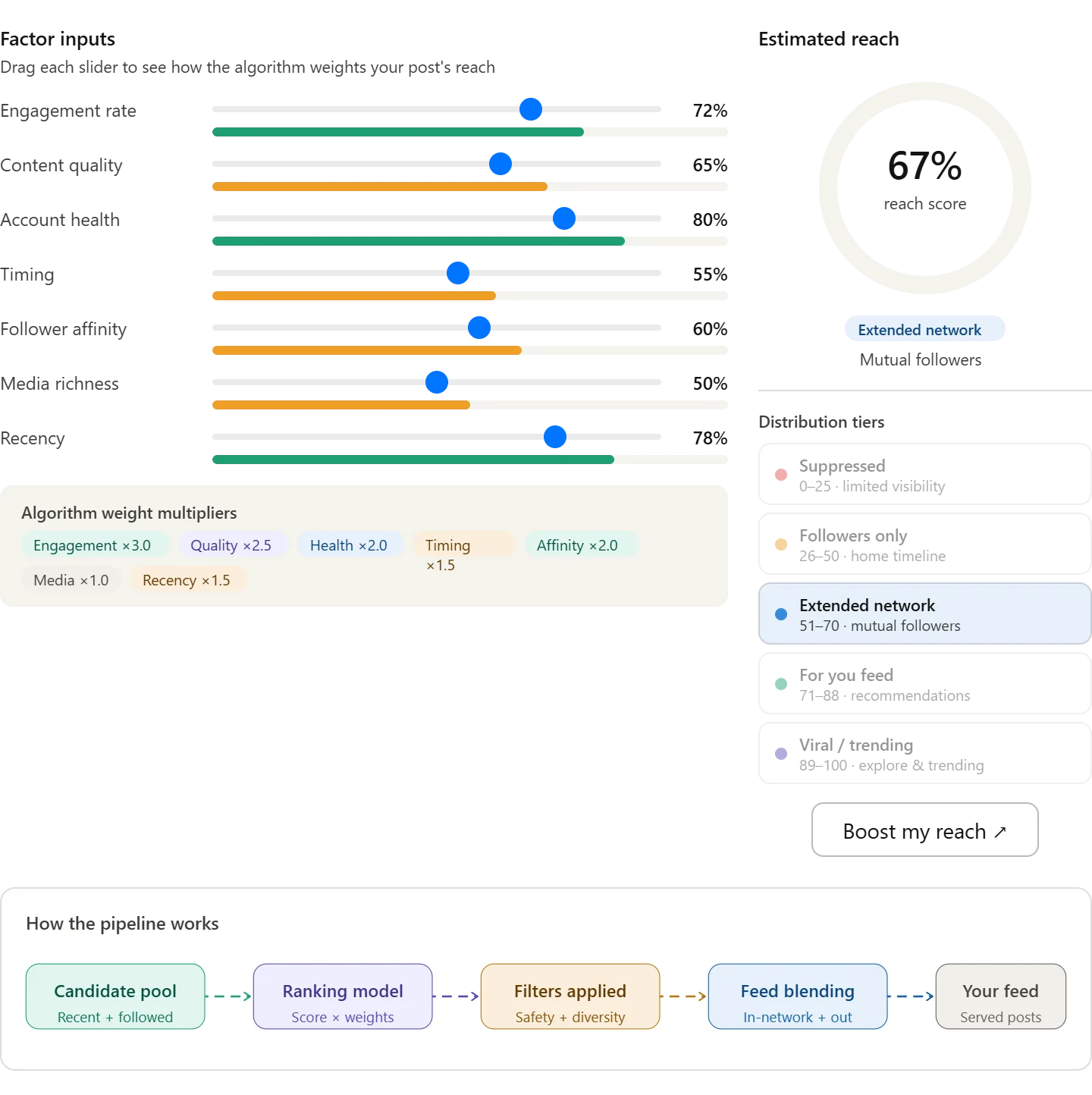
Twitter’s algorithm governs how content is distributed across timelines and search results. Unlike chronological feeds of the past, the platform now prioritizes content based on relevance, engagement potential, and the perceived authenticity of user behavior. This means that even high-quality content can see a sudden reduction in reach if Twitter interprets your activity as low-quality, repetitive, or automated.
Several elements influence reach:
Content Quality: Posts that receive early engagement are favored. Conversely, content that is ignored initially can be deprioritized.
Account Health: Suspicious activity, repeated violations of Twitter rules, or frequent account interruptions can reduce your content’s visibility.
Engagement Patterns: Accounts that display unnatural activity, such as excessively rapid posting, repetitive replies, or aggressive following/unfollowing, can be flagged by Twitter’s detection systems.
Timing and Consistency: Posting inconsistently or at times when your audience is inactive can contribute to lower reach, even if your content is excellent.
Understanding these factors helps explain why a seemingly sudden drop in reach is rarely random; it is usually the result of one or more compounding factors that signal to Twitter that your account’s content may not be providing optimal value to the network.
Common Causes of a 90% Reach Drop
1. Shadowbans and Temporary Restrictions
A shadowban occurs when Twitter limits the visibility of your content without notifying you directly. While not officially confirmed by Twitter, many users experience sudden declines in impressions and engagement that align with this phenomenon. Shadowbans can be triggered by automated behaviors, spam-like activity, or repeated reports from other users.
2. Excessive Automation
Using automation tools irresponsibly can lead to reach reduction. Actions such as sending hundreds of identical DMs, retweeting the same type of content too frequently, or mass-following/unfollowing are flagged as unnatural behavior. Even if your automation was intended to save time, Twitter interprets repetitive and high-volume activity as manipulative.
Tools like Appilot allow users to run automation workflows safely by mimicking human-like patterns, introducing variability in timing, and staying within platform limits. This ensures that engagement activities are scaled without triggering algorithmic penalties.
3. Algorithmic Changes
Twitter continuously updates its algorithm to improve user experience. Updates can deprioritize certain content types or adjust the weighting of engagement metrics. For example, accounts that previously relied on rapid posting for visibility may see their reach decrease if the algorithm now favors slower, more organic interaction.
4. Content Irrelevance or Fatigue
Even if your account is healthy, posting repetitive content that no longer resonates with your audience can reduce reach. Audiences fatigue quickly when exposed to similar messaging, and engagement decreases, which in turn signals to Twitter to show your content less frequently.
5. Account Warnings or Violations
Past warnings or rule violations—even if minor—can result in reduced distribution. Twitter may temporarily deprioritize accounts under review or with pending policy flags, affecting impressions and reach across multiple posts.
How to Diagnose the Root Cause
Step 1: Review Analytics
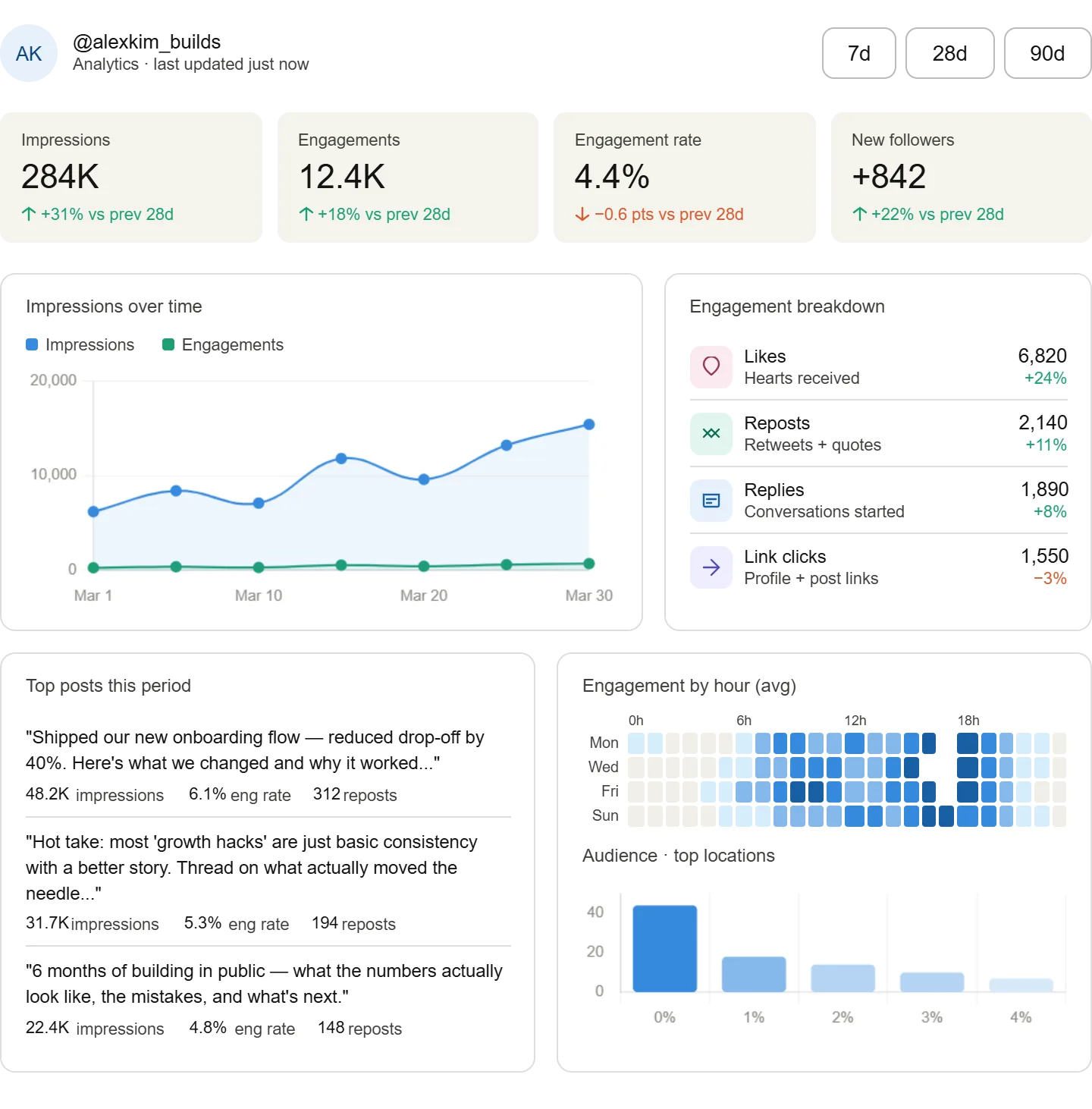
Check Twitter Analytics for trends. Look for sudden drops in impressions, engagement rate, or clicks. Identify if the drop is across all posts or isolated to certain types of content.
Step 2: Evaluate Account Activity
Audit your recent actions. Have you increased posting frequency, automated DMs, or used third-party tools that may have accelerated activity beyond typical human patterns?
Step 3: Check for Temporary Restrictions
If your account displays warnings or notices about unusual activity, temporarily restrict or pause automated workflows. A brief pause allows you to reset any potential flags without further escalation.
Step 4: Assess Content Relevance
Review engagement rates for recent posts. Content that previously performed well but now underperforms may indicate audience fatigue or changes in interests. Adjust messaging, format, or timing accordingly.
Immediate Steps to Recover Reach
Pause High-Risk Automation: Stop any workflows that send repetitive messages or mass actions.
Verify Account Health: Ensure your email, phone number, and recovery options are up to date to prevent account restrictions.
Engage Authentically: Respond to comments, interact with followers, and participate in conversations manually to signal genuine activity.
Adjust Posting Frequency: Scale down temporarily to avoid appearing spammy. Spread posts over hours or days instead of minutes.
Audit Content: Replace repetitive posts with fresh, engaging content designed to spark genuine interactions.
Rebuilding Smart Automation
Once reach starts to recover, reintroduce automation in a controlled manner. Smart automation prioritizes natural behavior patterns:
Introduce random delays between actions.
Vary post timing and interaction sequences.
Avoid duplicating messages or replies.
Monitor performance and adjust based on engagement data.
Appilot can help automate safely by providing granular control over task timing, limits, and variability. This allows you to scale actions like posting, liking, and replying without creating detectable patterns that could trigger algorithmic penalties.
Long-Term Strategies to Maintain Reach
Consistent Posting: Maintain a consistent schedule aligned with audience activity.
Content Quality Over Quantity: Focus on creating high-value, engaging content rather than mass posting.
Monitor Analytics: Continuously review reach and engagement metrics to detect early signs of decline.
Use Safe Automation: Implement structured, human-like automation workflows with variability and limits.
Diversify Engagement: Mix automated activities with manual interactions to maintain authenticity.
By combining these strategies, you can prevent sudden drops in reach while growing engagement organically over time.
Real-World Recovery Example
A marketing agency managing multiple Twitter accounts noticed a 90% drop in reach after using aggressive automation scripts for several weeks. By pausing all automation, auditing content, and reintroducing workflows with Appilot using randomized schedules, they restored reach to previous levels within two weeks. Engagement increased by 45% compared to pre-drop metrics, demonstrating that controlled automation paired with content adjustments can reverse steep declines effectively.
Frequently Asked Questions
Q: Can reach drops happen even without automation?
A: Yes, algorithmic changes, content fatigue, or audience behavior shifts can reduce reach even if you post manually.
Q: How long does it take for reach to recover?
A: Recovery depends on the cause. Pausing risky activities and posting consistently may restore reach within days to weeks.
Q: Should I stop using all automation?
A: Not necessarily. Smart, well-structured automation can help maintain efficiency and engagement without triggering penalties.
Conclusion
A sudden 90% drop in Twitter reach can feel catastrophic, but the cause is almost always identifiable, and recovery is achievable through structured corrective steps. Understanding how Twitter evaluates accounts, adjusting behavior, auditing content, and implementing safe automation practices are all critical to restoring visibility.
By combining authentic engagement with tools like Appilot to manage automation intelligently, you can rebuild reach, maintain audience trust, and scale sustainably without risking future penalties. Focus on long-term account health, create high-value content, and adopt safe workflows to ensure consistent growth in the evolving Twitter landscape.