You’re the Bottleneck in Your Own Business? Here’s How to Delegate

You wake up with a full list of tasks, client messages waiting, campaigns to manage, systems to check, and decisions that only you can make, and before the day even properly starts, you already feel behind, not because there is no system in place, but because everything still somehow depends on you.
You try to move faster, respond quicker, handle more at once, and for a while it works, until it doesn’t, and suddenly you are stretched too thin, missing details, delaying work, and feeling like your business is growing in size but not in capacity.
The strange part is that from the outside, things look successful, clients are coming in, operations are running, revenue is growing, yet internally it feels chaotic, fragile, and heavily dependent on your constant involvement.
You cannot step away without something slowing down or breaking, and even when you try to delegate, it either comes back to you for approval, gets done incorrectly, or creates more work than it saves, making you question whether delegation is even worth it.
You are not alone in this, and more importantly, this is not a failure of discipline or effort, but a structural issue in how your business is designed, where you have unintentionally positioned yourself as the central point of execution, decision-making, and problem-solving.
The good news is that this problem is completely fixable, and once you understand why you have become the bottleneck and how to redesign your workflow, you can create a system where your business runs efficiently without depending on you for every step.
Why You Became the Bottleneck
Most founders do not plan to become the bottleneck, it happens gradually as the business grows and complexity increases.
You Started as the System
In the early stages, you handled everything yourself, from client communication to execution, which made sense at the time because it was faster and ensured quality.
However, as the business grew, the same approach scaled poorly, because instead of building systems, you kept adding responsibilities to yourself.

Decision Dependency Slows Everything Down
When every decision requires your input, even small ones, it creates a bottleneck where work cannot progress without you.
This leads to delays, backlogs, and constant interruptions that prevent deep work.
Lack of Clear Processes
Without defined processes, delegation becomes inconsistent, because tasks are handled differently each time, making it difficult for others to replicate your work reliably.
Fear of Losing Control
There is often a hesitation to delegate fully, driven by the fear that quality will drop or mistakes will increase, which results in partial delegation where you still remain heavily involved.
The Hidden Cost of Being the Bottleneck
At first, being involved in everything feels like control, but over time it becomes a constraint that limits growth.
You spend more time managing tasks than building systems, which reduces your ability to focus on strategy, expansion, and long-term improvements.
This also affects your team, because they become dependent on your input, reducing their ability to operate independently and slowing down overall productivity.
More importantly, it prevents your business from scaling, because every additional client or project increases your workload instead of being absorbed by the system.
The Complete Solution: How to Delegate Without Losing Control
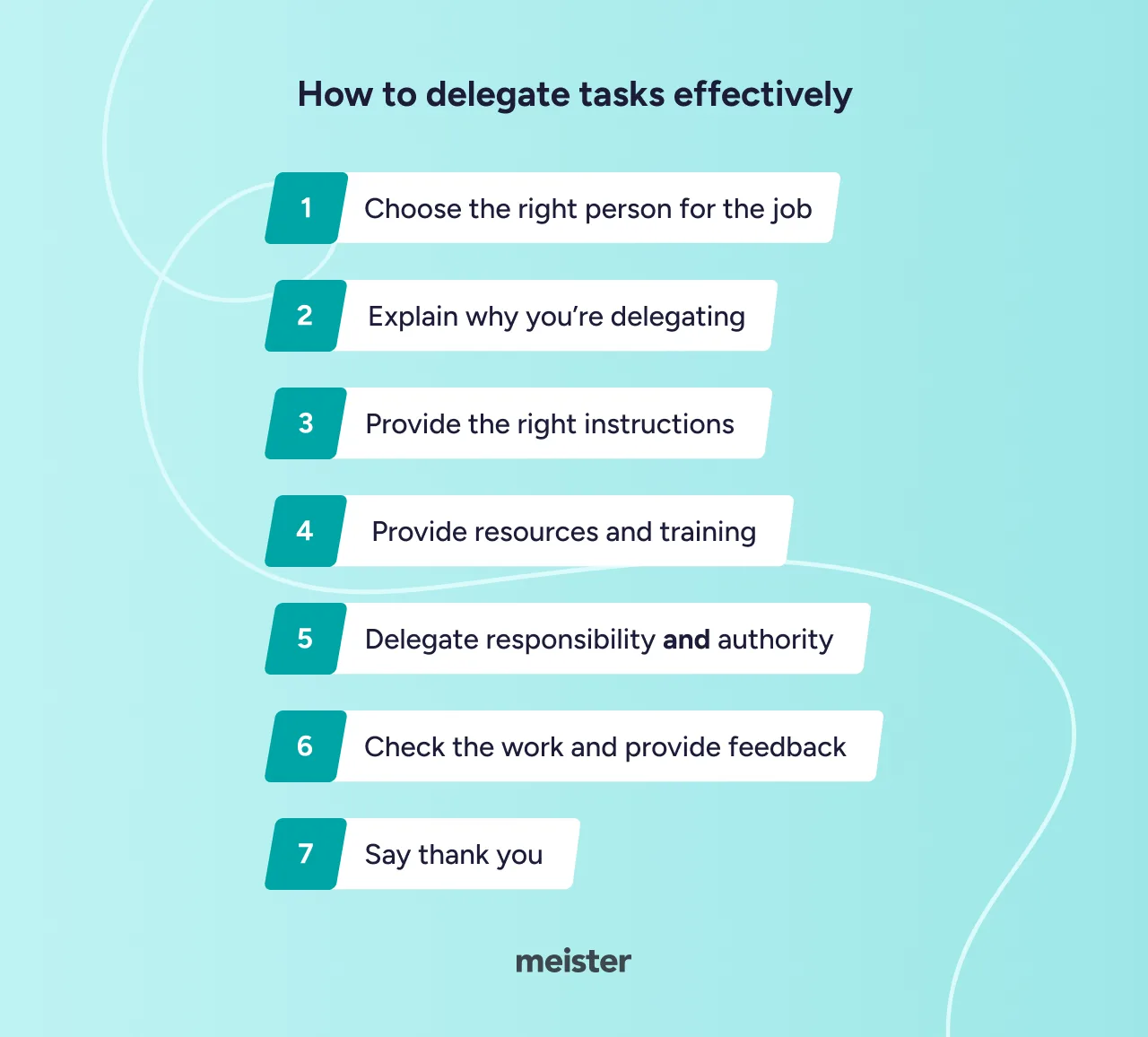
Delegation is not about handing off tasks randomly, it is about designing systems where tasks can be executed consistently without your constant involvement.
The first step is to identify recurring tasks that consume your time, because these are the easiest to standardize and delegate.
Instead of explaining tasks repeatedly, you need to document processes clearly, outlining steps, expected outcomes, and common issues, so that others can follow them without needing constant guidance.
Once processes are defined, the next step is to assign ownership, ensuring that each task has a clear responsible person who is accountable for its execution.
This reduces dependency on you and creates a structure where work can move forward independently.
However, manual delegation alone is not enough, because it still relies on human execution, which can be inconsistent and limited in scale.
This is where automation becomes a critical layer, allowing you to remove repetitive tasks entirely from your workflow.
A practical way to implement this is by using a platform like Appilot, which enables you to automate repetitive workflows on real devices, reducing the need for manual execution and freeing up your time for higher-level decisions.
By combining structured delegation with automation, you create a system where tasks are handled efficiently without requiring your constant input, allowing you to focus on growth rather than execution.
How to Prevent Becoming the Bottleneck Again
Prevention starts with designing your business as a system rather than a collection of tasks, ensuring that processes are documented, roles are clearly defined, and responsibilities are distributed effectively.
Regular reviews help you identify areas where dependency on you is increasing, allowing you to address it before it becomes a problem.
Automation plays a key role in maintaining efficiency, ensuring that repetitive tasks do not re-enter your workflow.
Common Mistakes That Keep You Stuck
One of the most common mistakes is delegating tasks without clear instructions, which leads to inconsistent results and more work for you.
Another is micromanaging, which prevents your team from developing independence and keeps you involved in every detail.
There is also a tendency to delegate execution but not decision-making, which maintains the bottleneck at a higher level.
Real Success Stories: Before and After
A business owner managing multiple clients found themselves overwhelmed with daily operations, unable to step away without everything slowing down.
After implementing structured delegation and automation using Appilot, they were able to reduce their workload significantly and focus on strategic growth.
Another example involved a small team that struggled with dependency on a single decision-maker, but after redefining roles and processes, they achieved greater efficiency and independence.
Frequently Asked Questions
One common question is whether delegation reduces quality, and while it can initially, proper systems and processes ensure consistent results over time.
Another question is how to know what to delegate, and the answer lies in identifying tasks that are repetitive, time-consuming, and do not require your unique expertise.
There is also the concern about losing control, and in reality, effective delegation increases control by creating predictable and reliable systems.
Conclusion: Build a Business That Runs Without You
Being the bottleneck in your own business is not a sign of failure, it is a natural stage of growth, but staying there limits your potential.
Once you shift from doing everything yourself to building systems that operate independently, your business transforms from something you manage constantly into something that runs efficiently with minimal intervention.
If you are feeling overwhelmed right now, the best step forward is not to work harder, but to redesign how work flows through your business, because once you do, growth becomes sustainable and scalable.