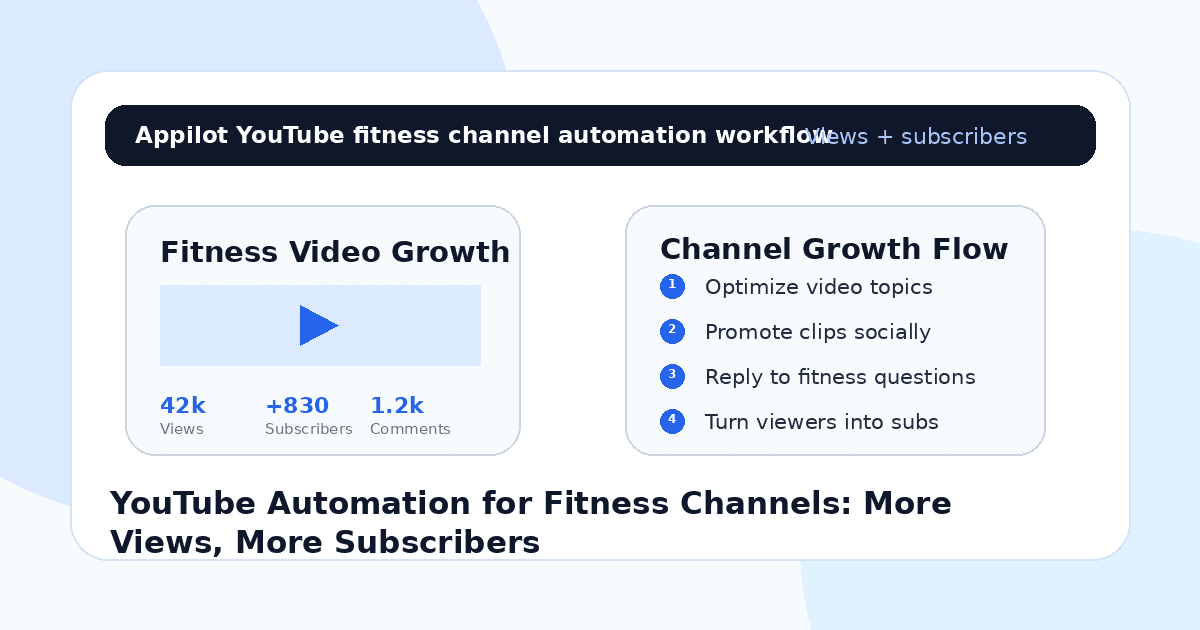
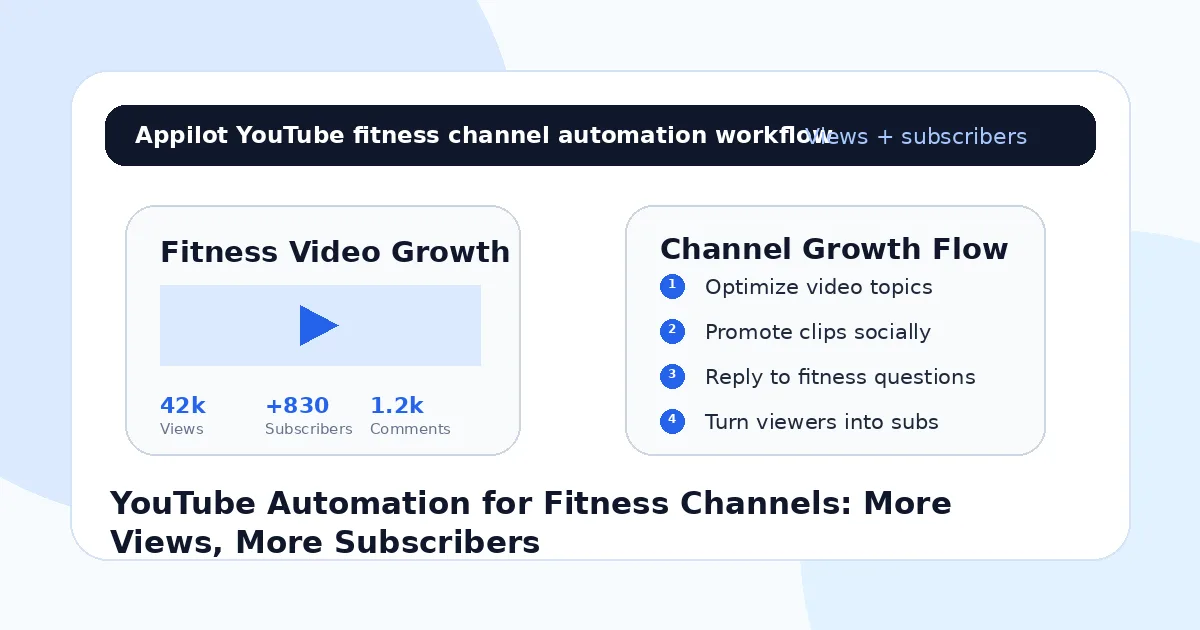
YouTube Automation for Fitness Channels: More Views, More Subscribers
You upload a new workout video, optimize the title, add a clear thumbnail, and wait for YouTube to push it.
A few loyal viewers watch. Someone comments that the routine helped them. Another asks if beginners can do it. A few people save the video, but the view curve slows down before the channel gets real momentum.
That is the challenge for fitness channels on YouTube. Good content matters, but views and subscribers usually grow from a full system: better topics, stronger hooks, short-form promotion, fast comment replies, and a clear reason for viewers to come back.
YouTube automation helps fitness creators manage the repeatable promotion and engagement work around each video. Used carefully, it can help bring more viewers to your channel and turn casual watchers into subscribers.
The goal is not to fake views or spam links. The goal is to help more of the right people discover your workouts, trust your coaching, and subscribe for more.
Why Fitness Channels Struggle to Grow on YouTube
Fitness is one of the most crowded content categories online.
There are channels for fat loss, muscle gain, yoga, Pilates, mobility, calisthenics, bodybuilding, home workouts, gym beginners, nutrition, sports performance, and recovery. That means a new video competes with thousands of other workouts, many from creators with huge libraries and strong subscriber bases.
The problem is not always video quality. Sometimes the topic is too broad. Sometimes the title does not match what people search. Sometimes the intro is too slow. Sometimes viewers ask questions but never get replies. Sometimes the creator posts the video once and does not promote it anywhere else.
Most fitness creators get this wrong by treating YouTube as an upload-only platform. They publish the video, share the link once, and wait. But growth comes from repeated signals: search intent, viewer retention, comments, shares, returning viewers, Shorts, social promotion, and community interaction.
Automation helps support those signals without forcing the creator to manually manage every step.
What YouTube Automation Means for Fitness Creators
YouTube automation for fitness channels should not mean fake views, fake subscribers, or low-quality traffic. That can damage trust and create poor channel signals.
A better meaning is automating the surrounding workflow: promoting videos across Instagram, TikTok, Twitter/X, Reddit, Discord, and other platforms; replying to common viewer questions; routing interested people to playlists; monitoring comments; and keeping viewers connected to the next video.
Real-device automation is useful because most promotion happens inside mobile-first social apps. Instead of relying only on desktop tools or fragile scripts, real-device workflows run through Android devices or emulators and behave more like normal mobile app usage.
A platform like Appilot is built around this kind of workflow. It lets fitness creators run social automation on Android devices or emulators from a browser dashboard, without coding, ADB setup, or keeping a laptop connected all day. For YouTube growth, that means creators can promote videos and manage viewer touchpoints more consistently while focusing on filming, coaching, editing, and programming.
Automation should support real discovery. It should never replace real content quality.
Step 1: Choose Video Topics With Clear Search Intent
Before automating promotion, make sure the video topic has a clear purpose.
A vague video like “full body workout” can be hard to rank because the competition is huge. A more specific topic like “20-minute beginner dumbbell workout at home” gives YouTube and viewers a clearer reason to care.
Fitness channels grow faster when each video answers a specific need. That need might be fat loss, beginner strength, lower back mobility, glute training, home workouts, gym confidence, posture correction, meal prep, or recovery.
Automation can help promote a video, but it cannot fix a topic that nobody understands or searches for.
A strong topic should make the viewer think, “This is exactly what I need today.”
Step 2: Use Shorts and Social Clips to Drive Discovery
A long YouTube workout video can be broken into many smaller clips.
A 30-minute workout can produce short clips for YouTube Shorts, Instagram Reels, TikTok, Twitter/X, and stories. One clip can show the hardest move. Another can explain a beginner modification. Another can highlight a common mistake. Another can tease the full routine.
These clips help people discover the full video.
Automation can support the repeated promotion work around those clips. For example, a creator can use automation to reply to comments asking for the full workout link, send viewers to the YouTube video when they ask, and keep social activity active after the upload.
This is where Appilot can fit naturally into the workflow. Fitness creators can run Instagram, TikTok, Twitter/X, Discord, and other social actions through Android devices or emulators while using those platforms to guide interested viewers toward YouTube.
The full video lives on YouTube. The clips create the discovery path.
Step 3: Reply Fast to Viewer Questions
Fitness videos create practical questions.
Viewers ask how many times per week to do the workout, whether it is beginner-friendly, what equipment is needed, how to modify a move, whether it helps with fat loss, or which video to watch next.
These comments are not just engagement. They are retention and subscription opportunities.
If a viewer asks for a beginner version and you reply with the right playlist, they may watch more videos. If someone asks about a follow-up routine and you suggest the next video, they may subscribe. If someone asks about coaching and you reply quickly, they may become a lead.
Automation can help surface repeated questions and support faster replies, but fitness advice still needs care. Keep answers general when needed and avoid giving specific medical or injury advice without proper context.
A helpful comment section can become part of your channel’s growth engine.
Step 4: Create Playlists That Convert Viewers Into Subscribers
A single video can get views, but playlists build channel depth.
Fitness viewers often want a path. They want a beginner series, a 7-day challenge, a fat-loss playlist, a mobility routine, a push-pull-legs plan, or a home workout library.
If your channel has clear playlists, automation can help route people to the right one.
For example, if someone comments “I’m a beginner,” you can guide them to a beginner playlist. If someone asks for abs, send the core playlist. If someone wants dumbbell workouts, send the dumbbell series.
This makes the viewer more likely to watch multiple videos and subscribe.
The easier your channel is to navigate, the more valuable every new view becomes.
Step 5: Promote New Videos Beyond YouTube
YouTube growth does not have to depend only on YouTube search and recommendations.
Fitness creators can promote new videos through Instagram stories, TikTok clips, Reddit fitness discussions, Discord communities, newsletters, Facebook groups, and Twitter/X posts. Each platform should have its own style.
Instagram works well for quick demos, story polls, and DM replies. TikTok works well for hooks and short tips. Reddit can work when the creator adds genuine value and follows community rules. Discord can help with loyal community members and challenge groups.
Appilot helps by giving creators a way to manage repeatable social workflows across Android devices and emulators from one dashboard. That makes multi-platform promotion easier without turning the creator into a technical operator.
The key is to avoid dumping links. Give people a reason to watch the full video.
Step 6: Use Automation to Support Community, Not Fake Growth
Fake views and fake subscribers are not a growth strategy.
They may make a video look active for a moment, but they do not create watch time, comments, returning viewers, coaching leads, or real fans. Poor-quality traffic can also hurt performance if viewers leave quickly.
Automation should support real people and real interest.
Use it for comment routing, social promotion, community reminders, playlist suggestions, and viewer follow-up. Do not use it to create artificial video plays or fake subscribers.
The best fitness channels grow because viewers trust the creator. Fake growth weakens that trust.
Step 7: Track the Metrics That Actually Matter
View count is important, but it is not the only number that matters.
Fitness creators should track click-through rate, average view duration, audience retention, comments, returning viewers, subscribers gained per video, playlist starts, YouTube Shorts traffic, external traffic, and coaching or product leads from videos.
A video with fewer views but strong retention and many subscribers may be more valuable than a viral clip that attracts the wrong audience.
You should also track which content type grows the channel best. Beginner workouts may bring subscribers. Quick tips may bring Shorts traffic. Long routines may bring watch time. Transformation content may bring coaching leads.
Automation helps drive and manage more attention. Analytics show which attention is worth scaling.
Common Mistakes Fitness Channels Should Avoid
Buying Fake Views or Subscribers
Fake numbers rarely create real channel growth. They can hurt trust, retention, and long-term performance.
Posting Videos Without a Promotion Plan
A new upload needs clips, stories, replies, community posts, and external promotion. Do not rely on one upload notification only.
Ignoring Comment Questions
Comments reveal what viewers need next. Replying well can increase trust, watch time, playlist views, and subscriptions.
Making the Channel Hard to Navigate
If viewers cannot find the next workout, they may leave. Use playlists, pinned comments, descriptions, and clear calls to subscribe.
Measuring Only Views
Views matter, but watch time, retention, subscribers gained, returning viewers, and qualified leads matter more.
Is YouTube Automation Right for Fitness Channels?
YouTube automation is a good fit if you already create fitness content and want a better system for promotion, engagement, and subscriber growth. It works especially well for personal trainers, online coaches, gym creators, yoga teachers, Pilates instructors, mobility coaches, nutrition educators, and fitness brands.
It may not be right if the channel has no clear niche, weak video quality, or no consistent upload plan. Automation can support growth, but it cannot replace useful workouts, strong coaching, and viewer trust.
Think of automation as a promotion and engagement assistant. It helps more viewers find your content, but your videos make them stay.
Final Thoughts
Fitness channels get more views and subscribers when YouTube content is supported by a full growth system.
That means clear topics, strong clips, fast replies, useful playlists, multi-platform promotion, and real community engagement. Automation helps manage the repetitive work around that system, but the channel still needs valuable workouts and trusted coaching.
If you want to promote YouTube fitness videos without coding, ADB setup, or manual device management, Appilot gives fitness creators a browser-based way to control Android devices, emulators, and ready-to-use bots for YouTube, Instagram, TikTok, Twitter/X, Reddit, Discord, and more. You can check it out at appilot.app.
FAQs
Q1: Can YouTube automation help fitness channels grow?
Yes, it can help with social promotion, comment replies, playlist routing, community engagement, and sending interested viewers to videos.
Q2: Should fitness channels buy fake views or subscribers?
No. Fake views and subscribers rarely create watch time, trust, or real growth. Focus on real viewers and useful promotion.
Q3: What should fitness creators automate first?
Start with comment monitoring, social clip promotion, playlist suggestions, viewer replies, and routing interested people to relevant videos.
Q4: Can Appilot help promote YouTube fitness videos?
Yes, Appilot can support YouTube and social workflows on Android devices or emulators from a browser dashboard without coding.
Q5: What matters more than YouTube views?
Watch time, retention, returning viewers, subscribers gained, comments, playlist views, and qualified coaching leads matter more.