YouTube Automation for Musicians: Getting More Views on Music Videos
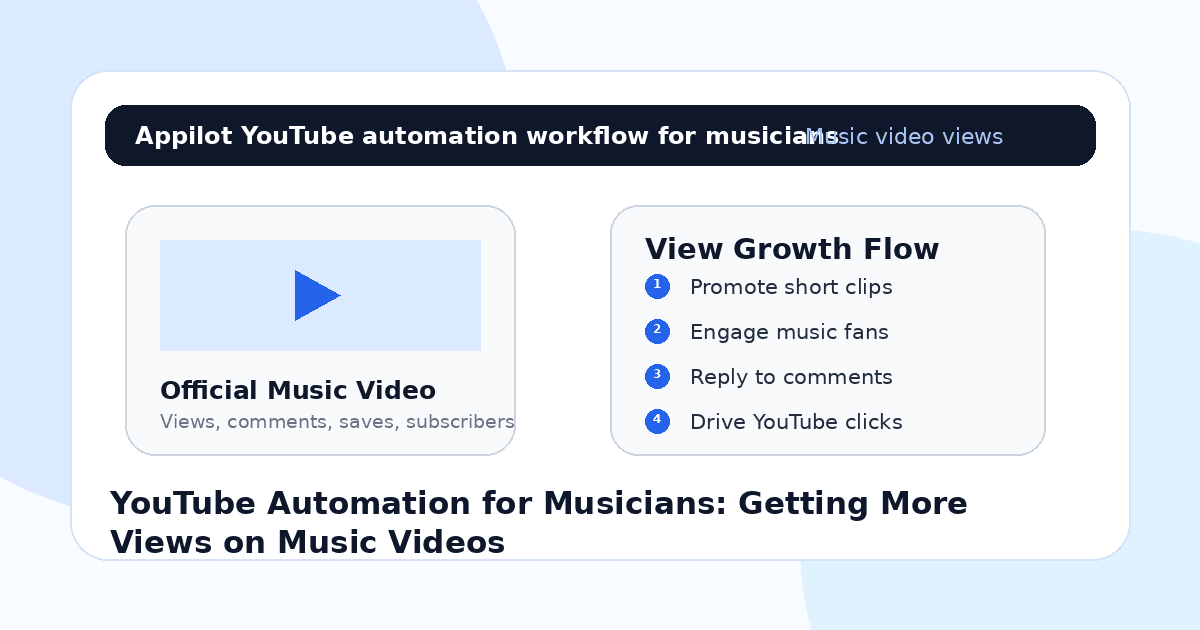
You finally upload the music video. The thumbnail looks good, the title is clean, the description has the streaming links, and you post it everywhere you can think of.
For the first few hours, friends watch it. A few fans comment. Maybe your story gets some link taps. Then the views slow down, and the video starts sitting there with far less attention than the song deserves.
That is the frustrating part of YouTube promotion for musicians. Uploading the video is only one piece of the work. Getting people to actually watch, comment, share, and subscribe takes a consistent promotion system.
YouTube automation can help with that system when it is used the right way. Not by faking views or running low-quality traffic. That usually hurts more than it helps. But by automating the social promotion work around the video, so more real fans discover it from Instagram, TikTok, Twitter/X, Reddit, Telegram, and other communities.
The goal is simple: turn attention from social platforms into real YouTube views.
Why Musicians Struggle to Get Views on YouTube
Most musicians treat YouTube like a release archive. They upload the official video, share the link once or twice, and hope the algorithm finds the right people.
That rarely works by itself.
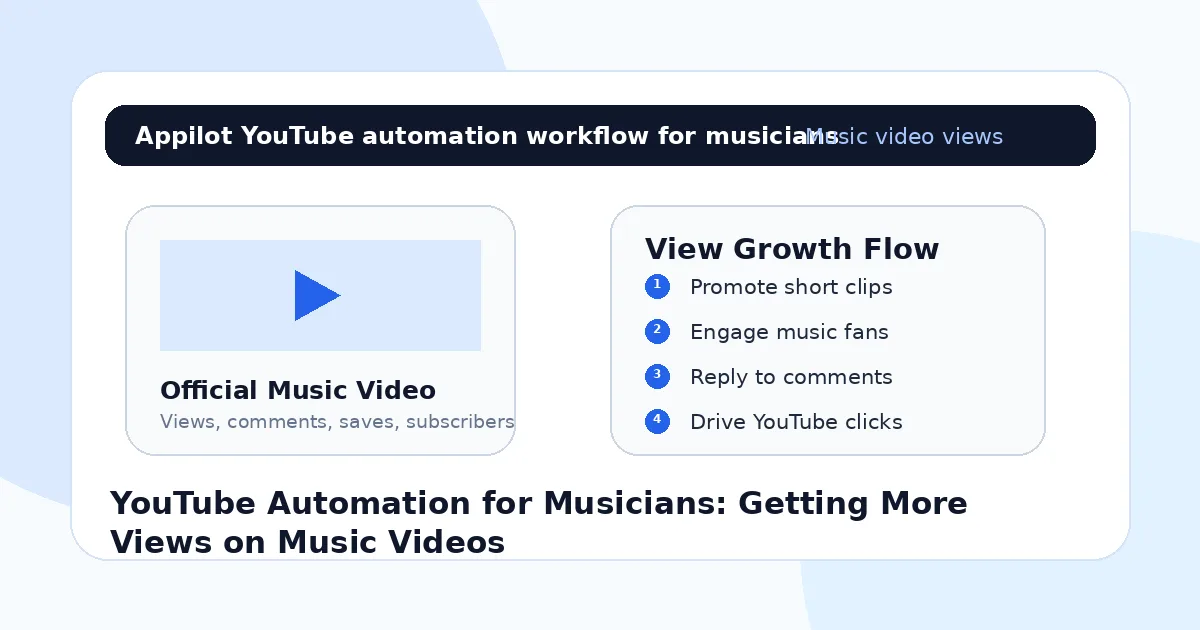
YouTube needs signals. Watch time, clicks, comments, saves, shares, returning viewers, and subscriber activity all help the video build momentum. But those signals usually start outside YouTube, especially for independent artists without a large subscriber base.
A music artist might spend weeks planning the video and only one day promoting it. That is the mistake. A music video launch needs repeated clips, reminders, comments, replies, fan conversations, and traffic from multiple places.
Manual promotion can easily take 60 to 90 minutes a day. You post clips, reply to people asking for the link, engage with fans of similar artists, answer DMs, push the video in stories, and keep the release alive after launch day.
Most artists get this wrong because they chase views instead of viewer intent. A smaller group of fans who actually watch, comment, and subscribe is more valuable than empty traffic that leaves after five seconds.
What YouTube Automation Means for Musicians
YouTube automation for musicians should not mean fake views. It should mean automating the repeatable promotion steps that help real listeners find your video.
That includes promoting video clips on Instagram, TikTok, and Twitter/X, replying to comments that ask for the link, sending the video when fans request it, engaging with similar-artist communities, and keeping release reminders consistent.
Real-device automation is useful because much of this promotion happens inside mobile apps. Instead of relying on desktop scripts or fragile API-based tools, real-device automation runs through Android phones or emulators and behaves more like normal mobile app usage.
A platform like Appilot is built around this kind of workflow. It lets musicians run social media automation on Android devices or emulators from a web dashboard, without ADB setup, coding, or keeping a laptop connected all day. For YouTube promotion, that means you can support your music video across social channels while keeping the creative side and fan conversations human.
Automation should send interested people toward the video. It should not manufacture fake attention.
Step 1: Build Short Clips From the Music Video
The full music video is not the only asset. It is the source material.
Before you automate promotion, cut the video into short clips for Instagram Reels, TikTok, YouTube Shorts, Twitter/X posts, stories, and fan community updates. Each clip should have a different purpose.
One clip might highlight the strongest hook. Another might show the best visual moment. Another might focus on a lyric. Another might show behind-the-scenes footage. Another might tease the story behind the video.
This matters because not every fan clicks from the same angle. Some people respond to visuals. Some respond to lyrics. Some respond to the emotion behind the song. Some respond to the artist personality.
Automation works better when you have multiple clips to promote, not just one link to repeat.
The best question to ask is not “How do I get people to watch?” It is “Which moment makes someone want to watch the full video?”
Step 2: Use Social Automation to Reach Similar Artist Fans
The fastest way to find likely viewers is to start near people who already listen to similar music.
If your sound fits indie pop, trap, Afrobeats, EDM, R&B, drill, folk, metal, or lo-fi, there are already artists, pages, playlists, venues, and communities where your potential fans spend time.
You can manually search these audiences, follow people, view stories, reply to posts, and join conversations. But doing that every day is time-consuming.
This is where Appilot can fit naturally into the promotion workflow. Appilot helps run social media actions through Android devices or emulators from one dashboard, so musicians can automate repeated discovery steps without coding or manual device work. You still decide the target audience, but automation helps keep the outreach consistent.
The goal is not to target random people. The goal is to reach listeners who are already close to your sound.
Step 3: Reply Fast When Fans Ask for the Video
A comment like “video link?” or “where can I watch this?” is a strong signal.
That person is already interested. If you reply quickly, you can turn the comment into a view. If you reply tomorrow, the moment may be gone.
Automation can help detect these high-intent comments and respond with the right next step. On Instagram, that might mean a short reply and a DM with the YouTube link. On Twitter/X, it might mean replying with the video link when someone asks. On TikTok, it might mean pointing people to the full video in your bio or pinned comment.
Keep the response short. A fan does not need a long pitch when they ask for the link. They need the video.
A good reply sounds like, “Appreciate you. Full video is here: [link].” A bad reply sounds like a generic marketing message copied from a promo agency.
Step 4: Use DMs Carefully Without Spamming
DMs can help music video promotion, but only when there is intent.
If someone replies to your story asking for the full video, send it. If someone comments that they want the link, send it. If someone has already engaged with the release several times, a short message can make sense.
But sending cold YouTube links to hundreds of random people usually feels desperate. It can hurt your reputation and lower trust.
One reason musicians use Appilot-style workflows is that the dashboard makes it easier to manage repeated social actions while still keeping control of the message. You can run Instagram, TikTok, Twitter/X, and other mobile workflows through Android environments without handling every action manually.
Still, the rule is simple. Send links when people show interest, not before they care.
Step 5: Turn Comments Into More Promotion Content
Comments are not just responses. They are content ideas.
If fans keep saying one lyric hit them, make a short clip around that lyric. If people ask how the video was shot, share behind-the-scenes footage. If they ask who produced the song, make a producer-credit post. If they compare your sound to another artist, that gives you a targeting clue.
This is how a music video campaign lasts longer than launch day.
You can keep posting new angles based on what people actually react to. That gives the video more chances to bring people back to YouTube.
Automation helps by increasing the number of fan touchpoints, but the insight still comes from reading the responses. The more you listen, the better the next promo clip becomes.
Step 6: Promote the Video Across Multiple Platforms
YouTube views can come from many places.
Instagram can drive views through reels, stories, DMs, and link stickers. TikTok can create curiosity through short clips. Twitter/X can help with music conversations and fan communities. Reddit can work if you are careful and genuinely participate in genre-specific communities. Telegram or Discord can help if you already have a fan group.
Do not use the same message everywhere.
Instagram needs visual moments. TikTok needs a strong hook. Twitter/X needs personality and conversation. Reddit needs context and community respect. Discord and Telegram need a fan-first tone.
Appilot can support multi-platform workflows by giving artists a way to manage mobile automation across several social apps from one place. That is useful when you are promoting a video for more than one day and do not want to manually repeat every action.
The best promotion feels platform-native. The worst promotion feels like link dumping.
Step 7: Track Real View Quality, Not Just View Count
More views are good only if people actually watch.
A video with 2,000 strong views, comments, subscribers, and repeat watchers can be more useful than 20,000 low-quality views that disappear after a few seconds.
Track YouTube analytics closely. Look at traffic sources, average view duration, audience retention, click-through rate, comments, likes, subscribers gained, and returning viewers.
Then compare that with your social activity. Which clip drove the best traffic? Which platform produced viewers who stayed longer? Which posts created comments asking for the full video? Which audience actually subscribed?
That is how you improve each release.
Automation helps create more chances for discovery, but analytics tell you what kind of discovery is actually working.
Common Mistakes Musicians Should Avoid
Buying Fake YouTube Views
Fake views may look good for a moment, but they usually do not create fans, subscribers, comments, or real momentum. They can also damage trust.
Posting the Link Once
One post is not a campaign. A music video needs clips, stories, reminders, behind-the-scenes posts, and repeated fan conversations.
Sending Cold Links to Random People
Cold YouTube links usually feel spammy. Send links when someone asks, replies, comments, or shows clear interest.
Ignoring Watch Time
View count alone does not tell the full story. Watch time and retention matter because they show whether people actually care.
Promoting Without a Clear Profile Path
If your social profile does not clearly point to the music video, interested fans may never find it. Make the link obvious.
Is YouTube Automation Right for Musicians?
YouTube automation is a good fit if you already have a music video, strong short clips, a clear artist identity, and social platforms where fans can discover you. It works best when your video has moments worth sharing and your audience is clearly defined.
It may not be right if you only want fake views or have no content plan. Automation can help promote the video, but it cannot make weak clips interesting or turn random traffic into fans.
Think of it as a promotion assistant. It helps you repeat the work that gets real people to the video.
Final Thoughts
Getting more views on a music video is not just about uploading to YouTube and waiting.
You need short clips, social engagement, fast replies, fan conversations, clear links, and repeated promotion after launch day. Automation helps by keeping those tasks moving without forcing you to live inside every platform manually.
If you want to promote YouTube music videos without coding, ADB setup, or manual device management, Appilot gives musicians and teams a browser-based way to control Android devices, emulators, and ready-to-use bots for Instagram, TikTok, Twitter/X, YouTube, and more. You can check it out at appilot.app.
FAQs
Q1: Can YouTube automation help musicians get more views?
Yes, it can help promote music videos through social clips, comment replies, DMs, fan discovery, and multi-platform traffic workflows.
Q2: Should musicians buy fake YouTube views?
No. Fake views rarely create real fans or watch time and can hurt long-term credibility. Focus on real promotion instead.
Q3: What should musicians automate first?
Start with social clip promotion, link-request replies, fan discovery, comment monitoring, and sending the video only when people ask.
Q4: Can Appilot help promote YouTube music videos?
Yes, Appilot can help run social automation workflows on Android devices or emulators from a web dashboard without coding or ADB setup.
Q5: What matters more than YouTube view count?
Watch time, retention, comments, subscribers gained, saves, shares, and returning viewers matter more than empty view numbers.